
Thailand's reservoirs 82% full before heavy rain on October 21–24
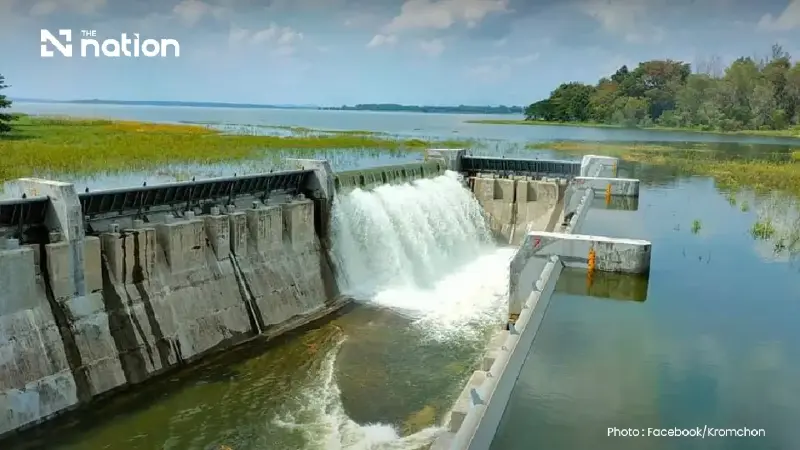


Thailand’s water agency calls for careful reservoir releases as Nong Pla Lai stands at 113% of capacity and more heavy rain threatens vulnerable areas.
- As of October 19, Thailand's large and medium-sized reservoirs were at 82% of their total storage capacity.
- The high water levels precede a forecast of heavy to very heavy rain expected in the East, lower Northeast, Central, and upper South regions from October 21–24.
- Reservoirs in the West and East regions are particularly full, at 97% and 89% of capacity respectively, with some individual reservoirs already over 100%.
- Authorities are managing water releases to prevent downstream flooding and have advised residents in at-risk areas to take precautions.
Thailand’s large and medium-sized reservoirs held 66,728 million cubic metres of water, equivalent to 82% of storage capacity, according to an Office of the National Water Resources (ONWR) report dated October 19, 2026. The update comes ahead of heavy to very heavy rain forecast for October 21–24.
The ONWR instructed agencies to align reservoir operations with expected rainfall and adjust releases to avoid affecting downstream areas. Reservoirs in the East and West require particular attention, with several holding water at levels exceeding 80% of capacity and some above 100%.
Heavy rain forecast for four regions on October 21–24
The East, lower Northeast, Central region and upper South are expected to receive more rain during October 21–24, with isolated heavy to very heavy downpours and strong gusts, according to the outlook cited by the ONWR and the Thai Meteorological Department.
The agencies’ assessment for October 19 identified persistent rain and isolated heavy to very heavy downpours in the East and South, alongside heavy rain in parts of the Central region. Residents were advised to watch for heavy rainfall and waterlogging.
Farmers and residents in areas facing heavier rain and gusts should take precautions to protect agricultural produce and vulnerable structures, the advisory said. The ONWR also advised people in flood-prone areas, particularly Satun in the South, Chachoengsao in the East and parts of the Central region, to follow official weather and water alerts closely.

Western reservoirs record the highest regional storage level
Western Thailand’s reservoirs held 27,556 million cubic metres of water, or 97% of capacity, the highest regional proportion in the October 19 report. The East followed at 89%.

The ONWR update put usable water nationwide at 42,600 million cubic metres, representing 75% of usable storage capacity. The reserves are sufficient for the coming dry season, while the water release volumes must be managed to accommodate further rainfall.
Nong Pla Lai reported at 113% of storage capacity
Nong Pla Lai Reservoir held 185 million cubic metres of water, equivalent to 113% of its stated storage capacity, in figures dated October 18. The reported level requires close monitoring of releases.
The ONWR is monitoring Nong Pla Lai, Prasae and Bang Phra reservoirs because of their importance to domestic water supplies, agriculture and industry in the Eastern Economic Corridor (EEC), which covers Chon Buri, Rayong and Chachoengsao.

The Chao Phraya basin, which supports agricultural areas and urban communities, also had moderate to high storage levels at four key dams. The following figures were listed for October 18:

Satun records the highest reported rainfall at 134mm
Satun recorded 134 millimetres of rain, the highest reading nationally among the regional rainfall maxima listed in the ONWR’s October 19 report. Chachoengsao had the highest reading in the East, at 80 millimetres.

The ONWR reported that heavy rainfall had caused water to accumulate in low-lying areas. The office had coordinated with local agencies to prepare for rivers overflowing their banks and possible flash floods.
