
Orionid meteor shower offers overnight viewing in Thailand
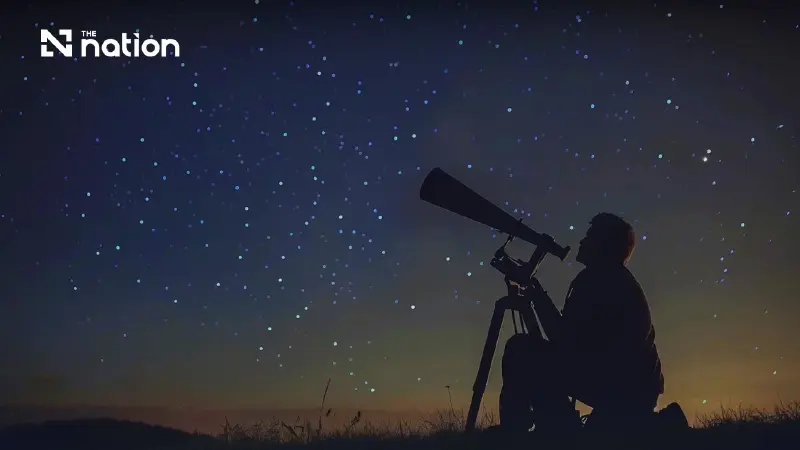


The best time to watch the Orionid meteor shower in Thailand is around 3am–5am on Thursday (October 22, 2026), provided skies are clear.
- The Orionid meteor shower will be visible in Thailand on the night of October 21, 2026, through to the dawn of October 22.
- The shower is expected to peak at an average rate of 20 meteors per hour, appearing from the eastern sky around 10:30 p.m.
- The best viewing time in Thailand is suggested to be between 3 a.m. and 5 a.m. on October 22, after the moon has set.
- Visibility of fainter meteors may be reduced by bright moonlight until about 2:30 a.m. and by city light pollution.
The National Astronomical Research Institute of Thailand (NARIT) is inviting the public to watch the Orionid meteor shower on the night of Wednesday (October 21, 2026), continuing until dawn on Thursday (October 22, 2026).
The shower is expected to average about 20 meteors an hour at its peak, appearing in the eastern sky from around 10.30pm.
What causes the Orionid meteor shower?
The Orionids, also known as the “Orion meteor shower”, originate from the numerous dust particles and small fragments left behind by Halley’s Comet (1P/Halley).
As Earth crosses the comet’s orbital path, its gravity draws in this debris, which burns up through friction with the atmosphere.
The resulting flashes resemble fireballs radiating from the constellation Orion, giving the shower its name.
Although the meteors appear to emerge from that area, they can be seen anywhere in the sky.

When to watch the Orionids
According to NARIT, this year’s viewing period runs from the night of Wednesday (October 21, 2026), until dawn on Thursday (October 22, 2026), with the shower forecast to average about 20 meteors an hour at its peak.
The radiant, the point from which the meteors appear to originate, will be near the arm of the constellation Orion.
The radiant will appear in the east at around 10.30pm before gradually climbing towards the middle of the sky.
Observers can continue watching until dawn, although moonlight will interfere with viewing from early evening until about 2.30am.
The Thai Astronomical Society likewise puts the start of viewing at around 10.30pm, with the best opportunity in Thailand roughly between 3am and 5am on October 22, provided skies are clear and free of clouds.
However, bright moonlight this year may obscure fainter meteors, meaning observers could see fewer than the forecast peak rate, particularly in cities with extensive artificial lighting.

How to improve your chances of seeing the Orionids
- Choose an open area away from streetlights and city lights.
- Start watching after 10.30pm, focusing on the period after midnight and before dawn.
- Look across a wide area of sky rather than concentrating solely on Orion.
- Take a break from your phone screen and allow your eyes about 20–30 minutes to adjust to the darkness.
- Check the weather and choose a safe viewing spot before setting out.
The forecast of 20 meteors an hour assumes ideal observing conditions. It does not mean observers will see a meteor at regular intervals of 3 minutes.
The number actually seen will depend on moonlight, clouds and light pollution.
