
Student List wins 52.6% majority in historic Serbia election on Oct 25
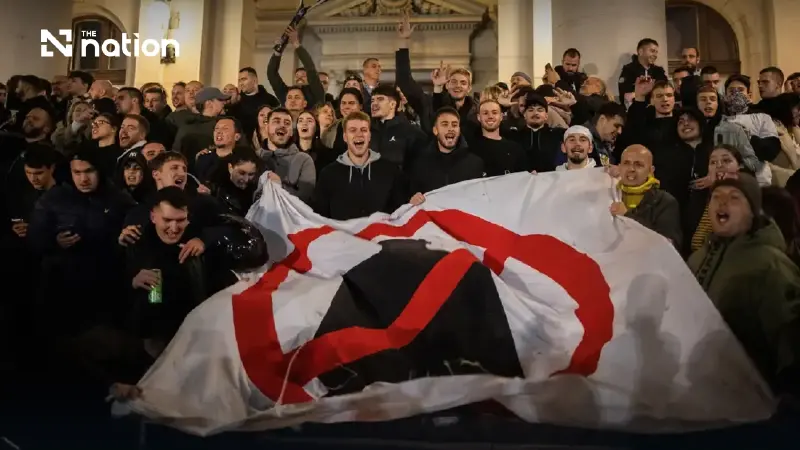


Serbia's student movement secured 52.6% of the vote on October 25, ending Aleksandar Vucic's 14-year rule following record turnout and mass anti-government protests.
- The student-led "Student List" party won Serbia's October 25 election with a 52.6% absolute majority, securing 135-140 seats in the 250-seat parliament.
- This historic victory ends the 14-year rule of Aleksandar Vucic and his Serbian Progressive Party, which will now move into the opposition.
- The snap election was called after two years of mass anti-government protests and featured a record-high voter turnout of nearly 70%.
Serbia's student-led "Student List" secured a historic parliamentary victory on Sunday (October 25), capturing an absolute majority of 52.6% of the vote and ending Aleksandar Vucic's 14-year grip on power after two years of mass anti-government demonstrations.
Led by candidates including cardiologist Ilija Srdanović, the newly formed movement won between 135 and 140 seats in the 250-seat parliament during its first electoral contest. Former President and Prime Minister Vucic conceded defeat on live television as tens of thousands of citizens celebrated in the streets of Belgrade.

Record turnout and dramatic concession
Voter turnout approached 70%, marking the highest participation rate since the breakup of Yugoslavia in 1992. Vucic's Serbian Progressive Party (SNS) secured 39.2% of the vote, translating to 105 seats, and is set to transition into the opposition after dominating national politics since 2014.
The election was triggered by snap polls called in September following nearly two years of widespread anti-government protests. Demonstrations began after a tragic train station canopy collapse in Novi Sad in 2024 killed 16 people, galvanising public anger against corruption and creeping authoritarianism.
"It is clear that we have lost these elections, the Student List has won," Vucic stated in a televised broadcast. Moments after his concession, the streets of Belgrade erupted with car horns, dancing crowds, and celebrations.

International response and European parallels
European Commission President Ursula von der Leyen and Enlargement Commissioner Marta Kos congratulated the student movement. Von der Leyen posted on X expressing readiness to advance Serbia's European Union integration, while Hungarian Prime Minister Péter Magyar offered official support.
Analysts noted parallels to Hungarian leader Viktor Orbán's defeat in April, suggesting the Serbian student movement could serve as a broader blueprint for youth-led political activism across Europe against educational decline and institutional stagnation.

Governance challenges and foreign policy balance
Substantial uncertainty surrounds the incoming administration's ministerial appointments and policy implementation. The student list's 250 candidates comprise university professors, actors, and farmers with little prior political experience.
The new government must navigate delicate foreign policy dynamics, balancing relations with the European Union as its largest trading partner, Russia as its traditional energy supplier, and China as a major economic investor, while addressing domestic anti-corruption and legal reforms.


