
Lessons can be learnt from disastrous floods
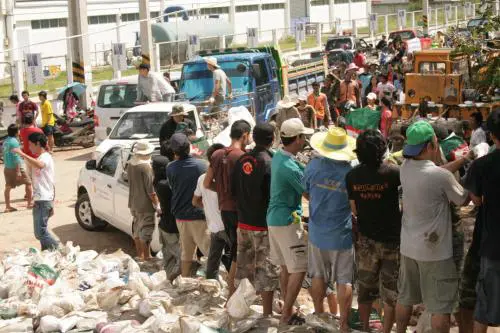


Behind the dark clouds is bright sunshine. That's how I sum up what we've learnt so far from the floods, which have devastated many provinces, chiefly Ayutthaya.
Now we know that government units can be united to fix problems, through the joint project of the Science and Technology Ministry and the Royal Thai Navy to quicken water flow to the Gulf of Thailand, though the effectiveness is hotly debated.
Bangkok residents are now forced to be more knowledgeable about geography. Living in the capital, which has everything anyone could dream of – but greenery, of course – they never have to look far. Having been well protected, they never yearned to learn how they are protected. Now, whenever a floodgate is reported broken, they search for the exact location so that they can Tweet and share in Facebook to alert those living in the areas.
Now, the true power of social media is unfurling. For some time, we’ve been learning about the power of social media in creative and destructive ways. But now we know their power in arousing sympathy and causing panic. Thanks to smartphones, people can simply push buttons and all the information, verified or not, is flying through the air. Through social media, many good-hearted people were seen in Ayutthaya helping flood victims. They came out in such huge numbers that traffic congestion turned into a major problem in the province, aside from floods.
Through social media, news of the danger from massive runoff and of evacuations was disseminated, sparking panic buying of consumer goods. On October 12, locally produced instant noodles disappeared completely from shelves, as well as bottled water and bags of rice.
I’m sure that I have lived half of my life, and I’m certain that I witnessed such scenes only from World War II movies, when factories were destroyed and no products could be made.
The Royal Thai Air Force also impressed us with the announcement recently that it is ready to use infrared scanners to spot flood victims deserted in their flooded houses. Wow, now we know that we have all the technology provided. It’s just a matter of time – and order – when this equipment can be used for the benefit of society.
We also learnt that in times of crisis, men can cry despite their physique. Strongly built and tough-looking Deputy Prime Minister Kittiratt Na-Ranong broke into tears when hugging Japanese investors at the Hi-Tech Industrial Estate.
He would have been endearing but for his call to the prime minister, showing that he gave up in saving the industrial estate. Huh, if a man with authority gives up, what can laymen like us do but let our houses get flooded.
It has never been this clear what kind of leaders we need in an emergency. The Thaksin government was hailed for its prompt reaction to the tsunami’s impacts, but that was not what we could expect from the government led by his youngest sister. Yingluck Shinawatra worked hard, but one day she ended up in a kitchen cooking for flood victims while her urgent mission was to take command in the war room. Thankfully, there was not much criticism as opposition leader Abhisit Vejjajiva also did the same thing.
To Democrat supporters, Bangkok Governor MR Sukhumbhand Paribatra deserved admiration when announcing that he would be responsible for the situation in Bangkok. Yes, he did such a wonderful job, knowing that he is in charge of the capital, which contributes one-fourth of gross domestic product. Yes, if Bangkok falls, not only would the entire nation suffer, he would also lose his precious job. The task is huge. If the city collapses into the water, the entire economy would not be spared. Yet, he was brave enough to put all that on his big shoulders.
Hopefully, good lessons will still surface, as the floods will be with us for some time.
