
The party cannot go on forever


Play
I am attending a media conference organised by the International Monetary Fund in Singapore.
The underlying themes are the growth prospects and policy challenges in Asia amid the ongoing crisis in Europe, the economic weakness in the US, and a spike in oil prices. China and India, the two main engines of growth in Asia, are experiencing a slowdown. China is witnessing a fall in demand for its exports. India has overstretched its monetary and fiscal policies. The rest of Asia will have to stay vigilant and embrace domestic-led consumption to cope with the volatility ahead because the crises in the developed world will take years to unravel. Deleveraging is on in full force.
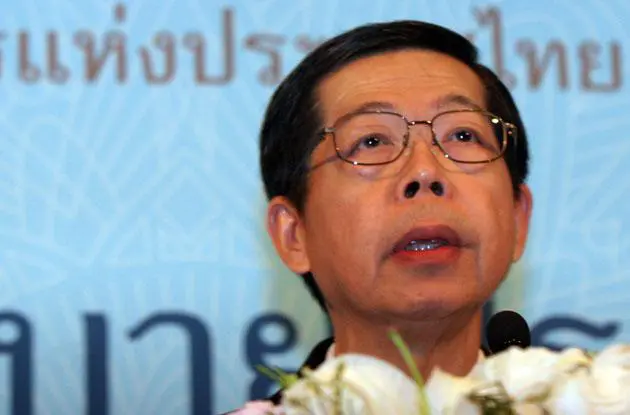
It is interesting to put Thailand into perspective against this backdrop. I recently talked to Anoop Singh, the director of the IMF’s Asia-Pacific Department, and Dr Prasarn Trairatvorakul of the Bank of Thailand. Singh is always upbeat about Asia, which emerged from crisis more than a decade ago with a strong rebound. The balance sheets of both the banking and corporate sectors have become healthier. In spite of the export slowdown due to weaker demand in the US and Europe, he still sees scope for Asia to rely on domestic consumption to drive growth. This would also allow policy-makers to improve infrastructure and tackle income distribution. But that’s a broad view on Asia as a whole.
Dr Prasarn hinted to me that the central bank’s monetary policy has already reached its limit. For the real interest rate is now in negative territory. The central bank can’t really ease its policy rate further to accommodate growth. The policy rates have been brought down twice in the past months only to address economic shocks arising from the flood disaster. As expected on Wednesday, the Monetary Policy Committee voted to keep the central bank’s policy rate on hold at 3 per cent. It also expressed concern over rising oil prices and the sharp increase in the minimum wage by 40 per cent to Bt300 per day starting on April 1. Both the higher oil prices and sudden rise in the minimum wage will add pressure on prices and complicate the central bank’s monetary policy management.
At the same time, the government has been on a spending spree with taxpayers’ money. Every week we hear of billions of baht being thrown at different pork-barrel projects that will not only crowd out productive investment but also create debt burden to the country in the medium term. Public debt to gross domestic product might remain in the comfort zone at 40 per cent plus to the gross domestic product at this juncture, but going forward with weaker growth prospects, it will strangle the government’s coffers and hurt the country’s credit rating given the speed at which the current spending spree is going on.
The Finance Ministry is now tasked with the responsibility of raising Bt800 billion from bond issuance and bank borrowing to finance reconstruction projects in the aftermath of the floods. The budget deficit is already running to the tune of Bt350-400 billion a year. Subsidies in different forms have been given to rice farmers and rubber planters. They cost billions upon billions.
Dr Prasarn is right to send a cautious signal to the government that it should take note of fiscal sustainability. Some of the projects to prevent floods might be necessary, but the country can’t afford big-ticket items on all projects to satisfy all members of society. There is still room for the government to create debt to restore the damage from the floods. It can do so step by step in accordance with the investment plan and implementation. At the same time, it must know when to stop, and bring the country’s fiscal shape back to normal.
The head of the Public Debt Management Office recently indicated that it won’t be until 2017 that the government achieves a balanced budget. I doubt that politicians will keep their promise. It would be too late, besides. So far, both Democrat and Pheu Thai governments have run deficits to keep to the target of high economic growth. This implies that our economy is running on borrowed money rather than on private-sector growth. The danger is that everybody is now hooked on high economic growth, which drives up real estate prices.
In reality, there is harvest time and there is winter. We harvest in good times and save for the bad times. In winter, we try to muddle through with what we have saved. Now there is no difference between harvest and winter. The general public and politicians expect fiscal injections to keep the party going indefinitely. As the Greek tragedy has shown us, the party sooner or later will have to come to an end.
