
Driving force


Play
Land development executive David R Nardone says the auto industry is bolstering industrial estate development in Thailand, and this will continue with the AEC in 2015
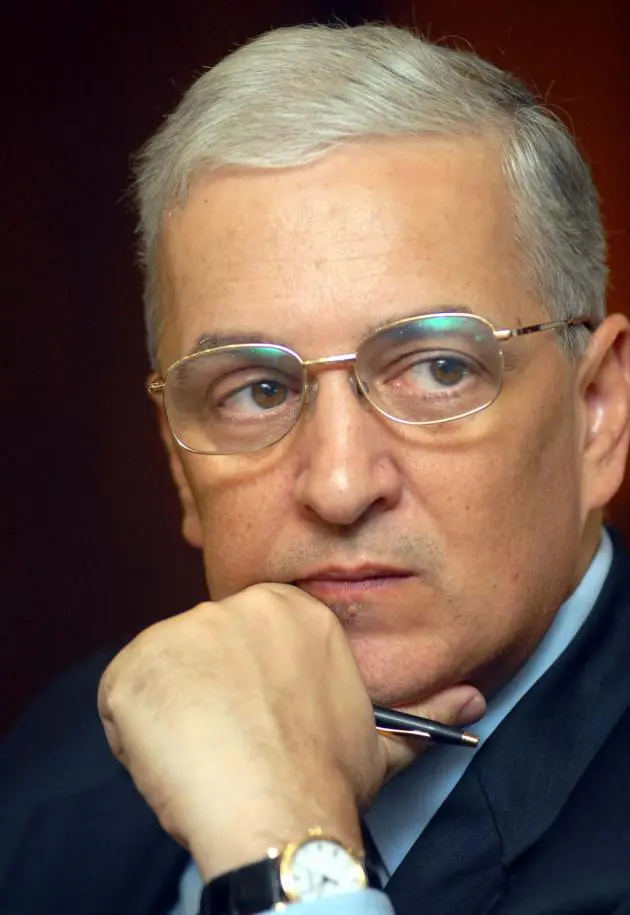
David R Nardone, president and CEO of Hemaraj Land and Development, a major Thai developer of industrial estates, says the firm is waiting for the right time to diversify into other Asean markets.
At this stage, it is benefiting from the country’s strong position in the automotive industry as Thailand gets set to join the Asean Economic Community (AEC) in 2015.
In the past few months, Hemaraj Land has also seen factory relocations from Ayutthaya and Pathum Thani provinces to its higher-ground properties in Rayong, Chonburi and Saraburi provinces.
Hemaraj is home to the factories of four major automobile companies, namely General Motors, Auto Alliances, Ford and Suzuki. Overall, there are a total of 270 automotive and related firms inside its industrial estates.
“We’re really quite a concentrated cluster of auto and related firms, so we’ve seen a massive amount of investment in the past two years. As much as 50 per cent of our business in the past nine quarters came from the auto sector.
“The sector’s outlook continues to be quite strong. From import substitution in the 1970s, the industry became an exporter after the 1997 crisis. Now it’s pretty much in balance in terms of domestic and export sales.
“We expect the country’s total capacity to rise to 3 million units in 2016 from the current 2 million units of one-tonne pick-up trucks, passenger cars and eco-cars. One third of our exports are now auto parts. If we look at the Japanese market of nine million vehicles, we could produce those tier-one parts here in Thailand for the Japanese market.
“Regarding the AEC, we’ve already seen the easier trading of auto parts and vehicles [among member countries].
“The production platforms for Thailand should be mainstream passenger cars and some small eco-cars as well as the one-tonne pick-up trucks, while Indonesia’s production platform should be SUVs or special utility vehicles.
“For Vietnam, the domestic market is still small and they may have to focus on the niche markets, but the broad-based supplies should come from Thailand and Indonesia, which currently has a domestic market of 800,000 vehicles.
“Besides the auto industry, our clients include the metal and steel industry [casting and forging], chemicals and petrochemicals, building materials, electronics and consumer-oriented products.
“For consumer products, companies want to tap the tariff and other benefits of the AEC by producing one category here in Thailand, another in Indonesia etcetera. As people have more disposable income, there will be a higher demand for consumer goods [across the 10-country grouping].
“We gain from the economies of scale in terms of production process and from the cross-border trading of those products.
“AEC integration in terms of import duties and ease of doing business results in more competitiveness for manufacturing in Thailand.
“However, it will take time for us to expand into other AEC markets as a developer. In my opinion, the biggest potential markets are Indonesia and Vietnam. For Myanmar, it will take longer as you need infrastructure first, and the initial types of industries in Myanmar may not be our target.
“At this stage, we aim to capture the opportunities coming to Thailand as a result of the AEC. For example, Ford is opening a new factory this month in Thailand for production of the Ford Focus.
“Initially, the capacity is about 150,000 vehicles. Certainly, it’s not all for the Thai market. They will also be sold in Indonesia, Singapore, Malaysia, Vietnam as well as other markets.
“In China, they mainly produce for the Chinese market, with a little for export. India is another large market, with Ford and GM setting up plants over there, but not much for export due to infrastructure and other bottlenecks.
“But Thailand is producing for a large domestic market and is already exporting to other Asean markets as well as Australia and South Africa.”
