
Get involved or get out of office


Play
The prime minister seems to regard foreign trips as more important than debating the highest law of the land; she must attend Parliament and demonstrate that she is indeed the country's leader
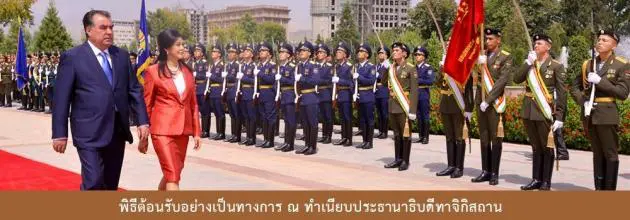
As deliberation of constitutional amendment goes on in Parliament, Prime Minister Yingluck Shinawatra is on a trip to Tajikistan. It is not the first time she has prioritised other activities over parliamentary business. The premier has missed several important debates that have led to critics calling into question her capability to lead the administration.
So far Yingluck has been absent from debates on the amnesty bill as well as the budget. Deliberately or not, this time it’s amendment to the Constitution. The highest law of the land might be amended and she is outside the country. Moreover, the debate on constitutional changes to the method of electing senators was initiated by her own Pheu Thai Party. Certainly this should deserve the attention of the premier.
Her absence from the House and her professed ignorance about various controversial issues were perhaps understandable during her first year in the office. She was new to politics and the public continues to accept and overlook her poor public-speaking skills. Things are different now that she has been premier for over two years, heading five cabinets. She has had more than enough time to learn about her role and obligations.
Yingluck has said she wants Parliament to find a solution on the amnesty issue, and she has correctly emphasised the status and importance of Parliament and the magnitude of the issue. But the fact that she doesn’t fully take part in the process contradicts her own statement. The amnesty bill demands her attention in the House. It directly involves the reconciliation process, which has been one of her party’s banner policies since Day 1 of her premiership. The House deliberation also involves members of her government and her exiled brother Thaksin Shinawatra, making it doubly important that she attends and participates. Despite all this, she has instead spent time meeting diplomats and chairing a meeting of the Women’s Empowerment Fund.
If the amnesty bill doesn’t seem to fit into her idea of a leader’s obligations, the budget bill didn’t capture her attention either. Again, she let the public down with only a brief appearance at that debate. It is as if she weren’t even partially accountable for the government’s spending. Her absence also shuts off opportunities for her to learn more about administering the country, and leaves her completely ignorant on the opinions of the opposition. Her lack of will to participate makes her look irresponsible. She is among the few world leaders who shrug off such responsibilities.
Her ignorance and lack of participation will become even more of a millstone as she enters her third year in office. The more she remains absent from the democratic process, the more it shows her failure to prioritise as leader of the country. She can remain tight-lipped on highly controversial issues when meeting the press, but deliberately avoiding significant parliamentary sessions is different. As head of the executive branch, she must fully understand her duties and responsibilities and assert herself in that role. She need not give eloquent speeches in the House in a bid to impress. All she has to do is to demonstrate willingness to be part of the process, especially when critical issues dictate the direction of the country.
Silence might have been golden during her honeymoon period, but she has reached the point where she can no longer justify passivity with Thailand at a political crossroads. The more she tries to stay beyond the problems, the more the public will cry out for her to either lead or resign. No country in the world can survive if its leader has no idea what direction their country is heading. If the charter amendment proposal is not important enough for her to attend parliament, what issue is?
