
Despite talk to the contrary, a new election is the only option
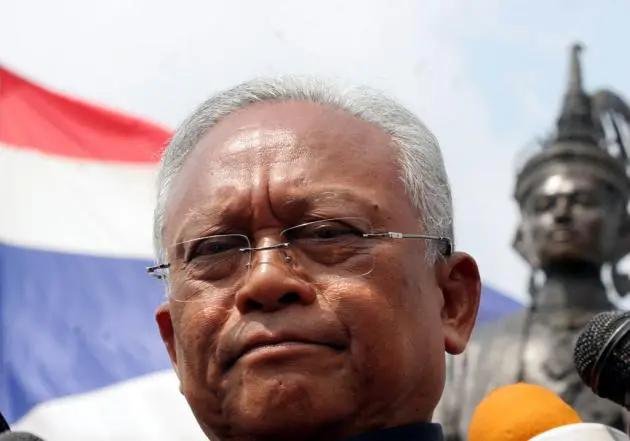


Suthep Thaugsuban's call for widespread civil disobedience might have been aimed at firing up the protesters at Democracy Monument. It was, at most, a symbolic gesture.
The threat of a violent confrontation between the two sides remains a possibility, with the “whistle-blowing protesters” camped out on Rajdamnoen Avenue and the red shirts holding their own rally at the other end of the capital. That threat has to be removed if we don’t want the country to fall off the cliff once again, as it descends on the slippery road of a new round of turmoil.
Premier Yingluck Shinawatra has made it clear that she will not step down to take responsibility for the controversial passage in the House of Representatives of the amnesty bill that would have offered blanket clemency to all parties concerned, including those convicted of corrupt practices.
The red shirts have called their own rally to counter the growing number of anti-government protesters, setting the stage for a prolonged stalemate if a political solution isn’t found to bring down the rising temperature.
The only practical option appears to be for the premier to dissolve the House and call a snap election, giving the power back to the people to decide who should be given the mandate to govern this country following the current crisis.
The opposition Democrats could pre-empt that move by filing a censure motion which would automatically block the premier from calling a new election. But the opposition leadership seems resigned to the fact that the only pragmatic way out of the current face-off is to ask the people to go to the polling booths once again, rather than face violent clashes on the streets if things follow the predictable course.
With a snap election, the amnesty bill, which has been rejected by the Senate as part of the Yingluck government’s hasty retreat, would be effectively “killed”. That would put to rest the widespread suspicion among anti-government elements that the ruling Pheu Thai Party could revive the bill after the mandatory six-month period expires.
The premier has also let it be known that dissolving the House isn’t on her mind just yet. Her strategists, probably headed by former premier Thaksin Shinawatra, may be trying to hang on to power because a snap election would rob the government of a chance of spending the Bt2 trillion planned for a string of mega-projects to build new infrastructure and the Bt350,000 million for flood-prevention schemes.
Some polls have also suggested that the blanket-amnesty bill has dramatically changed the political landscape and that if national elections were held today, the opposition Democrats could be more popular than the Pheu Thai Party.
But in the wake of the unprecedented outpouring of dissatisfaction against the government, Premier Yingluck isn’t in a position to pick and choose her own political timing anymore. Sooner or later, she will have to make the difficult choice of getting the people back to the polling
booths.
For the protesters, a new election will offer the opportunity for a “People’s Agenda” to pressure political parties into coming up with real commitments to fight graft and to put an end to any further attempts to make corruption a “pardonable act” in national politics.
Once politicians are forced to go back to the campaign trails, they will have to tell the voters what they intend to do with the current government’s highly controversial rice price pledging policy. Both Pheu Thai and the Democrats will have to come up with campaign platforms to tackle the infrastructure and anti-flood projects that have been targets of severe criticism in the past months.
The Democrats aren’t guaranteed a better election result either, despite the fact that the number of people joining the Rajdamnoen protest has been unprecedented. The opposition party also runs the risk of being accused of “manipulating the people’s genuine anger” for their own selfish political gain.
The silent majority has spoken out against the “tyranny of the majority” in the House. Now it’s time for Thais to decide the next move, not on the streets, but through the peaceful and respectable process at the ballot box.
