
DASTA marks a decade of connections and looks ahead to sustainable tourism


STMS 10 Years: Recognize, Reconnect, Reimagine
On October 19, 2026, Siripakorn Cheawsamoot, Director-General of the Designated Areas for Sustainable Tourism Administration (Public Organization), or DASTA, delivered the welcoming and opening remarks at an event entitled “A Decade of Connections, Moving Forward Together Sustainably” (STMS 10 Years: Recognize, Reconnect, Reimagine). He also gave a keynote address on “STMS and the Power of Collaboration: From Local Communities to Sustainable Tourism in Thailand”.

Kukiat Nimneam, Chief Inspector of the Department of Local Administration, delivered a keynote address entitled “The Role of Local Administrative Organisations in Advancing Thai Tourism towards Sustainability”. Organised by DASTA’s Office of Tourism Capacity Development, the event was held at TK Palace Hotel & Convention, with participants also joining online.

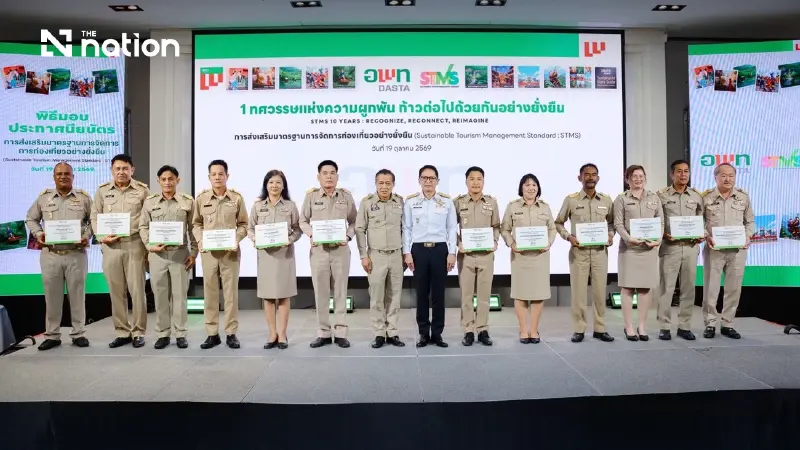
The programme included the presentation of 2026 Sustainable Tourism Management Standard (STMS) certificates to 13 additional local administrative organisations that had met the criteria. A panel discussion entitled “Lessons from Local Areas: Towards the Future of Sustainable Tourism” shared experiences from three areas: Nan Town Municipality, on improving urban quality; Khao Chaison Subdistrict Administrative Organisation in Phatthalung, on health and wellness tourism destinations; and Kok Sathon Subdistrict Administrative Organisation in Loei, on community-based tourism management.

The event highlighted the achievements of STMS, developed by DASTA in 2016 to help local administrative organisations manage tourism systematically across economic, social, environmental and management dimensions. Aligned with the criteria of the Global Sustainable Tourism Council (GSTC), the standard also supports the development of local authorities into destination management organisations (DMOs).

Over the next decade, STMS will move beyond helping local administrative organisations meet the standard towards using it to deliver tangible results. Under the “Graduation Plan & Exit Strategy” approach, DASTA will transfer responsibilities and expertise to local organisations that are ready to operate independently. The aim is for local authorities to use the standard to strengthen local economies, create opportunities for residents and entrepreneurs, and support the balanced, high-quality and sustainable growth of Thai tourism.
