
British Council Unveils "Next Generation Thailand" Research, Highlighting the Youth "Agency Gap" and 8 Key Policy Recommendations
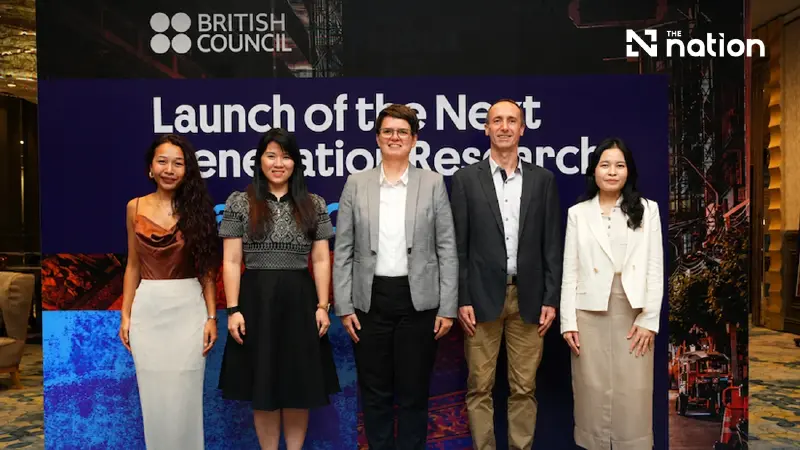


BANGKOK, 27 August 2026 — The British Council today released its latest global research report, "Next Generation Thailand," based on a nationally representative survey of 2,000 Thai youth aged 18–30, alongside qualitative insights from leaders across education, civil society, and the public sector. The report highlights a critical "agency gap": while young Thais possess high personal ambition and readiness across key life areas, they face systemic hurdles and structural exclusion from decision-making processes.

Ms. Sarah Rogerson, Country Director of British Council Thailand, stated: “The Next Generation programme has been delivered in more than 20 countries worldwide, including Viet Nam, Indonesia and Myanmar, with Thailand being the latest. Our survey of 2,000 Thai young people, representing diverse regions, genders and young people with disabilities, found that while young people see themselves as ready and capable of contributing to society, their voices are still not being heard sufficiently. The gap between ‘capability’ and ‘participation’, or the Agency Gap, is therefore a key theme of the report. The British Council will use these findings as a starting point for working with partners across English language, education, the arts and creative industries, creating spaces and opportunities for young people to help shape their own futures.”

Ms. Piyatida Khambunma, Founder & Research Lead at Iconic Research, presented the report’s key findings, structured into two parts:
Part 1: High Ambition — Youth Readiness and Redefining Success
1. Redefining success, with financial security taking priority: Thai youth place greater importance on financial security (62%) and good health and wellbeing (43%) than on marriage (10%) or moving out of their parents’ home (5%).
2. Positive outlook on the future and entrepreneurial ambition: 84% of Thai youth are optimistic about their career prospects and quality of life, while 89% identify English as an important language to learn. Meanwhile, 68% are interested in starting a business within the next five years.
3. Cultural pride and soft power: Thai cuisine (58%), Thai culture (44%) and Thailand’s natural landscape (39%) are among the cultural aspects young people are most proud of, highlighting their potential to contribute to Thailand’s soft power.
4. Civic and climate readiness: 88% of respondents reported being politically engaged to some extent, while 45% identified air pollution as Thailand’s most urgent environmental challenge.
Part 2: System hurdles – Three core barriers
1. Education & skills mismatch: Only 25% feel that the current education system adequately prepares them for work and life, while 35% believe society does not sufficiently value or reward educational achievement.
2. Entrepreneurship funding blocks: 53% see limited access to business information as a challenge, while 50% face a lack of capital and 46% lack sufficient business management skills.
3. Listening & inclusion gap: 51% feel their voices on national issues are rarely or never heard, while only 9% believe their votes directly influence national policy decisions. Meanwhile, 44% of employed youth with disabilities remain in insecure forms of employment, including part-time, self-employed and seasonal work.

To ensure these findings serve as a starting point for collaboration across sectors and contribute to tangible change, Dr. Matthew Sheader, Senior Justice and Youth Engagement Adviser at the British Council, outlined eight policy recommendations:
- Address perceived inequalities affecting women, disabled and LGBTQ+ youth.
- Institutionalise youth participation in policymaking and public decision-making.
- Reform education to support future-ready skills and equitable access.
- Promote gender-responsive employment and leadership opportunities.
- Expand provincial ecosystems for education, employment and entrepreneurship.
- Broaden safe and constructive pathways for civic and political engagement.
- Strengthen safe digital spaces for youth dialogue and expression.
- Integrate young people into Thailand’s soft-power and cultural-economy strategies.
“These eight recommendations are grounded in the experiences, challenges and aspirations of young people across Thailand. By involving young people in analysing the evidence and shaping the recommendations, the report provides government, education and business leaders with practical directions that can be adapted to respond to the needs of the next generation,” Dr. Sheader added.

Dr. Boontida Uapipatanakul, Associate Professor at Rajamangala University of Technology Thanyaburi, who participated in the Youth Task Force, said: " The finding that 68% of Thai youth want to start their own businesses reflects the growing importance of entrepreneurship as a career path for Gen Z. Expanding vocational pathways and regional entrepreneurship incubators is therefore essential to help young people, particularly those outside major cities, access funding and build sustainable businesses in their home communities."

Ms. Suchada Noonphakdee, Founder of Impact Intelligence Lab, shared her perspective as a youth voice: “Thai youth have the creativity, capabilities and readiness to take action. What they need are opportunities to develop their ideas, along with access to information, funding, mentors and relevant networks. If all sectors create space for young people to participate in developing innovation, particularly in artificial intelligence, climate technology and sustainability, the next generation can create new businesses and opportunities for Thailand.”
Download the Full Report
The full Next Generation Thailand research report is available for download on the British Council website at https://www.britishcouncil.org/research-insight/next-generation-thailand
