
Property firms focus on senior citizens, 'green' living
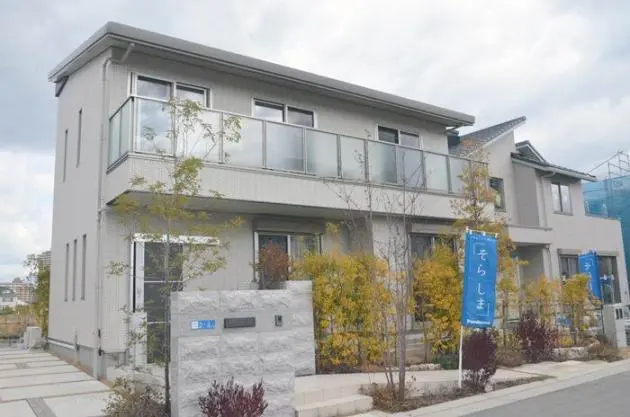


Catering to "green" living and senior citizens are the new focus areas for residential developers in a period when home-buyers are more concerned about the environment, the cost of living, and the quality of life as the country faces an increasingly "g
Pruksa Real Estate chief operating officer Lersak Chuladesa said after visiting Japanese company PanaHome’s innovative Smart City Chio-Ashiya project in Osaka last week that the trend for residential design had to take into account concern about the environment and customer demand, especially when it came to catering to ageing family members and their quality of life.
"We are interested in developing smart homes under the energy-saving concept, and intelligent residences to serve the middle- to upper-income market with homes priced above Bt5 million, as they have the purchasing power to pay for innovative housing to serve their demand," he said.
Pruksa’s first energy-saving project will launch this year under the brand, The Plant, on Pattanakarn Road in Bangkok.
Focusing on the mid- to upper-income market, this will be a pilot project for future developments, said Lersak.
Under the PanaHome concept at Smart City Shio-Ashiya, each of the Japanese company’s detached houses is designed to be a safe home, a healthy home, an energy-saving home and a smart home by using innovative technology to manage the property’s electrical system.
PanaHome’s houses each occupy a 50-square-wah (200 square metres) plot and comprise 120 square metres of usable space.
They cost 65 million yen (Bt18 million) apiece, with construction costs accounting for Bt35 million. Another 3 million yen of the total is the cost of the solar system, which has a generating capacity of 12 kilowatts, and 1.5 million yen is for installation of the smart-home system, which controls the electrical system.
Wanchai Kunanantakul, chairman and president of Siam Steel International, and who also visited the PanaHome project last week, said his company provided solar panels to Panasonic in Japan for use in detached housing and condominiums.
The company is also ready to produce reasonably priced panels for Thai industrial use and for property developers to use in their residential projects, he said.
"If the government had a clear policy to purchase solar electricity from residential sources, it would encourage home-owners to install solar panels at their properties," he added.
Noriyuki Yasuo, managing director of Panasonic (Thailand), said the company planned to launch its solar-power system in Thailand within the next year by offering small units capable of producing 6 kilowatts of electricity.
These would cost Bt600,000 per system to import from Panasonic’s Malaysian plant.
The company also plans to launch a smart-home system for remote control of electricity usage in the Thai residential market in the next year, said the MD.
"We are confident that Thai home-owners are interested in buying technology that will improve their quality of life," Yasuo added.
Solutions for seniors
Besides the green residential concept, property developers are also increasingly interested in developing housing to meet the needs of the growing ageing population.
Japan is one such greying country, with those aged over 65 now accounting for 25 per cent of the population, but with a combined purchasing power that contributes 65 per cent of overall consumer spending, according to Panasonic ES.
Panasonic develops products for the elderly under the concept of "serving senior people to live with convenience by themselves".
Panasonic AGE-Free Life Tech launches more products each year to serve demand from the elderly, doubling growth since 2012, the company has reported.
Meanwhile, Thailand’s property firms are also interested in developing homes that serve this market segment.
For example, LPN Development has joined with the Sawangkanives Foundation to develop a condominium for senior citizens in Samut Prakan province, and is also developing its condominium projects to comprise facilities to serve this segment in Pattaya.
"We are researching and developing our condominiums to have facilities that serve all members of the family, for which three are three generations – kids, working people, and older people who have retired," said the company’s managing director, Opas Sripayak.
The current trend in the sector is to expand into developing projects under the green concept, and homes that are safe and serve all family members during a period in which the average age of Thailand’s population continues to rise, he said.
Pruksa’s Lersak said property firms had to develop homes that serve the needs of all generations, and that meet the needs of those willing and able to pay for innovation.
"We plan to develop innovative housing options that customers can select from, such as adding an energy-saving system and/or a smart-control system, and special design for the ageing. If they want to add these things to their new home, they can place an order for us to do. This is our new business model for the next stage of development," he added.
