
Govt incentives considered for development of homes for elderly


Play
THE FINANCE Ministry may look into providing incentives for property developers to build homes for senior citizens as the country becomes an ageing society, Deputy Finance Minister Wisudhi Srisuphan said yesterday.
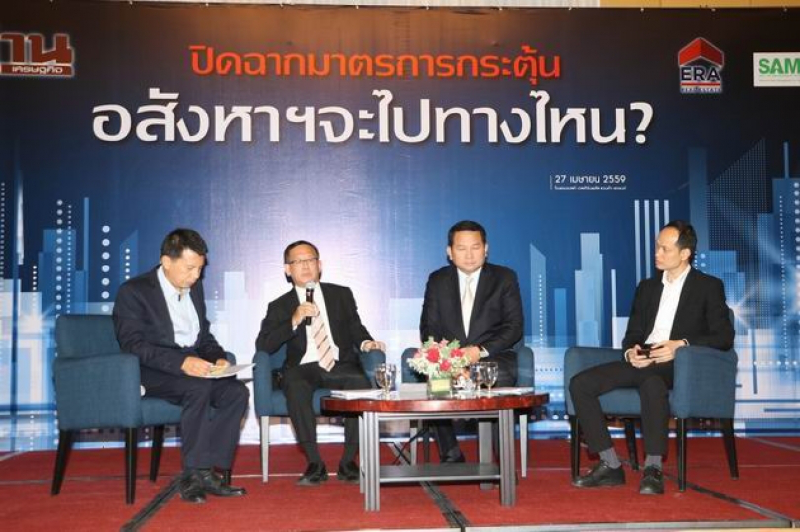
After opening a seminar on trends in the property market with the expiry today of the government’s real-estate incentives, he said the government wanted property developers to build innovative homes for ageing and disabled people.
The Board of Investment offers incentives for makers of innovative products. If property firms developed innovative homes that matched the BOI criteria, they could be eligible for similar tax-break incentives, he said.
But even if that is not practical, developers could propose to the government what kind of support they would need in order to build such homes, Wisudhi said.
“We cannot say we will have direct incentives for property firms that develop homes for ageing citizens, but if the demand is there and property firms develop homes to serve this market in the future, we may study what we can do,” he said.
Meanwhile, the government has no plan to extend the stimulus package after it expires today, because the property market has shown signs of a strong recovery over the past six months, he said. The stimulus measure reduced transfer and mortgage fees to 0.1 per cent.
After the stimulus went into effect last October 28, the property market in the final quarter of 2015 recorded growth in new home registrations of 13 per cent compared with the same period of 2014. Presales in the quarter also grew by 21 per cent year on year.
According to a survey by the Thai Condominium Association, the total value of presales since October 28 in metropolitan Bangkok was Bt300 billion as of yesterday, 20 per cent higher than the earlier estimate of Bt250 billion.
“Up to Bt50 billion of presales are attributable to the government measure,” association president Prasert Taedullayasatit told the seminar, which was organised by Thansettakij newspaper.
As the government has decided not to extend the measure, he believes that the market will change from promoting the sale of inventory, which occurred from the last quarter of 2015 until the first quarter of this year, to launching new residential projects.
“We will see property firms launch a number of residential projects worth more than Bt200 billion in Bangkok and its suburbs during the rest of the year,” he said.
Samma Kitsin, director-general of the Real Estate Information Centre of Government Housing Bank, believes that the property market will drop by 20-30 per cent in the two to three months after the stimulus measure expires today, and then the market will recover and return to normal.
Kavee Chukitkasem, deputy managing director of Kasikorn Securities, said property-industry stocks did not benefit from the stimulus measure because it was short-term, and this type of stock is for long-term investment of five to 10 years.
Property firms now will revise their business in line with changes in the country’s economy by balancing their portfolios between income from sales of residential projects and recurring income from services such as hotels, offices and retail outlets, he said.
