
Co-working spaces proving to be popular with small businesses
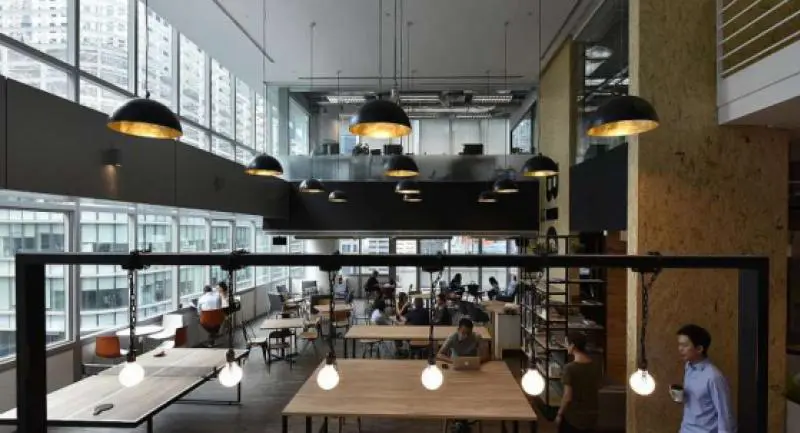


DUE TO A RISING DEMAND, co-working spaces have become a new model to serve start-up businesses and entrepreneurs in most of Asia, including Thailand.
“We can run the business from my home, but we also need a temporary office space for interaction with our customers. Co-working space is a new model that serves our demand and helps save rental cost for an office space. This also helps us manage our business costs,” said a start-up business owner, who uses temporary office space at the Small and Medium Enterprises Development Bank.
Surachet Kongcheep, associate director of research at Colliers International Thailand, said the concept of co-working space is finding favour among freelancers, start-ups and SME businesses that may not be ready or confident enough to commit to a lease in an office building. These spaces provide them with a more formal space, allowing a more professional presentation of their business in a convenient manner.
Surachet added that co-working spaces are also more relaxed than serviced offices, and more importantly, they generally go at a low rent. These spaces generally provide the core essentials of a general office space, such as a worktop, a high-speed Wi-Fi connection, a meeting room as well as access to printers and other office equipment.
Co-working spaces have been booming globally over the past few years, and are popular with those whose work relies heavily on the Internet as well as with frequent travellers who value the freedom of being able to work from anywhere with a good Internet connection. It is also becoming an alternative for those who value greater flexibility and proving suitable for freelancers who do not need to work out of traditional offices.
This concept has proven to be very popular in the United States as well as in Europe.
A joint survey conducted by Hubba Co Ltd and Colliers International Thailand Research shows that now Thailand has 120 co-working spaces compared to none in 2011.
Some operators of co-working spaces in Thailand are continuing to expand into new locations with new formats, often in partnership models.
According to research by CB Richard Ellis (CBRE), there has been an enormous growth in co-working spaces in Bangkok and the rest of the Asia-Pacific region over the last few years. This has come about by the start-up boom, demand for flexibility from employees and corporates, advances in technology as well as its appeal as a cost-effective alternative to traditional offices. There are around 300 co-working spaces in the Asia-Pacific region.
Competition among co-working space operators is also intensifying as they open more centres, lease larger spaces and increase their presence in prime areas. CBRE research shows that the key to running a successful co-working space is creating an experience, building a community and facilitating business and learning opportunities for end users.
