
PDP 2026 maps 50.9GW power build-out for green economy
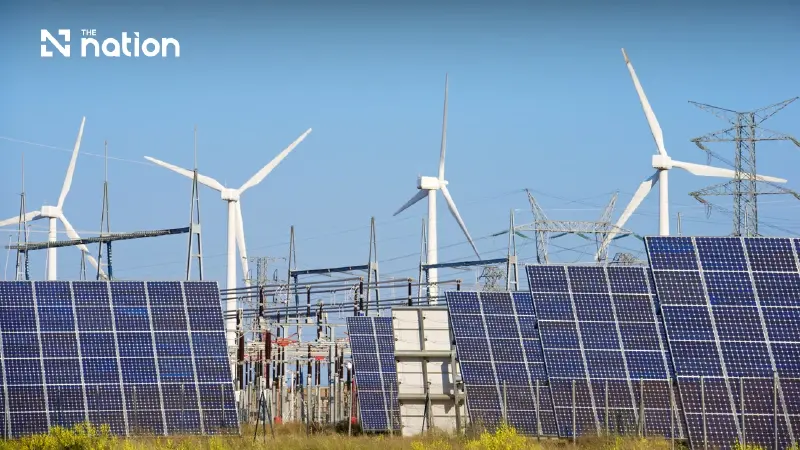


Thailand’s draft PDP 2026 proposes 50.9GW of new capacity by 2037, a flexible green grid and three routes to net-zero power by 2050.
- Thailand's draft Power Development Plan (PDP 2026) outlines the addition of approximately 50,900 megawatts (50.9GW) of new power capacity in its first phase, from 2026 to 2037.
- The plan is designed to support a green economy by aligning with Thailand's accelerated 2050 net-zero emissions target and aims to cut power-sector CO2 emissions by over 75%.
- The initial 50.9GW build-out will be dominated by clean energy technologies, including 24,300MW of solar power, 2,700MW of wind power, and 14,500MW of battery storage systems.
- This expansion is driven by new demand from data centers, AI, and electric vehicles, and aims to transform the national network into a "Green and Flexible Grid".
Thailand’s draft Power Development Plan for 2026–2050, or PDP 2026, sets out a major restructuring of the country’s energy system, including about 50,900 megawatts of new capacity in its first phase and a substantial increase in clean power.
The plan is aligned with Thailand’s third Nationally Determined Contribution, or NDC 3.0, which brings forward the country’s target for net-zero greenhouse-gas emissions by 15 years to 2050.
The draft has been approved by the PDP 2026 drafting subcommittee, chaired by Thosaporn Sirisumphand, and is due to be opened for public consultation on September 8, 2026.
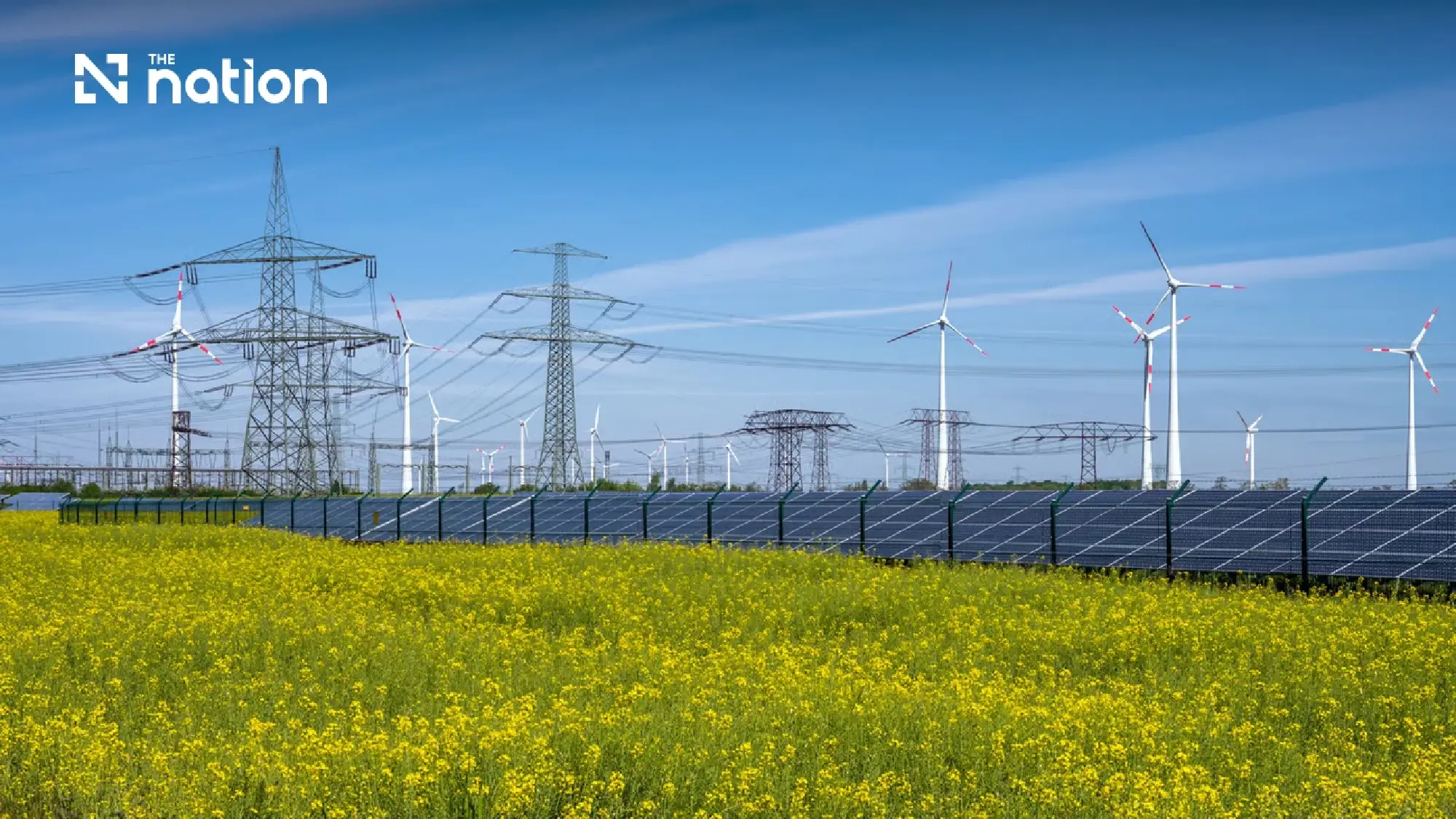

A shift towards a green and flexible grid
Wattanapong Kurovat, director-general of the Energy Policy and Planning Office, said PDP 2026 represented a major paradigm shift in Thailand’s energy planning.
The country must respond to climate change, international trade measures and a domestic electricity-consumption structure that is changing fundamentally, he said.
Under the traditional approach, system security was assessed principally through the reserve margin. The electricity network was centralised, generation depended heavily on fossil fuels, and consumers played a passive role.
PDP 2026 instead envisages a Green and Flexible Grid, combining renewable energy, battery energy storage systems, or BESS, and firm low-carbon generation.
The national network would be upgraded into a smart grid, while electricity users would become active consumers or “prosumers” capable of producing power and providing services to the system through technologies such as rooftop solar and electric vehicles.
Data centres and AI could add 8,800MW of demand
Thailand is also preparing for new forms of electricity demand, particularly from investment in data centres and artificial intelligence.
Under the high-growth scenario, electricity demand from data centres and AI-related operations could reach 8,800MW.
Other factors include the expansion of electric mobility and the growing number of consumers installing rooftop solar systems to generate their own electricity. These developments will change the network from a one-directional system into one with power flowing in both directions.
The draft also replaces reliance on the reserve margin alone with the Loss of Load Expectation, or LOLE, as a measure of system security.
LOLE is intended to provide a more accurate picture of reliability and supply risks as the proportion of variable renewable energy increases.
Power-sector emissions to fall by more than 75%
PDP 2026 aims to reduce carbon dioxide emissions from electricity generation from the current level of about 80 million tonnes of CO2 to 19 million tonnes by 2050.
The reduction of more than 75% is aligned with Thailand’s Long-Term Low-Emission Development Strategy.
Power-sector emissions are projected to fall to about 74 million tonnes of carbon dioxide equivalent in 2037 before declining to their lowest level of 19 million tonnes in 2050.

Electricity demand forecast to reach 79,696MW
The draft forecasts electricity demand of 57,273MW in 2037, rising to 79,696MW by the end of the plan in 2050.
Growth will be driven partly by electric vehicles and large-scale digital infrastructure, particularly data centres, whose demand could reach approximately 8,800MW.
Installed generating capacity is projected to stand at around 115,000MW in 2037 before rising to between 185,000MW and 253,000MW by 2050.
Much of the additional capacity would come from renewable generation and battery storage, which would provide flexibility and stability as more intermittent clean energy enters the national grid.
Clean energy is expected to account for approximately 49% of the electricity system in 2037, increasing to between 65% and 89% towards the end of the plan.
The energy mix would include solar power, onshore and offshore wind, battery storage, demand response and distributed energy resources, or DR/DER.
Small modular nuclear reactors, carbon capture and storage, and other emerging energy technologies would also be introduced to improve the readiness and efficiency of the smart grid.
First SMR scheduled to enter system in 2037
New generating capacity will be divided into two main periods.
The first, covering 2026–2037, is described as the Common Transition Capacity phase. The draft states that around 50,900MW of new capacity would enter the system.
The listed additions comprise 24,300MW of solar power, 2,700MW of wind power, 14,500MW of BESS and 2,660MW of demand response and distributed energy resources.
An initial 300MW of small modular reactor capacity would begin supplying electricity to the grid from 2037.
The system would also add 9,100MW of combined-cycle gas turbine, or CCGT, capacity. These plants would provide firm power when renewable sources were unable to generate sufficient electricity.
Three strategic options for 2038–2050
For the second period, from 2038 to 2050, the draft presents three strategic options. The direction would be selected according to the future readiness and costs of different technologies.
Option 1: CCS-driven system
The first option would place greater emphasis on carbon capture and storage alongside electricity generation.
It would add 76,350MW of new capacity, including 15,400MW of CCGT generation combined with CCS capable of capturing 47 million tonnes of carbon dioxide equivalent.
Renewable additions would comprise 4,590MW of solar and 7,660MW of wind power. The option would also include 40,000MW of battery storage and a further 8,700MW of small modular nuclear reactors.
This approach is intended to keep emissions as low as possible where domestic renewable-energy development faces limitations.
Option 2: Renewable energy-led system
The second option, known as RE-led, would maximise the use of renewable energy without relying on CCS.
The draft puts capacity under this approach at around 149,900MW, including 37,000MW of solar power, 50,000MW of wind power, 40,500MW of battery storage and 8,700MW of small modular reactors.
Option 3: Balanced route to net zero
The third approach, Balance Net-Zero, would seek to contain electricity costs for consumers while maintaining energy security.
It is designed to avoid excessive dependence on any single technology.
The option would provide approximately 96,250MW of capacity, comprising 16,590MW of solar power, 20,660MW of wind, 40,500MW of BESS and 8,700MW of small modular reactors.
It would retain 9,800MW of CCGT capacity, alongside CCS capable of capturing approximately 20 million tonnes of carbon dioxide equivalent.
Blueprint outlines broad net-zero capacity range
Under the overall Blueprint to Net Zero, Thailand’s combined electricity capacity is presented as ranging from 127,200MW to 194,800MW, depending on the strategic path selected.
Solar capacity would range from 28,990MW to 61,300MW, while wind capacity would range from 10,360MW to 52,700MW.
Battery storage would total between 40,000MW and 40,500MW, while demand response and distributed energy resources would account for 14,000MW.
Small modular reactors would provide 9,000MW, with CCGT capacity ranging between 16,800MW and 24,500MW.
The use of CCS would range from none under the renewable-led option to the capture of as much as 47 million tonnes of carbon dioxide equivalent under the CCS-driven path.
Direct green-power purchases to be opened up
In addition to expanding clean generating capacity, PDP 2026 proposes structural changes intended to support green manufacturing and give the private sector a greater role in the energy system.
One measure would introduce Third Party Access, or TPA, allowing third parties to use or connect to the electricity network.
The plan would also permit Direct Power Purchase Agreements, or Direct PPAs, enabling electricity producers and users to trade green power directly.
These measures are intended to support industries such as smart factories and data centres that require electricity from 100% clean-energy sources.
Smart meters and virtual power plants planned
Thailand’s electricity system would also be upgraded into a digital grid.
Smart meters would be installed for 100% of large electricity customers, alongside the development of digital substations.
New service markets would be introduced, including Virtual Power Plants, which aggregate smaller energy resources so they can operate collectively within the electricity system, and demand-response programmes that reward users for adjusting consumption when needed.
The changes would transform private companies and members of the public from electricity purchasers alone into participants capable of supporting the stability and flexibility of the national grid.
Source: Thansettakij
