
Swiss glaciers lose over 5% of their ice volume in 2026
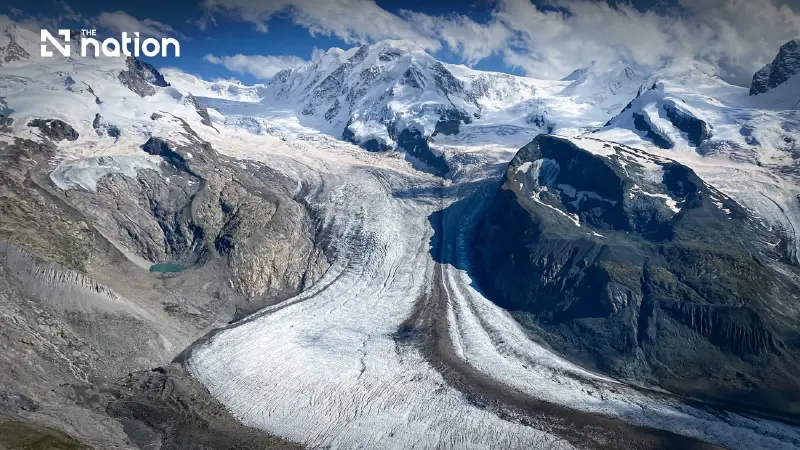


Switzerland’s glaciers have lost almost 20% of their ice volume in five years, with intense heat and low winter snowfall driving the 2026 decline
Glaciers in the Swiss Alps lost more than 5% of their ice volume in 2026, marking the second-largest annual decline since 1950. Glacier Monitoring in Switzerland (GLAMOS) reported the findings on Thursday (October 1).
GLAMOS described a “devastating” year for Switzerland’s glaciers, attributing the losses to intense heatwaves between May and September following a winter with below-average snowfall.
According to the glacier monitoring findings, the freezing level—the altitude at which temperatures reach 0°C—was above 4,000 metres on 76 days between May and September, more than twice the average.
Snow had disappeared even at elevations of 3,500 metres above sea level in the Swiss Alps by September. GLAMOS warned that Alpine glaciers could not survive in the long term under those conditions.
The longer-term retreat of glaciers has left Switzerland with almost 20% less glacier ice by volume than five years ago, according to GLAMOS.
Between July and September, Switzerland’s glaciers lost around 2.2 trillion litres of water. That was more than four times the annual drinking water consumption of all Swiss households.
