
TOPIC aims to lead region in R&D


Play
NSTDA sets up centre to take a guiding role in organic, printed electronics
In an attempt to make the country a hub for organic and printed electronics research and development in Asean, the National Science and Technology Develop-ment Agency (NSTDA) has established the Thailand Organ-ic & Printed Electronics Innovation Centre (TOPIC) as a facility for private partners to conduct and commercialise research.
The move follows the NSTDA’s years of research and development on oxygen-free graphene ink, the technology for which has already been licensed to local firm Innophene Company.
Adisorn Tuantranont, director of the Nano-electronics and MEMS Lab at the NSTDA’s National Electronics and Computer Technology Centre (Nectec), and the director of TOPIC, said the centre is set to position Thailand as a hub of organic and printed electronics research and development.
Organic and printed electronics research is an emerging technology that has huge potential for many industries including printing, publishing, packaging, lighting and electronics. It is environmentally friendly, making use of organic material rather than silicon electronics.
Thailand has many industries that stand to benefit from organic and printed electronics technologies. The primary focus of TOPIC is printing and packaging. The centre aims to help these industries survive in the era of electronic books and portable devices, especially tablets and e-readers. Demand for printing has declined continuously. Printing businesses have had to adjust themselves and improve their technology. Organic and printed electronics technology is the answer, Adisorn said.
Adisorn said the centre will provide research facilities as well as resources for researchers from across the four main centres under the NSTDA: Nectec; the National Centre for Genetic Engineering and Biotechnology (Biotec); the National Metal and Materials Technology Centre (MTEC); and the National Nanotechnology Centre (Nanotec).
Moreover, the centre also offers research services tailored to the requirements of private businesses, as well as linking them with the centre’s networks with universities.
"At the centre, we can do the research to serve the private sector’s needs and do co-research and development with both the private sector and universities under the consortium model. Another objective of the centre is to provide technology and knowledge transfer to the private sector, especially start-up companies that develop products with science, technology and innovation," Adisorn said.
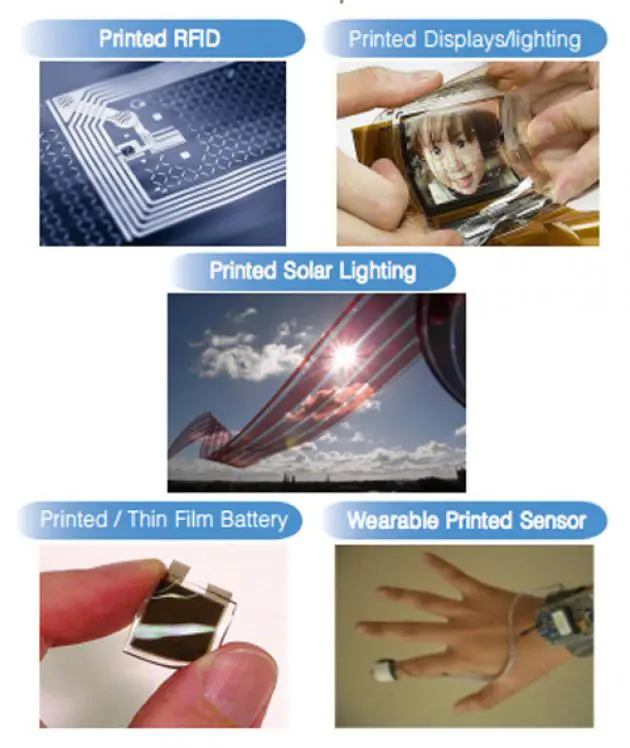
Businesses expected to immediately and directly benefit from this kind of technology include firms producing smart packaging, smart magazines, printed antennas (RFID), printed sensors and printed batteries.
By the end of this year, the centre aims to recruit 20 members, to be engaged in co-research and development with 10 incubated companies.
The centre is also a member of the Organic Electronics Association (OE-A). The association is an information and communications platform for companies and research institutes active in organic electronics as an emerging technology. The beauty of being a member of OE-A is that TOPIC can collaborate with OE-A members by exchanging information and experiences and cooperating with them on technical projects.
OE-A board member Reinhard Baumann said that currently, OE-A has 188 member companies and research institutes. OE-A is a huge organisation of companies and institutes that have the same interest in developing this new industry, he said, adding that every member can benefit from the network.
Thailand is the fourth country from Asia and the second country in Southeast Asia to join OE-A following Taiwan, Korea and Singapore.
"We hope to attract investment for research and development in this kind of technology here in Thailand," said Adisorn.
"Our goal for organic and printed electronics research and development is to focus on printing and packaging first, since Thailand has large industries. Our strength is that we have both demand and supply sides in organic and printed electronics. Meanwhile, Japan and Korea are focusing on the display industry. That is why we have to differentiate ourselves," Adisorn said.
Komkrit Sajjaanantakul, managing director of Innophene, a start-up company founded in 2011 and licensed to make oxygen-free graphene conductive ink, said this and organic and printed electronics are game-changing technologies.
"Our team of scientists has discovered and patented how to produce quality and affordable graphene conductive ink with green technology in order to create near-zero waste and low energy consumption in our production," Komkrit said.
He added that the firm had competitive advantages as a world-class graphene conductive ink manufacturer. The company can offer better performance, competitive pricing and full technical support to many related industries, he said.
There are five industrial segments that the company focuses on: RFID; electronic and mobile components; smart-objects industry including smart-card applications and E-books; alternative energy such as solar cells and batteries; and medical devices, focused on bio-sensor applications.
