
Technology will continue to define top trends in the coming year


Play
Internet of Things, hybrid cloud to take spotlight
Several technologies and trends are expected to play crucial roles in the new year, such as the “Internet of Things”, e-commerce, mobility, the hybrid cloud, and the government’s dream of a “digital economy”.
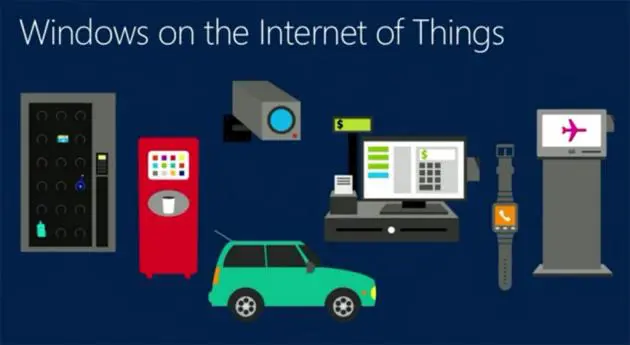
In 2015, businesses will strengthen cyber-security, the Internet of Things (IoT) will go mainstream, and companies will find that machine learning will give them an edge over their competitors, said Haresh Khoobchandani, managing director of Microsoft Thailand.
IoT will no longer be about connecting “things” but about the efficient and smart use of data accessible through cloud computing. Businesses will be able to act on key insights, improve customer service, reduce time to market, enable new innovations in product and service development, and ultimately transform companies with new business models and revenue streams.
Businesses will begin to utilise big-data services fully in the cloud for data-driven decision making. This utilisation will be driven through broader access to machine learning, massive computing power connecting systems and services, and the explosion of online data.
“On the cyber-security front, we’ve seen how large corporations and consumers have fallen victim to cyber-attacks in the past year, compromising the privacy and security of their information online. Businesses will do more to fight the increasing threat of hackers and prevent huge losses.
“We will also see policy and technology developments that will help businesses beef up security on premises, in the cloud and across mobile devices.
“At Microsoft, the greater transparency and protection of our customers’ content and personal data are what we continuously strive towards. We do not scan customers’ communications for the purposes of creating advertising products, and we continue to expand encryption across our services and enhance the transparency of our software code,” Khoobchandani said.
As Thailand moves into the digital economy, he added, it is essential to ensure the adoption and implementation of robust regulatory regimes that provide a high degree of privacy protection, both to combat emerging cyber-crimes and to facilitate the international data transfer needed for true global integration.
Strong incentives to protect intellectual property rights are also critical to protect and foster the innovative capacities of domestic and foreign firms, he claimed.
E-commerce competition
In 2015 globally, retailers are expected to see e-commerce sales rise, with the Asia-Pacific region is expected to contribute the lion’s share.
As savvy retailers broaden their horizons to further drive growth, the coming year will provide rich pickings for retailers that make the right moves and embrace new and targeted strategies to win the hearts of consumers.
Pawoot Pongvitayapanu, founder and managing director of Rakuten Tarad.com, has outlined his predictions for how the global retail industry over the next 12 months will be dominated by four main trends: online promotions, personalised promotions and marketing, niche markets, and mobile commerce.
Online promotions will get serious as more e-commerce merchants look to establish themselves in the market and build a loyal customer base. There will be greater attempts to lure customers through discounts and giveaways.
Meanwhile, technology has developed in a way that brings measurable benefits to merchants. Merchants can use this great marketing intelligence to create targeted and personalised promotions that customers want and can have a significant impact on sales and customer retention.
As niche markets blossom, online merchants will use technologies such as data analytics to gain invaluable insights. Specialised online stores, from plus-size clothing to do-it-yourself tools, will also continue to attract loyal followings of shoppers willing to spend on quality products.
Meanwhile, more consumers are making the shift from desktop-based shopping to discovering products and making purchases via mobile devices. This will, in turn, drive greater adoption of omni-channel commerce, as businesses seek to deliver a seamless experience across multiple platforms.
Facebook believes the year 2015 will see the mobile world led by the Asia-Pacific region. People are on mobile devices all day, every day. This region is home to the largest mobile-phone markets worldwide, with 2.6 billion users in 2014, and people will continue to come online via their phones, according to eMarketer.
Not only are people in Asia buying phones, they are heavily engaged with their devices. Across Asia, time spent on mobile devices has eclipsed TV, ranging from 44 per cent of media time spend in Japan to 60 per cent in Thailand, according to Millward Brown’s AdReaction survey.
The average person checks his or her mobile device 100 times a day and checks Facebook 14 times a day, according to International Data Corp’s “Always Connected” report. This makes mobile devices a crucially important channel for business and brands to connect with people, especially in the Asia-Pacific region.
Dan Neary, Facebook vice president for Asia and the Pacific, said this was a primary region of growth since it is made up of many different countries and cultures, is home to two-thirds of the world’s population, and is also likely to be the region where the next billion Internet users come on board.
This is also a mobile-first region. For many people in this part of the world where feature phones are more prevalent than smartphones, their first Internet experience is on Facebook. He added that this was especially true for Thailand, with more than 27 million people accessing the service each month, making it the ninth-largest Facebook country worldwide.
An indication of how fast Facebook is growing in the Asia-Pacific region is in the latest quarterly earnings report. Asia saw 28-per-cent year-on-year growth in daily active people to 242 million, and 21-per-cent growth in monthly active people to 426 million.
“Over the last year, we have invested in programmes to help educate agencies and businesses on how they can leverage our platform to drive better returns. We have seen how brands and businesses, particularly in Thailand, are now able to run campaigns more efficiently and effectively on our platform and be able to reach targeted audience groups,” Neary said.
Hybrid cloud
VMware outlines three key areas of information-technology deployment businesses must consider in 2015 to build a software-defined enterprise. They are a software-defined data centre, hybrid cloud, and end-user computing, said Chawapol Jariyawiroj, country manager of VMware Thailand and Indochina.
Software-defined networking, storage, data centres and security will start to mature next year, while increased data consumption and creation have sparked the need for businesses to look to the cloud. The hybrid cloud model will provide them with an approach to extend their private-cloud data centres into the public cloud seamlessly and without compromise.
He added that in 2015, US-based Forrester Resarch expects to see a significant number of businesses across the Asia-Pacific region embrace hybrid tablet/laptop devices.
Digital economy
The coming year will see several factors that will enhance the IT industry, especially the government’s policies that have been pushing forward many sectors and the increase of consumer confidence. In addition, the rising digital economy will increase demand for IT ranging from data centres to individual devices.
Sontiya Nujeenseng, country manager of Intel Microelectronics (Thailand), said the IT industry would contribute countless opportunities for doing business or even expanding businesses into the international level.
Meanwhile, small and medium-sized enterprises play a crucial role in the Thai economy, and IT can be the foundation supporting such businesses.
However, to achieve this, a skilled workforce is needed that can transform business and product development to excite the market.
“In my view, the digital economy will enhance the capabilities of SMEs and prepare Thai people to have full potential over the AEC [Asean Economic Community] in 2015,” Sontiya said. “Furthermore, when Thailand enters a full digital economy, the strong infrastructure will lead the country to enjoy state-of-the-art innovations that elevate their way of living, such as smart city projects.
“We at Intel continue to drive innovation to meet the needs of people in this digital era. In parallel, we are committed to supporting the [military regime’s] road map for building the digital economy to drive the country forward.”
