
Conference to showcase VMware 'One Cloud, Any Application, Any Device' architecture


Play
"One Cloud, Any Application, Any Device", the latest architecture for information technology created by US-based software company VMware, will show how organisations can transform to a brave new model of IT at a global conference in San Francisco late thi
Hosted by VMware, “VMworld 2015 US” – a conference for virtualisation and cloud computing – will be held under the “One Cloud, Any Application, Any Device” theme, a model which will help businesses to grow strongly and vigorously, said an executive of the company.
Chawapol Jariyawiroj, country manager, VMware Thailand and IndoChina, explained that the idea of the “One Cloud” model is to allow businesses to develop and run any application securely from anywhere.
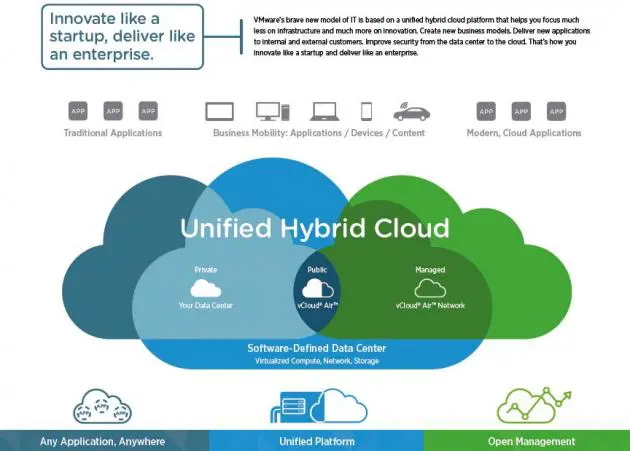
VMware earlier announced the industry’s first unified platform of virtualised computing, networking and storage for the hybrid cloud.
Defined in software, VMware’s platform will enable customers to create one consistent environment across the private and public cloud to run, protect and manage any cloud-native or traditional application.
The platform will also offer customers openness and choice in how to build and manage their applications and cloud environments based on their specific needs.
Chawapol said bringing to market a unified platform that united on-premises and public clouds with open management would enable rapid development, automatic deployment and secure consumption of any application, anywhere.
“With our ‘One Cloud’ platform, our customers will be able to use all of three types of clouds services we provide – private, public and hybrid,” he said, adding that this was the flexibility of the platform, which was fluid.
“No matter the type, choice or cloud consumption model, this unified platform brings the flexibility and choice to create new or update existing applications, with greater ease of manageability and security across the business,” he said.
The new architecture will enable IT organisations to operate on- and off-premises clouds as a single, unified environment, he added.
The world’s largest virtualisation-specific event will be held at the Moscone Centre in San Francisco from August 30 to September 3.
It is expected to attract around 23,000 attendants from a mix of IT technical professionals and IT business decision-makers from organisations of all sizes, representing a wide range of industries.
The event will provide updates about the latest products and cloud-based services as part of VMware’s cloud infrastructure and management, cloud application platform, virtualisation technology, and end-user computing vision, the country manager explained.
The participants will have a chance to discuss in sessions how VMware is enabling business mobility and how customers are leveraging the hybrid cloud, and much more.
VMware is the global leader in virtualisation, cloud infrastructure and business mobility solutions.
With 2014 revenues of US$6 billion (Bt211 billion), VMware has more than 500,000 customers and 75,000 partners.
Chawapol said his company built infrastructure that facilitated enterprises to drive mobility and cloud.
“Good and capable infrastructure must provide technology and bring applications to users. We need to make applications that have reliability, flexibility in management, and security,” he stressed.
Virtualisation technology
Before cloud, virtualisation technology was the area in which VMware first innovated as a company, and one in which Chawapol said it had made the “breakthrough” and had been a game-changer for the competition in the industry ever since.
Virtualisation is at the heart of VMware’s “One Cloud, Any Application, Any Device” architecture, and is the single most effective way to reduce IT expenses while boosting efficiency and agility – not just for large enterprises, but for small and midsize businesses too, he added.
Fifteen years ago, the company initiated computing virtualisation, and now it includes networking and storage, which means everything in a data centre can be virtualised so that users can buy much cheaper hardware, he said.
“We are no longer depending on hardware. Hardware becomes just a body, but software is the soul and intelligence. We build software-defined data centres, the idea of which is to put all the brain and technology into the software instead of into hardware,” he said, adding that VMware’s technology can virtualise server, network and storage in a data centre.
Many global and large companies are currently attentive over virtualisation technology, and the number of companies adopting the technology is growing, said Chawapol.
Currently, most of them virtualise their servers, with more than 30 per cent of them undergoing 30-60 per cent of their internal virtualisation. Another 35 per cent of those companies are expected to undergo internal virtualisation covering 60-90 per cent of their servers within two years.
“It is good to see more enterprises are realising the potential of virtualisation. [After they saw the ability and usefulness of server virtualisation] now, it won’t take much more time to convince the customers [to use the network virtualisation],” he said.
As the government is gearing up to move Thailand to a ‘digital economy’, VMware’s solutions will be able to serve the policy, he said, adding that the trend of virtualisation, cloud and mobility would continue in Thailand for the next few years.
However, the next step is how to make these technologies serve all existing applications, because around 20-30 per cent of the applications, or traditional applications, are still used in conjunction with mainframes, he stressed. “Our task is educating people,” he added.
