
Climb every mountain
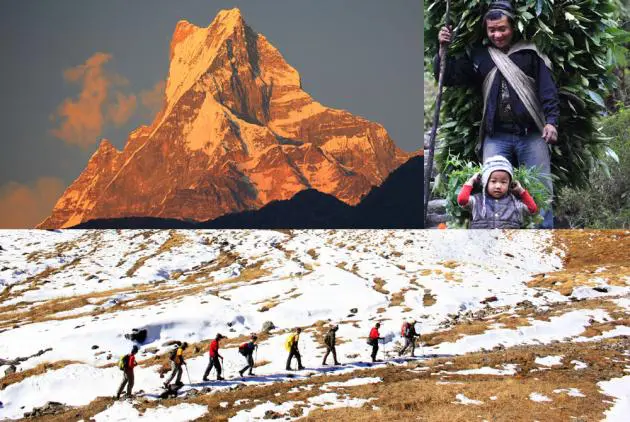


Well, perhaps not every mountain but the trek up to Annapurna Base Camp in Nepal is well worth the months of preparation
Two years, a friend called me up and told me we should have a go at the ABC Trek. I’d never heard of it but a few days later decided to look on the Internet to try and find something about the trail. As soon as the majestic view of the Himalayas sprang up on my computer screen, I knew I had to go there too.
ABC Trek or Annapurna Base Camp Trek is a moderate nature trek in the Himalayas in north-central Nepal. Although labelled a moderate trek, it is essential to be well prepared before starting the journey. In the Himalayas, trekkers walk all day in extreme weather and are at risk of falling victim to altitude sickness.
Those of us who normally live at lower altitudes will have problems working in the thinner air at higher altitudes. It’s therefore important to start and stick to a vigorous exercise routine more than two months before our journey to make sure that our physical strength can endure the challenges of trekking at higher altitudes.
Our group of nine, two women and seven men, exchange knowledge, information and preparation right up until the day we leave Bangkok. We plan to spend a night in Kathmandu then take a 30-minute flight to Pokhara the next morning rather than spending six hours or more on the road. The distance between Kathmandu and Pokhara is only 200 kilometres but the condition of the road makes it impossible to reach Pokhara in less than a day. From Pokhara, it’s an hour in a four-wheel drive to the start of our journey at Naya Pul.
The Annapurna range is an important section of the Himalayas. It ranks as the 10th highest mountain in the world and is located to the east of a great gorge that cuts through the Himalayas by the Kali Gandaki River. On its western and northwestern slopes it has glaciers, which drain into this gorge. Annapurna has many high peaks but the two highest peaks are Annapurna I (8,091 metres) and Annapurna II (7,937 metres), at the western and eastern ends.
Annapurna is a Sanskrit name, which literally means “full of food”, but is normally translated as Goddess of the Harvests. In Hinduism, Annapurna, a goddess of fertility and agriculture, is a form of Parvati, the consort of Shiva.
We take every curve and turn as a photo opportunity until the local guide warns us that too many stops mean a late night. We rush a bit before facing our first physical challenge, a long paved stairway of more than 2,000 steps. We pass village after village and our energy levels drop lower and lower, falling to their lowest point as we walk with only torches to guide our steps. We reach our lodge at 9pm, have a quick meal, then shower and fall into bed.
Up with the sun the next morning and enjoying breakfast with the Himalayan range as the backdrop helps us forget the tiredness of the day before. We can see Machhapuchhre or Fish Tail Mountain standing at the end of a long spur ridge, coming south out of the main backbone of the Annapurna Himal. With its fish-tailed pinnacle, Machhapuchhre is one of the most renowned mountains in Nepal Himalayan range. The mountain is off limits to climbing since it is considered sacred by locals.
Surrounded by ice and snow, we decide not to have a shower after our second night. The lukewarm water is just too cold and we agree it’s better to be dirty and warm than clean and cold.
On day four, we are walking at 2,500 metres above sea level and altitude sickness is rearing its ugly head. Our guide Hagu tells us that the trail today will be really tough, as we will be climbing another 1,000 metres, which is high compared to the 500 metres a day of the past three days.
We finally reach Machhapuchhre Base Camp at 3,700 metres. Many in the group are complaining of knee pain and a few are show symptoms of altitude sickness. But we all pray that we’ll feel better after some sleep, since we still have a full day’s trek in front of us before we reach Annapurna Base Camp.
Another day dawns and so does our journey. The trail itself is not very tough but the thin air makes it hard to move fast. The distance is shorter than other days but we take twice as much time. Breathing turns out to be the toughest task. The canned oxygen is our best companion. There’s little conversation.
Once the sign of Annapurna Base Camp comes into sight, we squeeze the last of our strength and drag ourselves into the camp, proudly placing Thai national flag and The King's flag on the mountain before heading to the best spot for sunset.
The freezing wind cuts through our jackets but no one moves back to the camp. The magnificent view of the golden sunlight bathing the peaks of Annapurna range is mesmerising.
If there is a place called heaven, this is it.
