
Spicing up the edge of the world


Play
Enjoying a taste of paradise on Banda Neira
Banda Neira was once the global centre of the trade in spices such as nutmeg and mace to the empires of Europe but since then, these region has suffered political instability and sank into poverty and depression.
With the divisive civil war now at an end, the residents of the largest population centre on the Banda Islands of Indonesia hope that tourism can bring in some much needed revenue and employment.
A portrait of Lady Diana adorns a wall in the Maulana Hotel, a rebuilt Dutch-colonial building with a wonderful veranda overlooking the waterfront between palms and ketapang trees with views of the isolated volcanic island of Gunungapi Wetar.
More than 500 years ago Dutch, Portuguese and English traders fought for control of the islands with the Dutch East India Company establishing Banda Neira as its base for the extraction of nutmeg and mace, the only source of these valuable spices at the time.
In medieval times, two nutmegs were worth an entire cow and Europeans greedily sought the most direct route to the lucrative islands.
Ferdinand Magellan, Bartolomeu Dias and Vasco da Gama all set sail to find the Mollucas, and it is not difficult for modern-day travellers arriving at Banda Neira by ferry to imagine the awe they must have felt on seeing the islands for the first time.
The once imposing colonial villas of the Dutch and Portuguese conquerors are now in a state of disrepair. Children play football inside Fort Nassau, the first Dutch fort built on Banda Island, and cannons rust in the tropical sun.
Steps lead up through blooming frangipani and bougainvillea plants to Fort Belgica, the only fortress to date that has been restored to its former glory.
The view from the walls is like something from a pirate novel with cannons pointing out into the bay where three-masted ships once anchored but today are home to colourful fishing boats.
“I would like to serve dinner here at one point with music and torches,” says Abba, guesthouse owner and Banda tourism ambassador, whose real name is Rizal Bahalwan.
“I use Abba because it’s easier for tourists to remember,” he says.
Abba worked as a tour guide from the age of 15 and has seen firsthand the damage caused by the civil war.
“Lots of tourists came here between 1990 and 1998 with one airline flying three times a week from Ambon,” he explains.
But even in the good years, no more than 1,500 tourists arrived on a weekly basis but this number plummeted in the wake of the civil war that raged between Muslims and Christians on the Moluccas from 1999 to 2002.
Thousands lost their lives or fled while at one point Muslim fundamentalists burnt down a church dating back to the colonial era.
Tourists have been slow to return since hostilities ceased but this did not deter Abba from opening his Mustier Guesthouse in 2007.
At the start, he only had one guest a month but now the dining table each evening is full of tourists savouring barracuda, tuna burgers and vegetables with peanut sauce while listening to the traditional music of the Moluccas.
The war wounds seem to be healing slowly with a handful of Christians again attending mass each Sunday in the newly rebuilt colonial church.
In Tembi Rumah Budayam there is a museum in a former mosque showing how the old colonial masters once lived. The collection includes Dutch silver coins, swords, muskets, furniture made from tropical wood, a gramophone as well as a bell that used to call plantation workers to their meals.
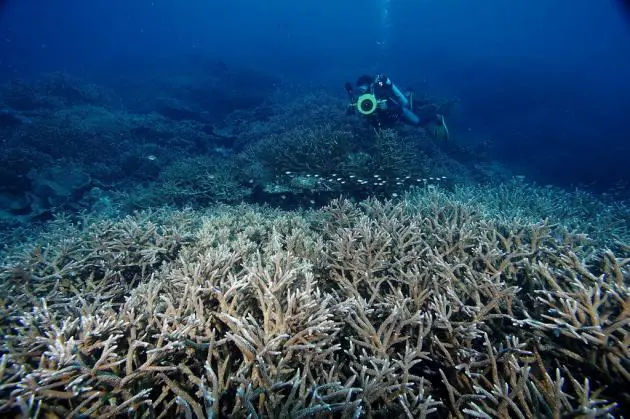
The majority of Abba’s guests however are not here to sample the culture. Instead they are diving enthusiasts looking to explore the incredible array of leather corals, yellow soft corals, huge sponges and massive table corals.
Even the lava flow from Gunungapi Wetar’s last eruption in 1988 is already completely overgrown by coral. It should be noted that a licence is needed before diving in the azure waters.
It is also possible to take the ferry to Pulau Ai where – if a text message is sent in advance – 65-year-old Yusuf Madja will be waiting at the pier to bring visitors to a local guesthouse.
Things are so quiet that most people last no longer than a day here before leaving again. Women sit on verandas hacking Indonesian kenari almonds while nutmeg dries in the midday sun.
The narrow empty beach at Pantai Sebila is a wonderful place for a stroll with its white sands, palm trees and corals rich in marine life.
In the evening, visitors can sit and watch the sun go down behind the island of Run, which the English traded for Manhattan in return for giving the Dutch full control of the Banda archipelago. Not at all a bad deal when enjoying a taste of paradise at the edge of the world.
If you go
_ Tucked away in between Sulawesi and Papua, Banda Neira is very off-the-beaten track for the tourist, and the island is only access through the boat line.
_ Your gateways to the island is Maluku (also known as Moluccas or the Spice Islands), reached through daily flight from Jakarta.
_ Visit www.TourismIndonesia.com.
