
Chadchart outlines three smart city principles to transform Bangkok
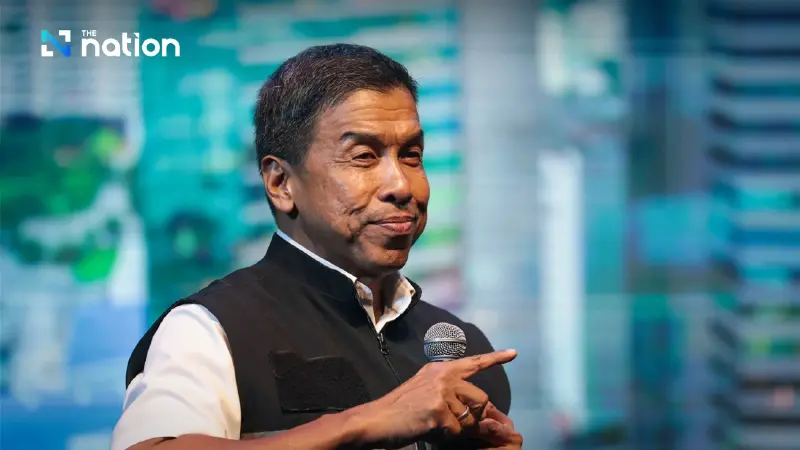


Bangkok Governor Chadchart Sittipunt outlines three smart city principles to improve urban living, public services and economic opportunities for all.
- Bangkok's smart city strategy is based on three core principles: a people-centric approach, business feasibility, and technological feasibility.
- The people-centric approach ensures technology delivers tangible benefits to residents, exemplified by the 'Traffy Fondue' digital complaints platform and policies for open government data.
- Projects must be financially sustainable and use appropriate technology, with practical applications including AI-managed traffic signals, upgraded pavements, and streamlined online permit systems.
Bangkok Governor Chadchart Sittipunt has outlined three core principles for transforming the capital into a smart, liveable city that creates opportunities and hope for everyone, with technology serving as a tool to improve people’s lives.
Speaking at the THAILAND SMART CITY 27 LIFE IN THE CITY seminar organised by Post Today, Chadchart highlighted the rapid advancement of technology and computing power in line with Moore’s Law, while noting that government agencies often struggle to keep pace.
He stressed the need to accelerate technology adoption while ensuring that its application remains appropriate and aligned with public needs.

Putting people at the heart of smart city development
Bangkok’s smart city strategy is built around three fundamental principles:
- People-centric approach: Ensuring that technological solutions deliver tangible benefits to residents.
- Business feasibility: Ensuring that projects are operationally and financially sustainable.
- Technological feasibility: Ensuring that suitable technology is available and can be effectively deployed.
Chadchart emphasised that a “liveable city for all” must create opportunities and inspire hope across society. Bangkok is pursuing this vision through four key dimensions: people, the economy, urban spaces and physical infrastructure, and city management.
Building trust between residents and the Bangkok Metropolitan Administration (BMA) through transparency and public participation is central to this approach.
One example is Traffy Fondue, a digital complaints platform that has received approximately 1.4 million reports over four years, with more than 1.1 million cases resolved.
The platform has significantly reduced the time needed to address problems that could previously take up to two months to resolve. Location-based reporting also enables the BMA to allocate its budget more effectively in line with residents’ needs.
However, Chadchart warned against using artificial intelligence (AI) to create the illusion of progress, citing the example of digitally removing motorcycles from photographs of pavements rather than addressing the actual problem.
The BMA is also promoting its “Open by Default” policy, making government data and budget information publicly accessible for greater scrutiny.
Online permit systems are being developed, allowing applicants to track the progress of construction permit applications. The BMA aims to review applications within 14 days. The initiative aims to streamline administrative procedures and reduce opportunities for corruption.

Investing in pavements, traffic management and the environment
In terms of infrastructure, the BMA has been upgrading pavements and improving pedestrian connectivity in strategic areas, including Rama IV, Siam and Sam Yot, to encourage walking and provide more travel options.
To improve traffic management, Bangkok is deploying cameras and adaptive AI systems to adjust traffic signals according to real-time traffic volumes, improving traffic flow by approximately 10–15%.
Urban speed control measures have also contributed to an annual reduction of around 10% in road fatalities, according to the governor.
Environmental and quality-of-life initiatives include an online tree-monitoring system that tracks where trees are planted and how they grow, the development of 15-minute parks and the expansion of pet-friendly public spaces.
To tackle PM2.5 air pollution, the BMA has provided farmers in neighbouring provinces with straw-shredding machinery to reduce agricultural burning. It also restricts lorry access to the capital on days when air pollution reaches high levels.
Bangkok has revised its waste collection fee structure, retaining the 20-baht charge for residents who separate their waste while increasing fees for large businesses to encourage waste reduction.
Flood prevention efforts include reinforcing flood barriers along the Chao Phraya River and developing drainage tunnels to cope with heavy rainfall in inner-city areas.

Upskilling residents and connecting SMEs to supply chains
As part of its workforce development efforts, the BMA has launched platforms offering residents free opportunities to acquire new skills.
AI-powered tools are also being introduced as partners for practising spoken English, helping overcome the limitations faced by teachers responsible for large classes. According to trial results cited by Chadchart, students’ English reading and speaking skills improved by 14% within one year.
Bangkok is also providing vocational training linked to real employment opportunities and has partnered with The Coffee Club to employ older people in its cafés.
Chadchart identified the labour market as a vital component of the urban economy.
Bangkok is home to approximately 500,000 small and medium-sized enterprises (SMEs), employing 3.6 million people, while around 8,000 large companies employ a further 3.4 million.
A key strategy is therefore to integrate SMEs into the supply chains of major corporations, expanding economic opportunities rather than encouraging small business owners to compete by opening similar types of businesses.

Positioning Bangkok as a regional operations hub
Discussing Bangkok’s role in the regional economy, Chadchart argued that the Thai capital did not need to compete directly with Singapore and that the two cities should instead play complementary roles.
Singapore’s strengths in legal infrastructure and language make it well suited to hosting corporate headquarters and board-level functions, while Bangkok has the potential to become a regional operations centre accommodating large operational teams.
Bangkok’s advantages include its quality of life and a cost of living approximately one-third lower than Singapore’s, he noted.
Multinational companies with significant operational bases in Bangkok include ExxonMobil, with more than 2,000 operations staff; Western Digital, which provides services across 60 countries in 11 languages; and Agoda, which employs more than 4,500 people in the city as part of its global operations network.
Other supporting factors include international-standard hospitals, international schools, a diverse culinary scene and convenient transport connections to other provinces.
Chadchart likened Singapore to an executive boardroom and Bangkok to a “football pitch” capable of attracting professionals and talent from around the world. Their presence would stimulate the local economy through consumer spending, property rentals and purchases, and other economic activities.
The governor also highlighted Bangkok’s rankings of 29th and 33rd in global city indices, noting that the capital was one of only two ASEAN cities to feature among the world’s top 30.
Ultimately, Bangkok’s ambition is to become a place where opportunities flourish, connections are forged and everyone can enjoy a better quality of life.
