
Chadchart plans Green Line transfer to advance common ticketing and ease Bangkok’s budget burden
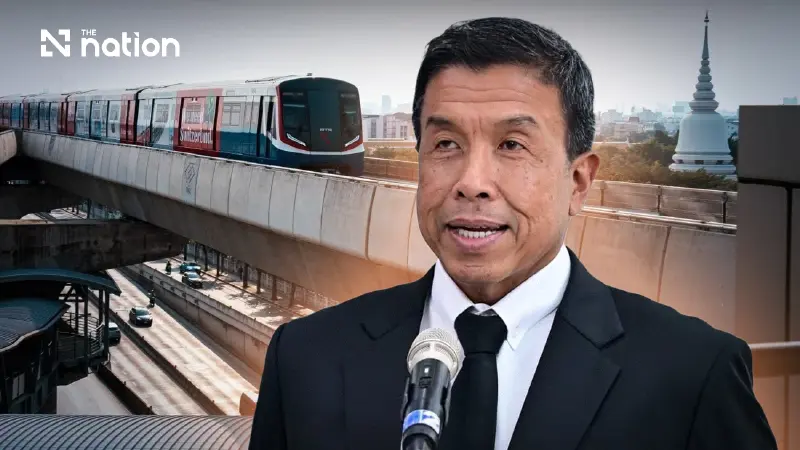


The proposed transfer would move the Green Line’s assets and debts to the government, easing Bangkok’s financial burden and supporting unified fares
- Bangkok is transferring the Green Line, including its assets and liabilities, to the Thai government to alleviate the city's financial burden and support a unified ticketing system.
- A key part of the process involves negotiating the project's valuation and the compensation Bangkok will receive, which will factor in assets, liabilities, and future revenue potential.
- The existing operating contract with Bangkok Mass Transit System (BTS) is not expected to be an obstacle, as its terms allow for a change in asset ownership.
- Upon completion of the transfer, the Green Line's assets will be managed by the Mass Rapid Transit Authority of Thailand.
Bangkok is preparing to transfer the Green Line, together with its assets and liabilities, to the government in a move intended to reduce the city’s financial burden and support a unified ticketing and fare structure.
Bangkok Governor Chadchart Sittipunt said the process was under way following a Cabinet resolution about two months ago instructing the Bangkok Metropolitan Administration to proceed with the transfer.

He said bringing the Green Line under central government control would help align management of the common-ticket system and fare structure across the rail network.
The Green Line represents a major financial obligation for Bangkok. Chadchart said transferring responsibility to the government would reduce budget constraints and allow the city to direct more funding towards residents and other areas of urban development.
BTS contract expected to remain unchanged
Chadchart said the existing contract with Bangkok Mass Transit System Public Company Limited, or BTS, was unlikely to present a problem because its terms already allowed for a change in ownership of the assets.
The substance of the contract would remain unchanged, with ownership transferring from the Bangkok Metropolitan Administration to the government.
The main issue is now the valuation of the project and the level of compensation Bangkok should receive in return for transferring a major rail infrastructure asset.
Discussions with the government will cover both the project’s book value and what the city considers an appropriate overall valuation.
The transfer would also reduce Bangkok’s responsibility for covering the difference between fare revenue and operating costs.
Chadchart said the city could not continue using funding intended for other purposes to support a single rail route.
Reducing that burden would leave more money available for infrastructure, public services and measures to improve residents’ quality of life.

Valuation to include future earnings
The proposed transfer still requires further negotiations with the government and consideration by the Bangkok Metropolitan Council because it involves the disposal of a major city-owned asset.
Chadchart said outstanding construction costs were unlikely to be a major obstacle because they would be included in the project’s book-value assessment and could be offset against existing liabilities.
Once transferred, the assets would again come under the Mass Rapid Transit Authority of Thailand.
The valuation must also take account of future revenue potential, particularly after 2029, when all income from the project is due to pass to Bangkok.
Negotiations will therefore consider the value of the infrastructure, money already invested by the city, the cost of procuring trains, operating expenses and the value of the project over the remaining concession period.
Bangkok and the government are also discussing how the Green Line should be managed after 2029 under the Public-Private Partnership Act.
That process remains under consideration.
