
Mahidol University debuts ESG tracking system for Thai companies
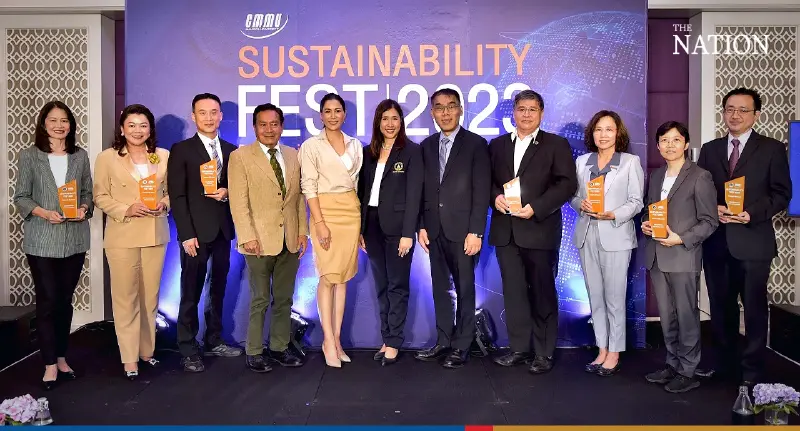


Thailand's first environment, social, governance (ESG) tracking system has been introduced with the goal of guiding businesses in all industries into the global sustainable development trend, Vichita Ractham, dean of the College of Management at Mahidol University, told a press conference on Wednesday.
The tracking system was developed through a partnership between the college and Australia's University of New South Wales.
Vichita said social responsibility and environmental concerns are required for all businesses worldwide. Some businesses, particularly large ones or those listed on the stock exchange, have already adopted the ESG principles and disclosed their results in annual reports.
Unfortunately, the majority of Thai businesses, most of which are small and medium-sized enterprises, are still not ready or committed to following the ESG path, Vichita said.
"The reasons why Thai SMEs are not following ESG practices, despite the fact that it is a must, are because they don't know how to do it or where to start," she explained.
The ESG tracking system was designed at the University of New South Wales and is being used in Australia and Singapore. The College of Management worked with the Australian university to build a Thai version of the system.
"It is entirely mechanical.The system operates by following public ESG data released by each organisation and analysing the quality and capabilities of the ESG applications. As a result, it can assure that there is no bias," Vichita said.

The ESG Tracking System was established in Thailand because many businesses here, even those with sustainability strategies, are unable to describe their ESG impacts.
As a result, although many businesspeople believe that ESG models are essential for organisations worldwide to ensure they are part of sustainability trends, they believe these models may be a waste of money.
The tracking system can ensure that when corporations perform good deeds there is a record of them, Vichita said. She explained that the system also helps identify how ESG practices can be improved.
The system rates the efficiency and participation of business according to the United Nations sustainable development goals.
Data collected is analysed according to two primary criteria:
- 1. ESG Disclosure: An organisation must have a high level of transparency, reliable, and usable data for evaluating performance.
- 2. ESG Data Quality: Organisations must have high-quality, accurate data in accordance with sustainability reporting rules, as well as the ability to review it in a variety of situations.

To create awareness of the ESG tracking system, the college applied to track and analyse the top 21 listed Thai companies in six key industries: agriculture, banking, construction, energy, retail, and telecommunication.
The goal was to identify the top ESG companies in Thailand as well as the best in terms of data disclosure. The college then gave ESG awards to the best performing companies: ThaiBeverage, Kasikorn Bank, Siam Cement Group, PTT Global Chemical, Central Pattana, Intouch Holdings, and Delta Electronics (Thailand).
Vichita said the award winners would serve as the best ESG examples for other companies to follow and that her college would continue the awards annually.
Apart from providing systematic ESG guidelines for all sizes of companies, the tracking system will be used by the college to enhance the sustainability skills of its students so that human resources will include the ability to manage and understand the development of sustainable business systems based on ESG concepts, Vichita said.
