
Egypt sees Thailand as gateway to trade and ASEAN cooperation
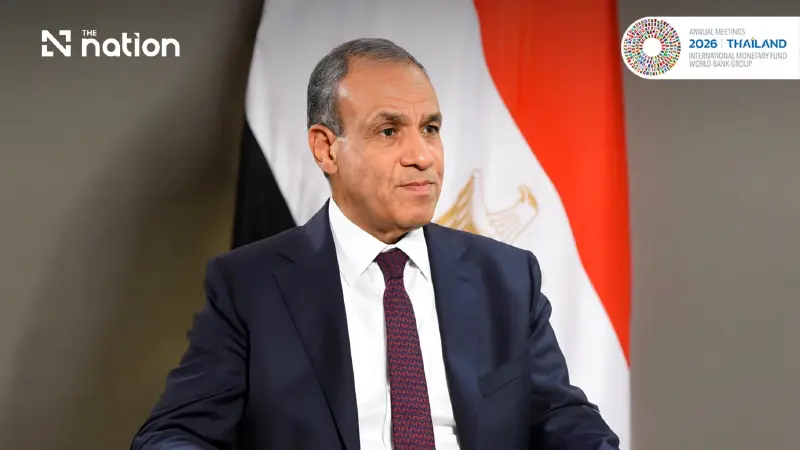


Egypt’s Widening Foreign Policy Scope: Deepening Ties with Asia … Egypt’s Foreign Minister Abdelatty’s Visit to Thailand
Egypt’s foreign policy is steadily broadening its horizons, with Asia emerging as an increasingly important pillar of our diplomatic and economic engagement. We are placing longstanding partnerships on a new trajectory; harnessing our solid political ties to forge new opportunities in trade, investment, technology and development across a region of growing global influence.
There has been significant momentum in Egypt’s outreach to Asia, underscored most recently by President Abdel Fattah El-Sisi’s Asian tour of South Korea, Malaysia and Indonesia, which reaffirmed Egypt’s commitment to strengthening its partnerships across the continent and expanding cooperation in political, economic and cultural fields.
Having recently returned from the Philippines, where I participated in the 59th ASEAN Foreign Ministers’ Meeting, my visit to Thailand offers a further opportunity to advance this engagement and to deepen Egypt’s ties with Southeast Asia.
ASEAN’s economic weight, technological capabilities and growing political influence make it an increasingly important partner for Egypt. Since Egypt’s accession to the Treaty of Amity and Cooperation in Southeast Asia in 2016, we have steadily expanded our engagement with ASEAN members across trade, investment, education and development. We now look forward to taking this relationship further by advancing Egypt’s aspiration to become a Sectoral Dialogue Partner of ASEAN. This reflects our recognition of ASEAN’s growing role in advancing regional stability and economic development, as well as the considerable potential for broader bilateral and multilateral cooperation.
Thailand has been an integral partner in this endeavour and an important bridge to our engagement with ASEAN and the wider Southeast Asian region. Our partnership with Thailand is underpinned by a deep-rooted historical tie. In September 1954, Egypt became the first Arab and African country to establish diplomatic relations with Thailand, laying the foundation for more than seven decades of bilateral relations.
My visit to Bangkok, the first by an Egyptian Foreign Minister since 1996, comes at an important juncture in our bilateral relations. It has provided an opportunity to reinvigorate our institutional mechanisms and translate political dialogue into tangible outcomes.
On this visit we convened the third session of the Joint Ministerial Commission and the Joint Business Forum, building on the eighth round of political consultations held in Cairo in June. These mechanisms are essential to sustaining high-level political dialogue while driving practical cooperation in trade, investment and development.
Marking another step forward, we signed a Memorandum of Understanding between the Thailand International Cooperation Agency and the Egyptian Agency for Partnership for Development. The agreement establishes a framework for joint development initiatives in third countries, particularly in areas of shared interest, aiming to combine our efforts to contribute to poverty alleviation and achieve sustainable development. It also reflects the potential for Egypt and Thailand to leverage their respective expertise and capabilities in support of development across the Global South.
My visit also takes place in my capacity as Egypt’s Governor at the World Bank, as I participate in the Fall Meetings of the International Monetary Fund and the World Bank. The convergence of these diplomatic and economic engagements is reflective of a broader reality where development and economic cooperation are no longer peripheral to foreign policy; they are central to it.
This is particularly evident amid persistent geopolitical tensions, mounting debt burdens and widening development financing gaps. For developing countries, reforming the international financial architecture is imperative to address pressing development needs. The same applies to climate action. Countries that have contributed least to climate change are often among those bearing its most severe consequences. We therefore need a global financial system that expands access to concessional development finance, strengthens resilience and enables developing economies to pursue sustainable growth without assuming disproportionate burdens.
Against this backdrop, economic cooperation with Thailand is a particular priority. The potential to expand bilateral trade and investment remains substantial. Thailand brings considerable strengths in manufacturing, agriculture, food production, healthcare and tourism, while Egypt offers a large and growing market, a skilled workforce, modern infrastructure and strategic access to Africa, the Middle East and Europe. Our objective is to encourage more Thai companies to view Egypt not simply as an investment destination, but as a gateway for production and regional distribution, while creating greater opportunities for Egyptian businesses to access Thailand and the wider ASEAN market.
Thai investment in Egypt is already demonstrating the potential of this partnership. Hi-Tech Apparel’s US$20 million sportswear factory in Qantara West, the first Thai industrial investment in Egypt and in the Suez Canal Economic Zone, provides a tangible example of what our economic relationship can deliver.
The regional environment further underscores the importance of resilient economic partnerships. Recent crises and disruptions to navigation in the Red Sea have affected shipping costs, delivery times and global supply chains, reinforcing the shared interest of Egypt and Thailand in secure maritime routes and resilient trade networks.
Egypt continues to invest in strengthening the infrastructure and operational capabilities of the Suez Canal while pursuing measures to enhance the resilience and competitiveness of its economy. The Government Offerings IPO Programme, the State Ownership Policy and the incentives extended to foreign investors form part of a broader effort to strengthen the private sector and create a more conducive investment environment.
Egypt’s engagement with Asia is ultimately part of a broader foreign policy anchored in strategic balance, diversification and mutually beneficial partnerships. We seek constructive relations across regions, grounded in mutual respect and shared interests, while strengthening cooperation with partners that can contribute to a more stable, prosperous and interconnected international order. Within this vision, Southeast Asia and particularly Thailand occupies an increasingly important place in Egypt’s ambitious foreign policy.
