
Marcos orders price caps for rice at P41 to P45 per kilo
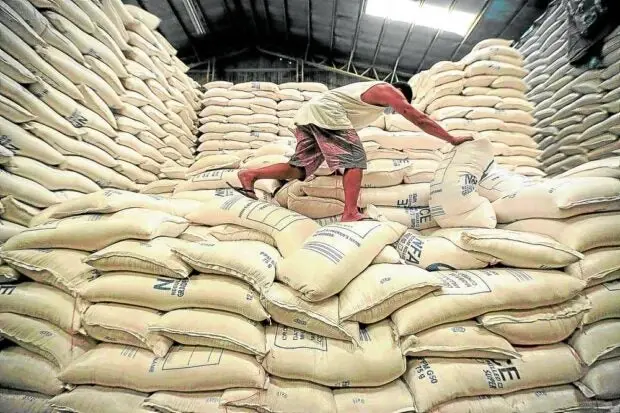


President Ferdinand “Bongbong” Marcos Jr has ordered price caps for rice amid soaring commodity prices. The price ceiling for regular milled rice is set at P41 ( US$ 0.72 ) per kilogram, while the cap for well-milled rice is P45 ( US$ 0.79 ) per kilogram.
The mandate covers the whole country, the palace announced on Friday.
“Under EO (Executive Order) 39, the mandated price ceiling for regular milled rice is PhP41 per kilogram while the mandated price cap for well-milled rice is PhP45.00 per kilogram,” said the statement.
Although the Philippines has a stable rice supply, the Palace said commodity prices are rising because of:
– illegal price manipulations like hoarding and industry collusion
– global events outside the country’s control, such as the Russia-Ukraine conflict
– India’s rice export ban
– capricious oil prices in the international market
The price caps are in effect until the President lifts them upon the recommendation of Department of Agriculture and Department of Trade and Industry.
Marcos is the concurrent Agriculture Secretary.
The price of imported white rice in Malaysia is up by 36%
The price of imported white rice has been increased to RM3,200 ( US$ 688.54), up from RM2,350 ( US$505.65 ) per metric tonne from Friday, says Padiberas Nasional Bhd (Bernas), Malaysia's state trading enterprise in the international rice market.
In a statement on Friday, Bernas said the price adjustment for imported white rice across its warehouses nationwide is in line with the current global pricing on imported white rice.
"Bernas faced a challenging first half of the year due to unpredictable factors such as climate change; the weakening foreign currency exchange rate; high operating costs and conflicts in the region.
"The factors collectively left a significant mark on the global trading market, later compounded by the ban of the export of white rice by India," it said.
Bernas said it has continued to absorb the increasing price of imported white rice in the last few years.
"However, due to the uncertainty of the current situation and after considering the need to ensure sustainable business operations and industry stability, price adjustments are necessary and unavoidable for the time being," it said.
The company is also working with the Agriculture and Food Security Ministry and related agencies and authorities as well as international trading partners to ensure a stable supply of rice for Malaysia.
"Although the global food market is now uncertain and increasingly challenging, Bernas remains intact and competitive.
"We also take appropriate steps to improve and guarantee the resilience of the domestic rice market by ensuring quality, price stability and product availability. This is our role as the sole gatekeeper for the country's paddy and rice.
On July 20, India, the world's biggest rice exporter, banned shipments of non-basmati white rice to maintain domestic prices at comfortable levels ahead of its general election due in early 2024.
The Star And Philippine Daily Inquirer
Asia News Network
