
Above the clouds: how Thai Airways is turning AI logistics into a competitive advantage
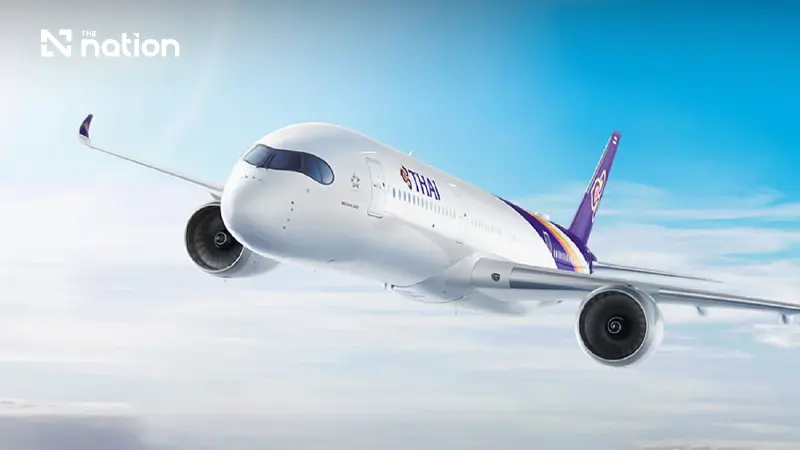


Thai Airways International is adopting AI-driven logistics and predictive maintenance systems at Suvarnabhumi Airport, improving efficiency, reducing delays and strengthening Thailand’s aviation hub ambitions.
In aviation, the difference between turbulence and smooth flight is increasingly decided not in the cockpit, but in the data centre.
For Thai Airways International, that shift is now becoming reality. As the national carrier continues its financial rehabilitation, it is quietly rebuilding its operational backbone with artificial intelligence — replacing paper-based systems with predictive analytics designed to keep aircraft flying, not waiting on the ground.
At Suvarnabhumi Airport, one of Southeast Asia’s busiest aviation hubs, Thai Airways is deploying AI-driven logistics systems that monitor fleet performance in real time. These tools analyse vast streams of operational data — from engine performance to component stress patterns — to forecast maintenance needs before technical issues arise.
In practice, this means a move towards predictive Maintenance, Repair and Overhaul (MRO), where algorithms can anticipate when parts will need servicing long before failure occurs. The result is fewer unexpected delays, reduced maintenance costs and more aircraft available for revenue-generating flights.

This digital transformation is not about spectacle or passenger-facing novelty. It is about precision. By integrating real-time fleet data with automated defect detection models, Thai Airways is streamlining turnaround times, improving scheduling efficiency and reducing unnecessary fuel burn. Each improvement, while incremental on its own, compounds into a more agile and cost-efficient airline.
Globally, the aviation industry is undergoing a similar shift. Leading carriers are investing heavily in AI and data-led operations to improve reliability, optimise fleet usage and strengthen supply chain resilience. For Thailand, however, the stakes are even higher: aviation is a critical pillar of tourism, trade and national connectivity.
That makes Thai Airways’ transformation strategically significant. As the flag carrier of a country positioning itself as a regional aviation hub, its operational efficiency directly supports Thailand’s wider ambitions — from airport competitiveness to cargo connectivity and regional travel flows.
What is emerging is a more modern identity for Thai aviation. Long celebrated for hospitality and service culture, Thai Airways is now layering technological sophistication beneath that reputation. The airline is evolving into a data-driven operator, where AI quietly ensures that schedules are more reliable, aircraft utilisation is higher and disruptions are minimised.
In this sense, “putting cargo in the cloud” is more than a metaphor. It reflects a broader shift towards intelligent infrastructure — where aviation logistics are no longer reactive, but predictive and self-optimising.
For Thailand, the implications are clear. A smarter flag carrier strengthens the entire ecosystem around it: airports run more efficiently, supply chains become leaner, and the country’s position as a Southeast Asian aviation hub grows stronger.
If the past era of Thai aviation was defined by warmth and service, the next may well be defined by something less visible but equally powerful — algorithms that keep the kingdom’s skies running on time.
