
Thailand Prepares Gastech 2026 as a Gateway to Global Energy Security
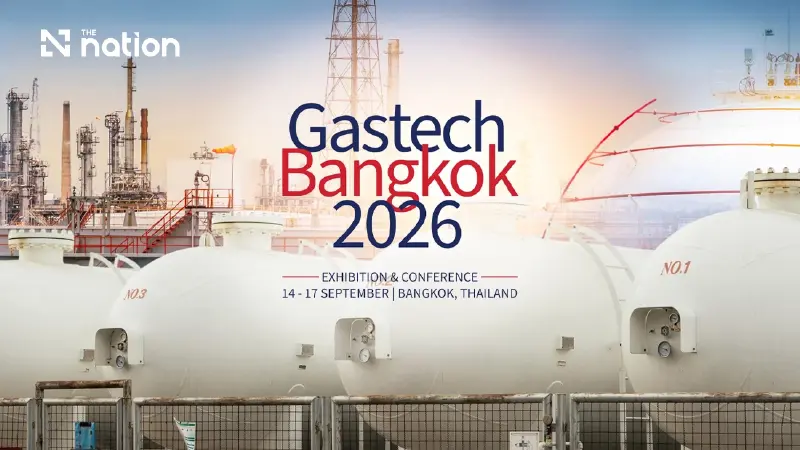


As host of Gastech 2026, Thailand is preparing to showcase its LNG infrastructure, Andaman petroleum potential, clean-energy transition and role in the global energy value chain.
Bangkok Takes the Global Energy Stage
In September 2026, Bangkok will become more than a host city. It will become a meeting point for the future of energy security.
Thailand is preparing to welcome Gastech 2026 at BITEC from 14-17 September, bringing the world’s largest exhibition and conference dedicated to natural gas, LNG, low-carbon solutions, electrification and AI for energy to the heart of Southeast Asia. The event is expected to attract ministers, policymakers, chief executives, regulators and energy innovators from around the world.

From Host Country to Strategic Connector
Gastech’s return to Thailand after 18 years gives the country a timely opportunity to present itself not only as an energy consumer, but as a strategic connector in the global energy chain. The Ministry of Energy will serve as host, TCEB (Thailand Convention and Exhibition Bureau) as national co-host, the Energy Regulatory Commission as supporting partner, with PTT as national consortium co-host alongside EGAT (Electricity Generating Authority of Thailand).
That ecosystem matters. It shows that Thailand’s preparations are not confined to one ministry or one company, but reflect a national platform linking policy, infrastructure, investment and hospitality.

Three Messages from Thailand
Thailand’s Gastech agenda is expected to focus on three core messages: investment opportunities in the Andaman Sea, readiness to become an ASEAN LNG hub, and energy-market liberalisation through Direct Power Purchase Agreements, or Direct PPAs.
The Andaman pitch will cover around 60,000 square kilometres of petroleum concession opportunities, supported by advances in 3D and 4D seismic technology that have strengthened confidence in the area’s potential. For Thailand, this is a story of using modern science to turn domestic resources into a pillar of long-term energy security.

Building an ASEAN LNG Platform
Thailand will also showcase its gas infrastructure, including LNG terminals at Map Ta Phut and Nong Fab, together with the planned T3 project in the Eastern Economic Corridor. These facilities are expected to give Thailand LNG receiving capacity of more than 20 million tonnes per year, creating a stronger base for LNG trading, re-export and small-vessel supply to regional markets.
This ambition places Thailand in a practical sweet spot: close to rising ASEAN demand, equipped with industrial infrastructure, and experienced in managing gas as a key fuel for reliable electricity generation.

Energy for the Digital Economy
Gastech 2026 will also allow Thailand to speak directly to the industries reshaping Asian power demand: data centres, electric vehicles, AI infrastructure and advanced manufacturing. Thailand plans to promote Direct PPAs as part of a more open energy market, supporting investors that need secure, competitive and cleaner electricity.
This is where energy policy becomes economic strategy. The event’s dedicated AixEnergy platform will bring AI, digital infrastructure and future energy systems into the same conversation, aligning neatly with Thailand’s push to attract high-value investment.

Clean Transition, Thai Pragmatism
The strength of Thailand’s Gastech positioning lies in balance. The country is not presenting energy security and decarbonisation as opposing goals. Instead, it is preparing to show how gas, LNG, hydrogen, CCUS, electrification, AI and clean-energy planning can work together in a realistic transition.
The draft PDP 2026 is expected to include new energy sources such as small modular reactors and a higher share of clean energy, while regional connectivity through gas pipelines and the ASEAN Power Grid remains part of the wider security vision.

A Showcase with Economic Lift
Beyond energy diplomacy, Gastech 2026 is set to deliver a direct economic boost. More than 50,000 participants, over 1,000 exhibition booths and more than 1,000 expert speakers are expected, while event-related spending could circulate around 10 billion baht through hotels, services and business activity.
For Thailand, that is the beauty of hosting well. A global conference becomes a trade platform, a tourism lift, an investment showcase and a statement of national capability.

Thailand’s Energy Moment
Gastech 2026 will arrive at a moment when the world is searching for energy systems that are secure, affordable, cleaner and more resilient. Thailand’s answer is to open its doors, show its infrastructure, invite investment and place ASEAN at the centre of the conversation.
In doing so, the kingdom is preparing not just to host the world’s energy leaders, but to help shape the next chapter of global energy security.
SOURCE: www.thailand.go.th
