
The Science of Brain Recovery: Neurobiology, Clinical Evidence, and Integrated Treatment for Addiction and Mental Health
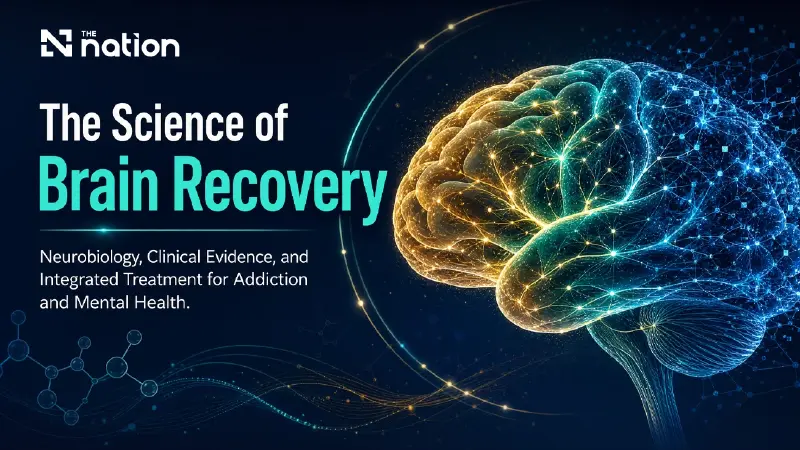


For decades, substance dependence and chronic mood disorders were widely misunderstood as personal shortcomings or failures of willpower. Modern neuroscience and clinical medicine have fundamentally shifted this paradigm: substance use disorders (SUD) and psychiatric conditions are complex neurobiological disorders involving structural and chemical dysregulations within the central nervous system.
This article synthesizes empirical evidence from global medical institutions to explain the biological mechanisms driving addiction, the neurological link between psychological trauma and chemical dependence, and the evidence-based clinical methodologies that facilitate sustainable brain recovery.

The Neurobiology of Addiction: Dysregulation of the Brain's Reward Architecture
Pioneering neuroimaging research, led by institutions such as the National Institute on Drug Abuse (NIDA), demonstrates that chemical dependence alters three primary brain circuits:
-
The Reward Pathway (Basal Ganglia & Nucleus Accumbens): Addictive substances trigger surges of the neurotransmitter dopamine at concentrations 2 to 10 times higher than natural rewards (such as nutrition or social connection). This artificial surge produces intense euphoria and reinforces compulsive seeking behavior.
-
Dopamine $D 2$ Receptor Down-Regulation: In response to excessive dopamine stimulation, the brain systematically reduces the density of dopamine $D_2$ receptors as a protective adaptation. This neuroadaptation leads to anhedonia the inability to experience pleasure from standard daily activities driving individuals to escalate substance consumption simply to achieve biological equilibrium.
-
Prefrontal Cortex Impairment: Chronic substance exposure impairs executive functioning within the prefrontal cortex, weakening impulse control, emotional regulation, and rational decision-making. Consequently, conscious willpower alone becomes neurochemically insufficient to interrupt compulsive behaviors.

Dual Diagnosis: The Interplay Between Mental Health and Substance Dependence
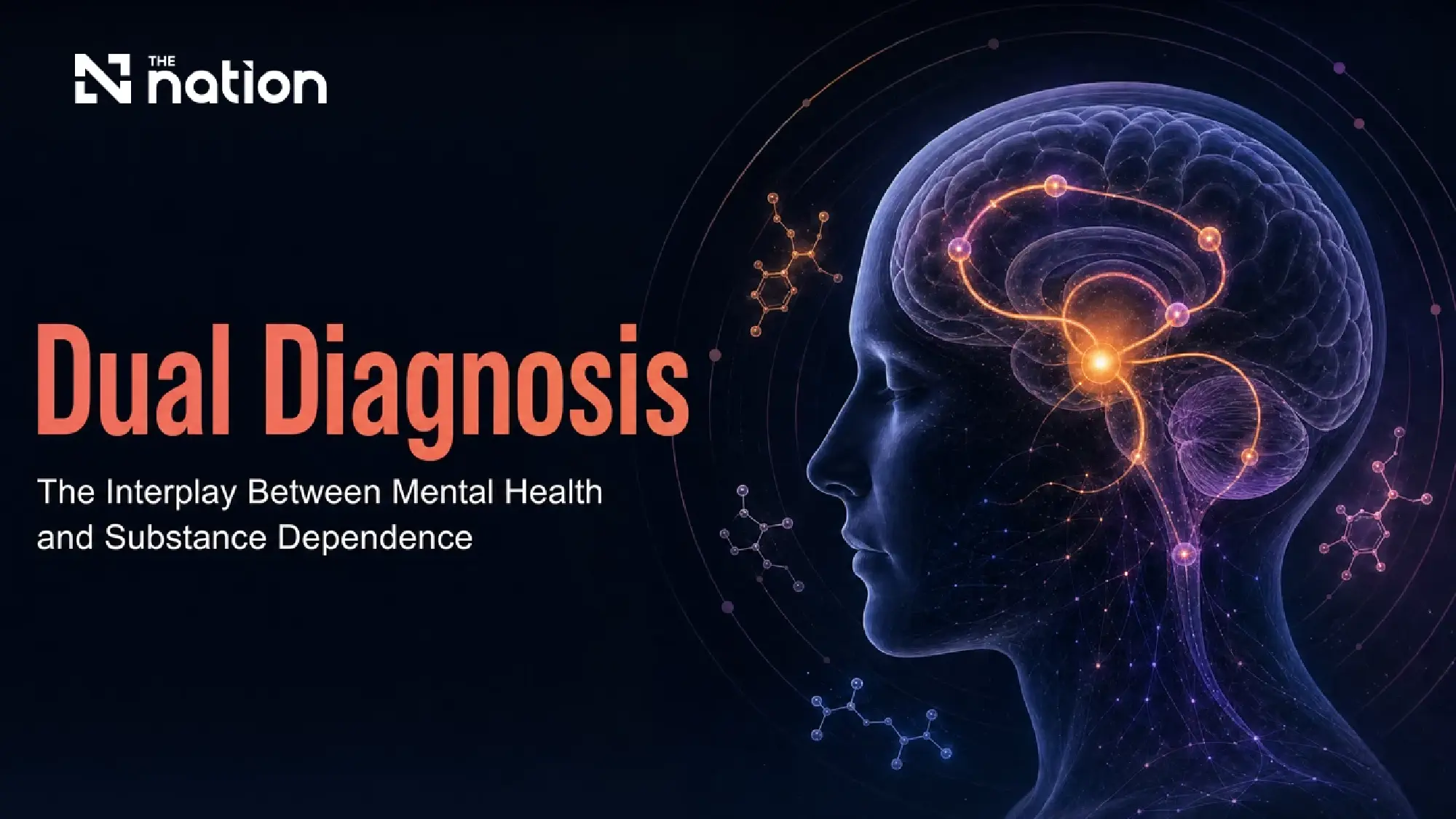
Data from epidemiological studies, including the National Survey on Drug Use and Health (NSDUH), indicate that approximately 50% of individuals diagnosed with a mental health disorder also meet criteria for a co-occurring substance use disorder, and vice versa. Common co-occurring conditions include Major Depressive Disorder (MDD), Generalized Anxiety Disorder (GAD), Burnout Syndrome, and Post-Traumatic Stress Disorder (PTSD).
[ Root Vulnerability ]
(Trauma, Anxiety, Depression)
│
▼
[ Self-Medication Cycle ]
(Substances used to suppress emotional distress)
│
▼
[ Neurobiological Shift ]
(Receptor down-regulation & dependence)
│
▼
[ Integrated Dual Diagnosis Care ]
(Simultaneous psychiatric & addiction recovery)
The Self-Medication Hypothesis
First articulated by clinical psychiatrist Dr. Edward Khantzian, the self-medication hypothesis posits that substance use frequently functions as an attempt to alleviate severe, unmanaged psychological pain:
-
GABAergic Regulation: Individuals experiencing acute anxiety or hyperarousal frequently rely on alcohol or sedatives to chemically enhance GABA activity, inducing temporary sedation.
-
Dopaminergic Compensation: Individuals suffering from clinical depression or exhaustion often turn to central nervous system stimulants (such as cocaine or methamphetamine) to elevate dopamine and norepinephrine levels.
Clinical trials confirm that treating substance use in isolation without addressing underlying psychiatric conditions leads to high relapse rates. Conversely, integrated inpatient dual-diagnosis interventions yield significantly higher 12-month continuous remission rates by treating both conditions concurrently.

Evidence-Based Clinical Modalities
Sustainable recovery relies on scientifically validated therapeutic interventions capable of leveraging neuroplasticity the brain's capacity to reorganize and form new neural connections:
1. Medically Supervised Detoxification
Abrupt cessation of certain substances (such as alcohol, benzodiazepines, or opioids) can trigger severe autonomic instability, seizures, or life-threatening withdrawal complications. Supervised medical detox utilizes targeted pharmacological protocols and 24/7 clinical monitoring to stabilize vital signs and safely normalize central nervous system chemistry.
2. Cognitive Behavioral Therapy (CBT) & Dialectical Behavior Therapy (DBT)
Meta-analyses consistently support CBT and DBT as first-line interventions for substance dependence and emotional dysregulation
-
CBT Identifies automatic cognitive distortions, disrupts conditioned behavioral loops, and establishes proactive relapse-prevention strategies.
-
DBT Cultivates core skills in distress tolerance, mindfulness, and emotion regulation, replacing self-destructive coping mechanisms with structured behavioral responses.
3. Eye Movement Desensitization and Reprocessing (EMDR)
Originally developed for PTSD, EMDR utilizes bilateral sensory stimulation (such as rhythmic eye movements) to facilitate the reprocessing of traumatic memories stored within the limbic system. Clinical trials demonstrate that EMDR significantly attenuates the vividness and emotional intensity of trauma triggers while reducing substance craving scores.

Environmental Reset and Autonomic Regulation
Chronic stress and urban triggers frequently keep the Hypothalamic-Pituitary-Adrenal (HPA) axis in a state of persistent activation, flooding the body with cortisol and locking the autonomic nervous system into a continuous "fight-or-flight" response.
|
Environmental State |
Physiological & Neurological Impact |
|
High-Stress Trigger Environment |
Sustained HPA axis activation → Elevated cortisol → Prefrontal hypoactivity → Heightened craving response |
|
Nature Immersion & Controlled Setting |
Parasympathetic activation → Reduced cortisol & blood pressure → Enhanced neuroplasticity & sleep architecture |
Studies in environmental psychology and restorative medicine show that relocating to a private, nature-oriented residential setting removes conditioned behavioral triggers. This transition allows the parasympathetic nervous system ("rest and digest") to regain dominance, reducing systemic inflammation and creating optimal conditions for cognitive and emotional rehabilitation.

Neuroplasticity and Long-Term Brain Recovery
The most encouraging breakthrough of modern neuroscience is that the brain retains the ability to repair itself after long-term substance exposure.
-
Receptor Normalization: Longitudinal Positron Emission Tomography (PET) imaging confirms that with sustained abstinence and structured clinical care, dopamine D2 receptor availability in the striatum gradually recovers toward baseline levels over 12 to 14 months.
-
Neurogenesis and BDNF: Structured recovery incorporating nutrient-dense diets, regular aerobic exercise, and mindfulness protocols stimulates the production of Brain-Derived Neurotrophic Factor (BDNF) a vital protein that supports neuronal growth, synaptic plasticity, and cognitive resilience.
Addiction and mental health challenges are treatable medical conditions requiring specialized clinical care, neurobiological support, and an environment conducive to deep restorative healing. Grounding treatment in empirical neuroscience removes societal stigma, providing a clear, structured, and clinically validated pathway toward lasting recovery and sustained quality of life.
Website : The Hills Rehab chiangmai
Email Admissions : [email protected]
Phone : +66 80 387 8577
