
Sa Kaeo governor apologises over Nong Chan land dispute
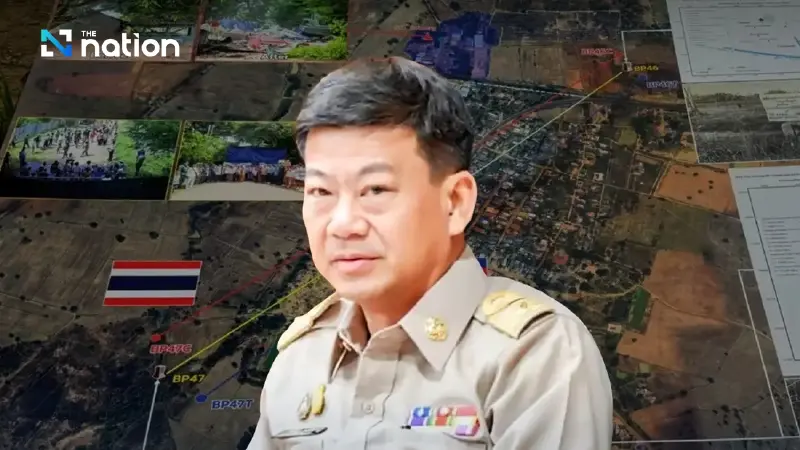


Sa Kaeo governor apologises to Nong Chan villagers for misunderstanding over land ownership documents, pledges to issue title deeds to eligible residents, with officials set to accept applications on August 25.
Sa Kaeo governor Parinya Phothisat on Saturday (August 23) issued a public apology after his earlier remarks about disputed land in Nong Chan village, Khok Sung district, sparked controversy.
Parinya had previously claimed that the disputed land was a forest area without land ownership documents, sparking criticism from residents.
“I sincerely apologise to all citizens for the misunderstanding regarding the land at Nong Chan village, Khok Sung district. I reaffirm that this area is within the Kingdom of Thailand,” Parinya said.
He clarified that Thai residents holding Sor Kor 1 (pre-emptive land use certificates), Nor Sor 2 (land reservations), and Nor Sor 3 (land utilisation certificates) in Nong Chan and the vicinity of boundary markers 45–49 are eligible to apply for formal title deeds.

Applications can be lodged with officials at the Aranyaprathet branch of the Sa Kaeo Provincial Land Office.
“Officials will issue title deeds to all eligible residents in line with the law. On Monday, August 25, I will accompany land officers to the area to accept applications directly,” he added.
The dispute dates back decades, with Thai villagers maintaining that they have held land rights documents since before 1962.
The issue resurfaced after Parinya joined First Army Area commanders on August 22 to brief the press on the outcomes of the Thailand–Cambodia Regional Border Committee (RBC) meeting.

Villagers have long called for urgent government action, arguing that Cambodian authorities have occupied parts of Nong Chan for more than 40 years.
Thai authorities have reaffirmed that the Nong Chan area lies within Thailand’s territory. The land was originally used as a temporary shelter for Cambodian refugees fleeing conflict. After the war ended, some Cambodians did not return home, and their community gradually expanded. This later led to claims by Cambodian villagers that the area belonged to them, causing hardship for Thai residents whose farmland was seized.
Following the latest clashes between Thai and Cambodian troops, the Thai side erected barbed wire fences in the area, restoring the land to Thai villagers’ rightful possession.
