
Fewer storms, tropical depressions forecast for Vietnam in 2026
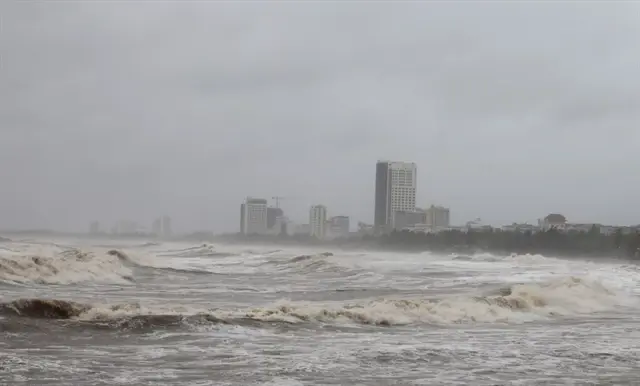


Hydro-meteorological experts cautioned that climate change continues to drive increasingly complex and extreme weather patterns, advising authorities and people to proactively prepare and respond by regularly following official forecasts.
The number of storms and tropical depressions in 2026 is forecast to be lower than the multi-year average, according to National Centre for Hydro-Meteorological Forecasting (NCHMF) deputy director Hoang Phuc Lam.
Speaking at a recent press briefing on hydro-meteorological outlooks held in Hanoi, Lam said this year may see fewer storms and tropical depressions than in 2025.
From February to July, the number of storm systems active in the East Sea (internationally known as the South China Sea) is likely to be close to the multi-year average at about 3.8 systems, including roughly 1.2 making landfall, he said.
Between August and December, this number is expected to fall below the multi-year average of 9.6 systems for this period, with around 3.8 making landfall. However, strong-intensity storms remain a concern, Lam stressed.
“From August to September, storms and tropical depressions will mainly affect northern regions, while from September to December, they are expected to primarily impact central and southern Vietnam,” he said.
Widespread heatwaves
Heatwaves in 2026 are likely to occur more frequently than during the same period in 2025, said the NCHMF deputy director.
In the southern region, heatwaves are expected to begin from late February to early March in the southeastern provinces, then intensify and gradually expand to the southwestern areas.
Meanwhile, localised heatwaves may appear in northwestern Vietnam from March. Around April, areas from Thanh Hoa Province to Hue City are likely to record high temperatures, which will then spread across the entire northern and central regions by the end of the month.
Heat intensity is expected to gradually ease in southern provinces from around May, while northern and central regions will see stronger heat conditions through August.
Weak cold fronts
NCHMF deputy director Lâm noted that cold fronts in the early months of 2026 are expected to be weaker than the multi-year average.
However, severe cold spells may still occur, particularly in February in northern mountainous areas, with risks of frost and ice.
Nationwide, the rainy season is forecast to be on par with long-term averages, beginning in late April to early May in the Central Highlands, in the second half of May in the southern region, and around May in the north.
This year, the number of widespread heavy rainfall events across the country is expected to be about the same as or lower than the multi-year average.
They may begin in June in the north, gradually move southward, and end around November in central provinces.
Water shortage risks
Lam warned that from April to July, localised drought and water shortages outside of irrigated areas may occur in Gia Lai, Dak Lak and Lam Dong provinces.
Meanwhile, during the early dry season of 2026, saltwater intrusion in the Mekong Delta is forecast to be around the multi-year average and potentially lower than in the 2024-2025 dry season.
From February to April, salinity levels may increase but are not expected to cause major impacts on livelihoods or agriculture in the delta, according to the NCHMF deputy director.
Along the southeastern coast, six high-tide events are forecast on March 1-6, March 28-April 3, April 27-May 3, October 7-13, November 4-10, and December 4-10.
During the November and December events, water levels at the Vũng Tàu station may exceed 4.3m.
Hydro-meteorological experts cautioned that climate change continues to drive increasingly complex and extreme weather patterns.
Viet Nam News
Asia News Network
