
Myanmar junta plans 'super-body' to tighten grip on military, new government
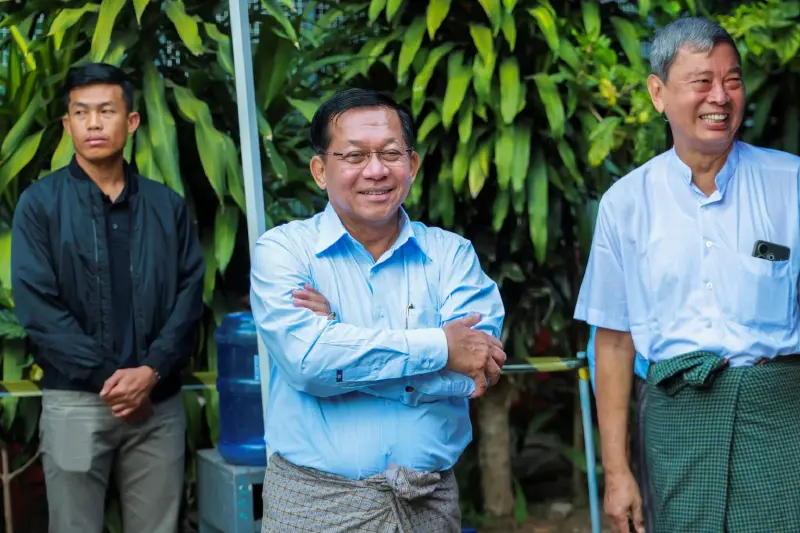


Myanmar’s junta says it will set up a five-member Union Consultative Council with sweeping powers over the military, civilian administration and the legislative process.
Myanmar’s military rulers say they will create a new council with sweeping powers over both the armed forces and the civilian administration, a step analysts and lawyers argue is designed to keep Senior Gen Min Aung Hlaing firmly in charge even if he assumes the presidency.
State media reported late Tuesday that the junta will establish a five-member Union Consultative Council, days after the final stage of an election that is expected to lead to a new parliament convening next month and authority shifting to a nominally civilian government.
Naing Min Khant, a programme associate at the Institute for Strategy and Policy, Myanmar, said the proposed body’s remit is unusually wide, giving it influence over core national security functions as well as the legislative process.
He described it as an institutional overhaul that could place a “super-body” above the executive, legislature and judiciary, effectively serving as the country’s supreme authority.
A junta spokesperson did not respond to calls seeking comment.
Min Aung Hlaing seized power in a 2021 coup that removed the elected government led by Nobel Peace Prize laureate Aung San Suu Kyi, sparking mass protests that evolved into a nationwide civil war.
More than 93,000 people have been killed in Myanmar’s violence since then, according to the Armed Conflict Location & Event Data Project.
Although the 69-year-old has said he plans to hand over “state responsibilities” to the next government, he is widely expected to become president.
The military-backed Union Solidarity and Development Party won 81% of available seats in both houses in a vote condemned by the United Nations, some Western governments and rights groups as a one-sided exercise aimed at entrenching military rule through proxies.
State media did not explain why the new council is being formed.
However, two lawyers said it could allow Min Aung Hlaing to move into the presidency without surrendering command of the armed forces, while also retaining leverage over the civilian administration and parliament.
Kyee Myint, one of the lawyers, said the council appears designed to supervise both the next commander-in-chief and the government, limiting the ability of any successor military chief to accumulate independent power.
Naing Min Khant warned the arrangement would come with no meaningful checks. “A defining feature of this structure is its total lack of accountability,” he said.
Reuters
