
Foreign investors flock to buy Thai hotels, with 2026 set to surpass THB12 billion
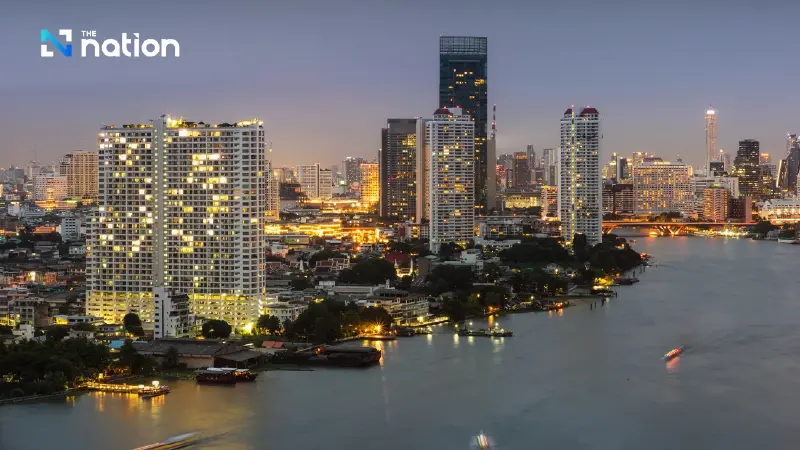


Foreign investors are driving the Thai hotel market, with 2026 set to see transactions exceed 12 billion baht, focusing on prime locations in Bangkok and Phuket.
Despite a slowdown in foreign tourist arrivals in 2025, the long-term recovery potential of Thailand's tourism industry has renewed investor confidence, creating a thriving hotel market. Both Thai and foreign investors are aggressively acquiring assets in high-potential locations to renovate, upgrade, and add long-term value.
Phattarachai Taweewong, Director of Research and Communications at Colliers Thailand, mentioned that Thailand’s tourism sector remains a vital economic driver, even under global economic pressure. In 2025, foreign tourist arrivals dropped to 32.97 million, down 7.23% year-on-year, generating 1.54 trillion baht in revenue, a decrease of 4.71%.
The primary markets continue to be Malaysia, China, India, Russia, and South Korea, with the highest revenues generated by Chinese, Russian, and Indian tourists. This shows their strong purchasing power in the hotel sector.
Meanwhile, domestic tourism continues to be a significant support, with over 202.66 million Thai tourists, marking a 2.84% increase and generating 1.17 trillion baht in revenue, up 4.18%. Bangkok and coastal destinations continue to dominate the market.

Occupancy drops, but room rates rise
Although the average hotel occupancy rate nationwide in 2025 decreased to around 72%, many hotels managed to push up their average daily rates (ADR) and revenue per available room (RevPAR). This shift reflects the strategic focus of operators on premium markets and enhancing product quality over mere volume competition.
Hotel transactions surge, investors return
In the past decade, the total value of hotel transactions in Thailand has reached 137.92 billion baht, averaging nearly 14 billion baht annually. The peak years of 2017-2018 saw transaction values exceed 20 billion baht per year, driven by the growth in foreign tourism.
In 2025, approximately six hotels, with 1,574 rooms, were sold, valued at 10.14 billion baht, concentrated in major tourist destinations like Bangkok, Phuket, Chonburi, and Koh Samui.
Phattarachai predicts that in 2026, the value of hotel transactions in Thailand could reach 12 billion baht, driven by ongoing negotiations and the investment interest of both Thai and foreign major operators.

Bangkok and Phuket lead investment locations
The most popular investment locations remain Bangkok, Phuket, Koh Samui, Pattaya, Krabi, and Chiang Mai, which continue to have strong tourism demand and are ideal for hotel renovations and new service openings.
“Post-COVID-19, many hotels were forced to sell due to financial pressures, presenting an opportunity for investors ready to acquire assets at competitive prices,” Phattarachai said.
Investment selection criteria: ROI and building age
Investors are primarily drawn to hotels that offer a minimum annual return on investment (ROI) of 6%, with buildings no older than 10-15 years to reduce maintenance costs. Hotels with over 150 rooms are seen as more economical, providing better returns. The "value-add" strategy is central to modern hotel investment.
“Today’s hotel investments focus on more than just holding assets but aim to create added value through renovation, upgrading hotel standards, repositioning to higher market tiers, and restructuring cost and revenue models to boost long-term efficiency,” Phattarachai said.

Thai hotels remain prime investment assets
The Tourism Authority of Thailand (TAT) projects that 34 million foreign tourists will visit Thailand in 2026. Despite global economic challenges, the recovery potential of Thai tourism remains a significant driver.
Overall, the "Thai hotel market" is shifting from traditional investments to strategic, value-driven investments focused on long-term sustainability, making Thai hotels a standout asset for both domestic and international investors.
