
Wild elephant ‘Sido Hoo-pub’ dies in relocation; DNP cites airway blockage, stress
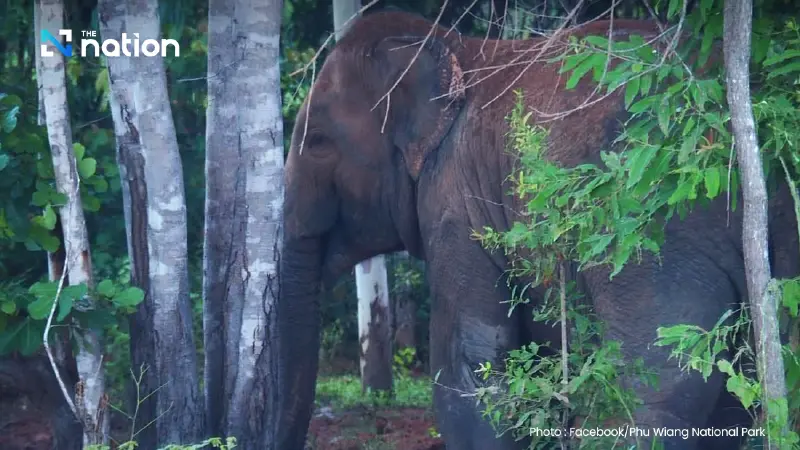


Department of National Parks said “Sido Hoo-pub” died during relocation after aspirating food that blocked his airway, triggering acute capture myopathy, shock and heart failure.
The Department of National Parks, Wildlife and Plant Conservation (DNP) clarified the facts and expressed its deepest condolences over the loss of the wild elephant Sido Hoo-pub, which collapsed and died during relocation from Khon Kaen province to the Phu Luang Wild Elephant Food Plant Rehabilitation Project in Loei.
“The Department recognises that this incident has caused grief and concern among the public. We extend our profound condolences over the loss of this valuable wild elephant, as well as to the family of the person who previously died after being attacked by a wild elephant in Khon Kaen,” the DNP said.
Sido Hoo-pub was a male wild elephant, estimated to be around 15–20 years old. He originally lived in Phu Luang Wildlife Sanctuary in Loei, but later moved into agricultural areas in Phu Wiang district, Khon Kaen, and was frequently seen near communities. This behaviour culminated in an incident in which a member of the public was attacked and killed.
The relocation was carried out under a temporary protection order issued by the Khon Kaen Administrative Court, with two key objectives:
- to protect the safety of residents living in high-risk areas; and
- to conserve the elephant’s life by returning it to a suitable natural food source.

The DNP said the operation was conducted in compliance with the court order, which is legally binding. Failure to comply would constitute contempt of court, a legal offence that could expose responsible officials to criminal penalties. The department added that inaction would also mean leaving local residents at continued risk to life and property.
It said it therefore had a legal duty to proceed with the relocation, guided by the rule of law, social responsibility and wildlife welfare.
The DNP said preparations were thorough and conducted to international standards, including:
- Establishing a multi-agency command centre
- Deploying experienced veterinarians and animal handlers
- Calculating anaesthetic dosage based on the elephant’s weight and physical condition
- Monitoring vital signs throughout the process, including respiration, pulse and body temperature
- Positioning the elephant to reduce pressure on the respiratory system.

Despite the preparations, the elephant suffered a sudden physiological crisis during the journey. Veterinarians halted the convoy immediately and provided emergency care, including airway management, intravenous fluids and temperature control, but were unable to save the animal.
An initial assessment suggested possible food aspiration, but the department said it would await a detailed necropsy to confirm the cause of death.
The DNP said it was committed to transparency and accountability, including:
- Appointing an expert panel to review every step of the operation;
- Conducting a detailed necropsy examining multiple body systems, including pathology and toxicology;
- Reviewing and improving standards for capturing and relocating wildlife—particularly pre-transport health assessment, fasting procedures and emergency contingency plans;
- Reporting findings transparently once the investigation is complete.
The department said human–elephant conflict management remains a challenge that requires the utmost caution, and it would apply lessons from this case to better protect both public safety and wildlife welfare.
It thanked the public for its understanding and reiterated it would continue working responsibly, transparently, and in line with scientific principles and conservation ethics.

The DNP later released autopsy findings for the male wild elephant “Sido Hoo-pub”, described as not yet fully mature and weighing about 2.3 tonnes. The elephant died while being relocated back to its habitat from Wiang Kao district, Khon Kaen, to Phu Luang Wildlife Sanctuary in Loei on February 3.
The cause of death was determined to be food aspiration leading to obstruction of the airway, together with acute capture myopathy, resulting in shock and heart failure.
According to the report, the necropsy was conducted by veterinarians from Protected Area Regional Office 8 (Khon Kaen).
The team found clear abnormalities in the respiratory system and multiple internal organs, including food and grass residue in the mouth, cloudy white foam in the trachea, pale gastrointestinal lining, an enlarged heart muscle, and haemorrhagic spots in several vital organs.
A large amount of food was also found in the digestive tract, particularly sugarcane and cassava.

The veterinarians also found features consistent with capture myopathy—acute muscle damage commonly triggered by severe stress in wild animals during capture or transport. The condition can cause circulatory collapse and rapid death, even when there are no obvious external injuries.
Tissue samples were collected from multiple organs, as well as food residue from the mouth and stomach, including samples from the lungs, heart muscle, liver, spleen and intestines, for additional laboratory testing to confirm the official cause of death.
The DNP reiterated that it has appointed a panel of experts to examine every step of the relocation operation and will review and improve operational standards—especially pre-transport health assessment, fasting procedures and emergency response plans—to prevent a recurrence. It said it would report findings to the public transparently.
