Turning Plastic Waste into Smiles Through Youth Innovation
TUESDAY, MAY 05, 2026
Play
A Chiang Mai youth-led project transforms 850 kg of plastic waste into learning spaces, inspiring sustainable innovation and community impact.
Amid the growing global crisis of plastic waste impacting the environment, a promising model has emerged that integrates academic knowledge with the power of youth volunteerism to drive a sustainable learning society.
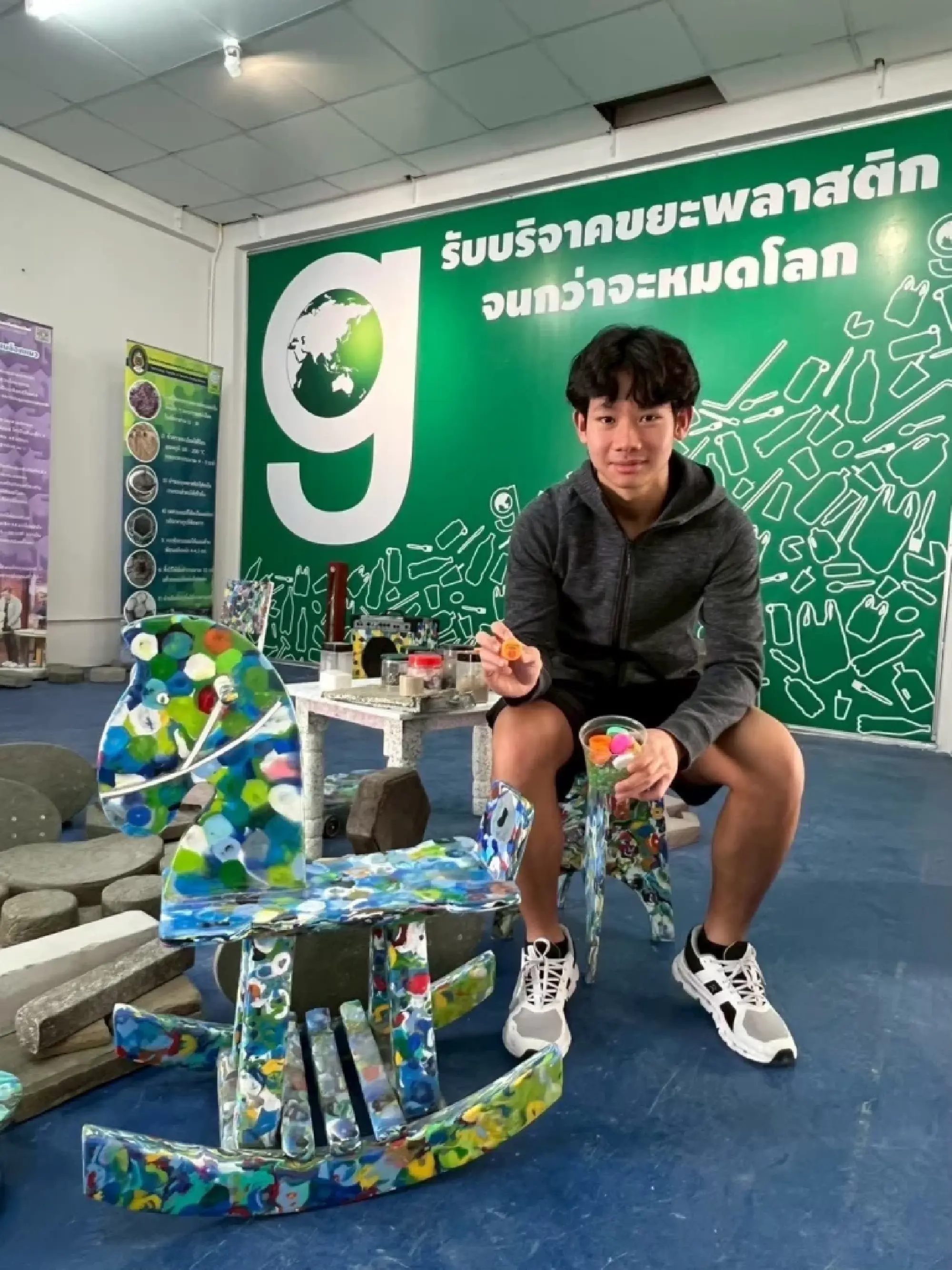
Phoom Kitrungrueangkul, a passionate young environmental volunteer, has initiated and co-developed the project “Turning Plastic into Smiles.” The project focuses on transforming plastic waste into practical, reusable materials for schools and communities.
With a strong interest in environmental material innovation, Phoom began by researching ways to incorporate water hyacinth into concrete to reduce heat absorption in construction materials. He also explored the potential of natural materials to minimize environmental impact. This experience inspired him to further develop recycled materials from plastic waste, aiming for real-world applications in construction and public space development.
To advance the project, he sought guidance from experts including Asst.Prof.Dr.Wechsawan Lakas and Nutapong Hirano, who served as advisors and knowledge providers. The project was developed under the concept of “Academic Volunteerism for Environmental Conservation,” emphasizing experiential learning through hands-on practice.
The process covered all stages—from studying plastic composition, waste sorting, and designing recycling processes to conducting laboratory experiments to test material properties. Low-Density Polyethylene (LDPE) was melted and combined with other waste materials under expert supervision to create recycled materials with suitable mechanical properties for construction and spatial development.
Phoom actively participated in every step, from understanding plastic waste issues and material properties to experimenting with recycling techniques and designing effective ways to transfer knowledge to teachers and students. The project reflects not only his interest in environmental innovation but also his ability to bridge academic knowledge with communication and community impact.
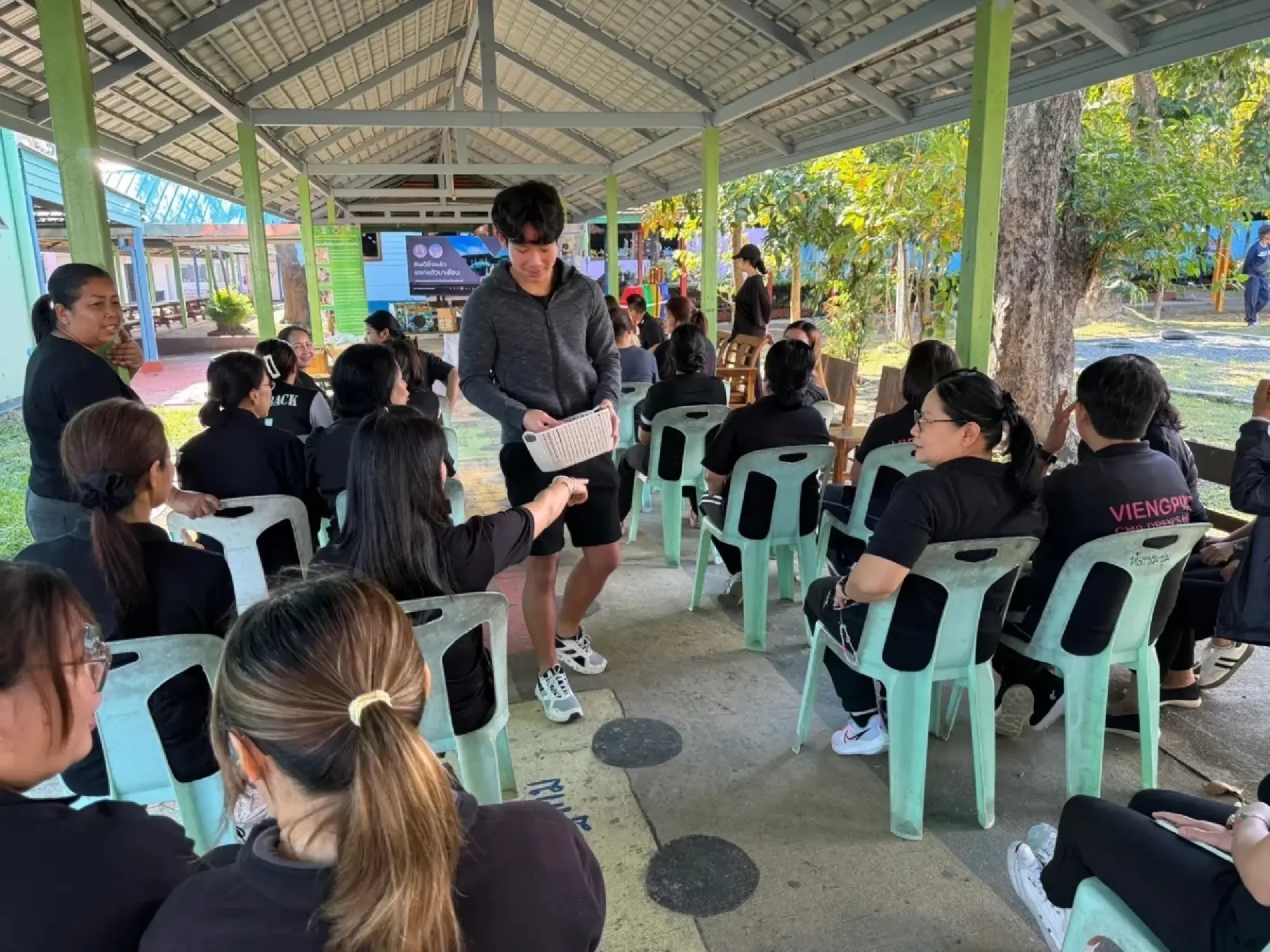
After successful development and testing, the project was implemented at Wiang Phing Children Home for Children (Baan Viengping Orphanage) in Chiang Mai. Activities included hands-on workshops with teachers and children through participatory learning, with Phoom serving as a youth speaker to deliver knowledge on production processes and practical applications of recycled materials.
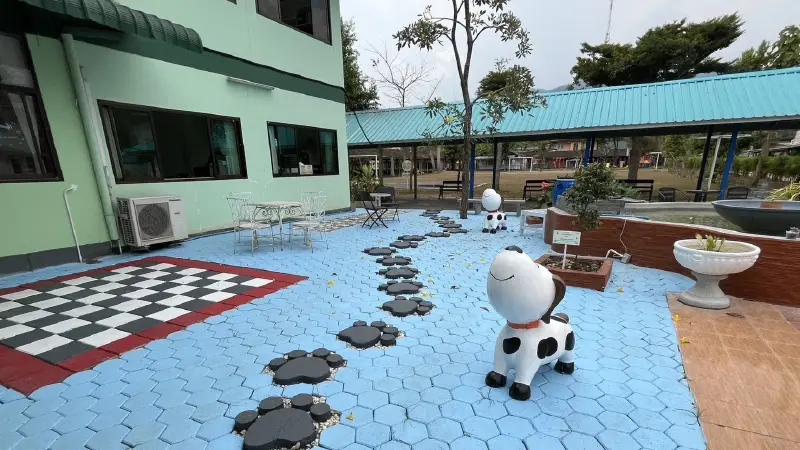
The project achieved tangible success by reducing plastic waste by over 850 kilograms and transforming it into innovative materials for community infrastructure. This included 130 square meters of hexagonal paving blocks made from hard plastic waste.
The newly developed learning and activity spaces directly benefit approximately 100 children, as well as staff and members of the surrounding community."
Asst.Prof.Dr.Wechsawan Lakas and Nutapong Hirano emphasized that providing youth with opportunities to engage in real research and hands-on work builds a strong foundation for future innovators and fosters social responsibility.
Phoom reflected on his experience:
“This project showed me that ‘waste’ can become a valuable resource when combined with science and design. Seeing plastic waste transformed into a learning space for children creates tangible benefits for the community. This has inspired me to continue pursuing environmental innovation.”
The “Turning Plastic into Smiles” project stands as a strong example of collaboration between youth, academics, and educational institutions. It demonstrates how innovation can be developed alongside environmental awareness, ultimately contributing to sustainable community and national development