
BOT prepares to enforce new source rules for cash deposits from THB5m
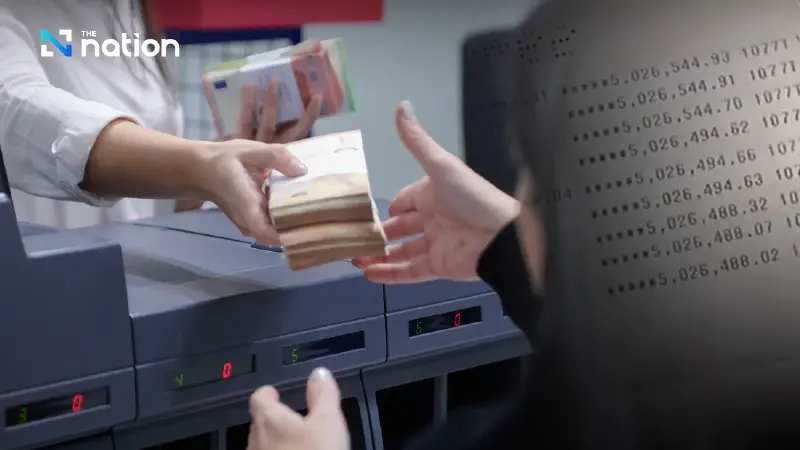


The central bank plans to require people depositing THB5 million or more in cash to state the source of the money as part of tighter controls.
- The Bank of Thailand (BOT) is preparing a new rule requiring individuals to declare the source of funds for cash deposits of THB 5 million or more.
- This regulation is expected to take effect in the next two to three months and will also apply to high-value banknote exchanges of the same amount.
- The measure aims to curb illegal transactions, corruption, and "grey businesses" by encouraging a shift to traceable electronic payments.
- This follows a similar, successful rule for cash withdrawals of THB 5 million, which has already led to a significant decrease in such transactions.
The central bank is continuing its policy of supervising high-value cash transactions to curb illegal transactions.
In April 2026, it began enforcing a measure requiring anyone withdrawing THB5 million or more in cash to clearly state the purpose of use.
To cover the entire system, it is also preparing to announce controls on high-value cash deposits soon.
Cash deposits of THB5 million or more must be declared as the source of funds

Vitai Ratanakorn, Governor of the Bank of Thailand (BOT), gave an update on measures to regulate cash transactions, saying the BOT was preparing to expand its tighter cash controls.
In about the next two to three months, rules on “cash deposits” worth THB5 million or more will begin to take effect, requiring people bringing in large sums to state and explain where the money came from.
The measure will also cover high-value banknote exchanges, such as bringing THB5 million in THB1,000 banknotes to exchange for THB500 banknotes.
The person requesting the exchange will also have to state the purpose and source of the money, while commercial banks will be responsible for checking and reporting such transactions.
Cash withdrawal controls take effect as volumes fall 30%
The BOT governor said the measure controlling cash withdrawals of THB5 million or more per transaction, which has been in place since early April 2026, had received a positive response and produced clear results.
Data for April 2026 showed the number of high-value cash withdrawals fell by about 28% and their total value by about 25% compared with the average for the first quarter (January-March).
In May, the downtrend in cash use continued, with a further decline of about 25-30%.
One reason may have been post-election factors, but another important factor was that the measure had encouraged people carrying out normal transactions to switch to other, more traceable channels.
Tighter cash controls across the system to curb corruption and grey business
The BOT governor stressed that suspicious transactions linked to corruption or illegal businesses often rely mainly on “cash” because it leaves no trail to follow.
Tightening rules on deposits, withdrawals and exchanges will help reduce opportunities for grey businesses and corruption over the long term.
At the same time, the BOT’s key intention in issuing the rules is to push transactions into the electronic system, whether through money transfers or cashier’s cheques, so that every transaction can be checked retrospectively.
“In developed countries, it should be possible to transfer everything or use other financial instruments instead of cash. This measure will help improve the country by making suspicious transactions harder to conduct.”
The BOT acknowledged that the measure could create some burden for commercial banks in terms of tracking systems, as they will have to check cases of split cash withdrawals from several branches under the same account name.
However, it was confident that this was the right approach for the stability of the country’s financial system.
