
Is July 1, a turning point for PM Paetongtarn and Thai politics?
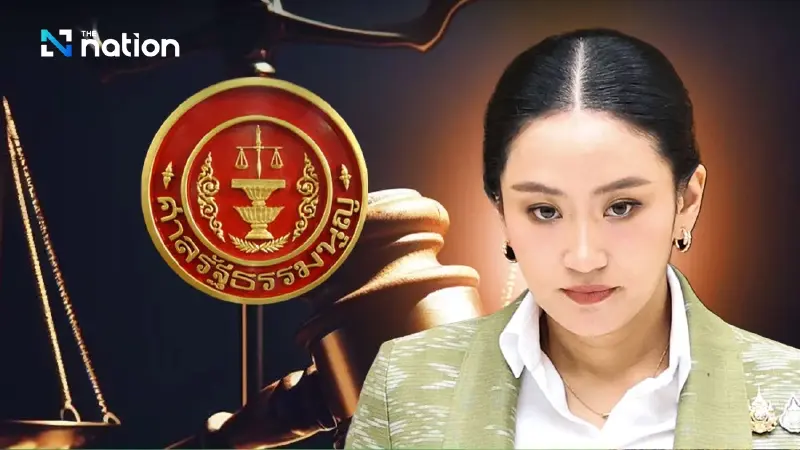


Thailand’s political spotlight is now firmly fixed on foreign affairs—specifically, rising tensions with its neighbour, Cambodia. The recent Thai-Cambodian border incident has heated up the domestic political climate, particularly following the leaked audio clip of a conversation between Prime Minister Paetongtarn Shinawatra and Cambodian Senate President Hun Sen.
The recording, which went viral on social media, has fuelled public debate and provided the Bhumjaithai Party with grounds to withdraw from the ruling coalition.
A crucial moment that could determine the fate of the Paetongtarn administration will arrive on Tuesday, July 1, 2025, when the Constitutional Court is scheduled to meet.
This follows a petition submitted by Mongkol Surasajja, President of the Senate, on behalf of 36 senators. The petition calls on the Constitutional Court to rule whether Paetongtarn violated serious ethical standards in her conversation with Hun Sen.
The senators argue that her conduct may warrant her removal from office under Section 170, paragraph one (4), in conjunction with Sections 160 (4) and (5) of the Constitution.
The court had initially delayed all hearings from 23–26 June 2025, as Thailand was hosting the Board of Members Meeting (BoMM) of the Association of Asian Constitutional Courts and Equivalent Institutions (AACC), of which it holds the presidency for the 2023–2025 term.
The event was held at the Siam Kempinski Hotel in Bangkok and featured in-person participation from AACC member countries such as South Korea, Turkey, and Uzbekistan, while others joined online.
In accordance with AACC regulations, particularly Article 15, the host country is required to organise at least one such meeting per year.
With the AACC summit concluded, the Constitutional Court will resume its duties and reconvene to consider the high-stakes petition on July 1, 2025.
Tuesday, July 1, 2025, is shaping up to be a critical day for Prime Minister Paetongtarn, as the Constitutional Court is expected to rule on whether to accept a high-profile petition seeking her removal from office.
The petition, filed by 36 senators, cites Section 170, paragraph 3, in conjunction with Section 82 of the Constitution. It claims that the leaked audio clip of a conversation between the Thai prime minister and Cambodia’s Senate President contains content suggesting interference in military affairs or misuse of office to influence national security mechanisms—allegations that could constitute a “serious violation of ethical standards.”
Should the court accept the petition, it may also issue an interim order suspending Paetongtarn from her duties pending a final ruling, just as it did in previous high-stakes cases involving Thanathorn Juangroongruangkit, former leader of the Future Forward Party, and ex-Prime Minister Gen Prayut Chan-o-cha.
Although the court has not yet decided whether to proceed with the case, the process alone has already shaken the stability of the Pheu Thai-led government, especially after the Bhumjaithai Party’s withdrawal from the ruling coalition.
If Paetongtarn is suspended, Pheu Thai will be required to nominate one of the deputy prime ministers as acting prime minister. In this case, it would likely fall to Phumtham Wechayachai, the most senior deputy PM in the Cabinet lineup.
This scenario would not only trigger internal friction but also intensify pressure from the opposition and segments of the public now calling for a House dissolution. On the other hand, if the court rejects the petition, the political crisis may ease somewhat, though questions surrounding Paetongtarn’s credibility are likely to persist in the public sphere.
While the legal battle will not conclude on 1 July, a decision to accept the petition would officially launch judicial proceedings that could redefine Thai politics. Most notably, it would mark yet another moment where Thailand’s political battleground shifts from the ballot box to the courtroom.
V. Cherngdoi
