
Nepal sets March elections after naming interim Prime Minister
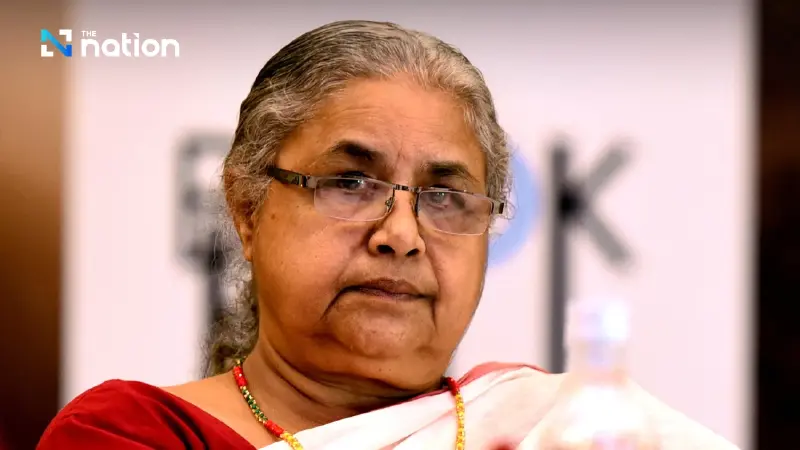


Nepal's President Ramchandra Paudel dissolved parliament and called for fresh elections on March 5, his office said late on Friday, following a week of deadly violence that culminated in the appointment of the country's first woman Prime Minister in the interim.
The announcement came just hours after Paudel appointed former Chief Justice Sushila Karki to lead the country, following the deadly "Gen Z"-led anti-graft protests that forced Prime Minister K.P. Sharma Oli to resign.
The president "dissolved the House of Representatives ... and fixed March 5, 2026, Thursday for the elections", according to a statement from the president's office.

Karki was appointed after two days of intense negotiations between Paudel, army chief Ashok Raj Sigdel and the protest leaders behind Nepal's worst upheaval in years, which left at least 51 people killed and more than 1,300 injured.
Nepal's southern neighbour, India, said it hoped that the developments would help foster peace and stability.
"Heartfelt congratulations to the Honorable Sushila Karki Ji on assuming the office of Prime Minister of Nepal's interim government. India is fully committed to the peace, progress, and prosperity of Nepal's brothers and sisters," Indian Prime Minister Narendra Modi said in a post on X.
The country-wide protests were sparked by a social media ban that has since been rolled back. The violence subsided only after Oli resigned on Tuesday.
Nepal has grappled with political and economic instability since the abolition of its monarchy in 2008, while a lack of jobs drives millions of young people to seek work in other countries like the Middle East, South Korea and Malaysia.
The country of 30 million people, tucked between China and India, inched back towards normalcy on Friday - with shops reopened, cars back on roads, and police replacing the guns they wielded earlier in the week with batons.
Profile: Nepal’s first female chief justice and now interim leader
Sushila Karki, a former chief justice and Nepal’s first woman to hold that position, has been entrusted with leading the country’s interim government after mass anti-corruption protests spiralled into the deadliest political crisis in decades.
Her appointment on Friday followed violent unrest that claimed at least 51 lives and forced the resignation of Prime Minister K.P. Sharma Oli earlier in the week.
A fearless judge
Renowned for her uncompromising stance against corruption, Karki was unafraid to challenge influential figures during her judicial career. That defiance nearly ended her tenure when lawmakers attempted to impeach her less than a year after she assumed the role of chief justice. The motion was ultimately withdrawn amid widespread public outrage, yet Karki later stepped down voluntarily, disillusioned with the political interference in the judiciary.
“She stood firm in the face of an impeachment motion and never compromised her principles. That makes her the right choice to guide Nepal through this crisis,” said J.L. Bhandari, a senior Supreme Court lawyer.
Limited political background
Although she has little experience in day-to-day politics or governance, colleagues believe her integrity will prove vital in restoring public trust. “She is a capable choice, but success will depend on building a strong team around her,” noted Dipendra Jha, another Supreme Court advocate who worked with her for a decade.
Early life and education
Born in 1952 as the eldest of seven children in Shankarpur, a jute-farming village, Karki grew up in modest circumstances. She pursued higher education in India, earning a master’s degree in law from Banaras Hindu University before starting her legal practice in 1979.
From her youth, Karki was drawn to public life. As a student, she was aligned with the Nepali Congress party and later took part in the 1990s pro-democracy movement against the panchayat system, a royalist regime that centralised power under the king. Her activism led to a brief spell in jail.
“She always treated people equally and inspired us to pursue education,” her younger sister, Junu Dahal, recalled in a 2016 interview—the year Karki broke barriers by becoming Nepal’s first female chief justice.
Looking ahead
Taking charge during a period of uncertainty, with political leaders in hiding and parts of the country still under emergency restrictions, Karki has pledged to work towards a fresh start.
“We will try to establish a new beginning for the country,” she told Indian broadcaster CNN-News18 earlier this week.
Reuters
