
US and China resume trade talks in Madrid with TikTok deadline looming
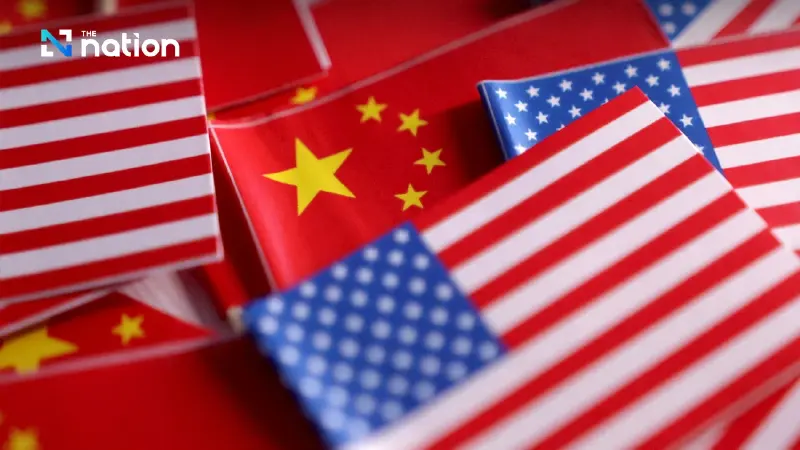


Senior officials from the United States and China met in Madrid on Sunday to discuss long-running trade disputes, Washington’s push for G7 allies to impose tariffs on China over its purchases of Russian oil, and the fast-approaching deadline for TikTok’s Chinese owner ByteDance to divest its US operations.
The meeting marks the fourth round of high-level discussions in as many months between US Treasury Secretary Scott Bessent, Trade Representative Jamieson Greer and Chinese Vice Premier He Lifeng, who have convened repeatedly in European capitals in an attempt to prevent ties from unravelling further under President Donald Trump’s tariff regime. Also present was China’s chief trade negotiator, Li Chenggang.
At their previous meeting in Stockholm in July, the sides agreed to extend a fragile trade truce for 90 days, easing retaliatory tariffs and resuming US access to rare earth minerals from China. Trump has since authorised the continuation of roughly 55% tariffs on Chinese goods until 10 November.
Analysts say the Madrid talks are unlikely to yield a breakthrough, with expectations centred on another extension of ByteDance’s deadline to sell TikTok’s US arm, currently set for 17 September. This would be the fourth such delay since Trump returned to office in January. A source familiar with internal discussions said no sale agreement was expected but the extension would allow the administration political breathing room, despite bipartisan frustration in Congress.
Trade expert Wendy Cutler said more substantial outcomes may be reserved for a possible meeting between Trump and President Xi Jinping later this year, perhaps at the APEC summit in Seoul in October. Potential announcements could include a resolution to US national security concerns over TikTok, new access for US soybean exports to China and a rollback of tariffs on certain Chinese goods linked to fentanyl.
Yet the more fundamental US demands, that Beijing reorient its economy away from state-subsidised exports and towards greater domestic consumption, are likely to take years to resolve. “China won’t agree without significant concessions on export controls and tariffs, and I don’t see the US ready to offer those,” Cutler said.
Russian oil pressure
The Treasury has also flagged discussions on joint efforts to curb money laundering and illicit shipments of technology to Russia. On Friday, Bessent urged G7 partners to impose new tariffs on China and India to discourage Russian oil imports, arguing that Moscow’s revenues must be cut off to push it into peace negotiations over Ukraine.
The US has already levied an additional 25% duty on Indian goods but has not imposed similar measures on China.
Spain’s diplomatic spotlight
Spain has sought to capitalise on hosting the talks, with Foreign Minister José Manuel Albares greeting the delegations at the Palacio de Santa Cruz. Madrid views the event as proof of its growing role as a venue for sensitive global negotiations, and a chance to reinforce its own relations with Washington after recent strains over NATO spending and Gaza.
Bessent has been openly critical of Spanish Prime Minister Pedro Sánchez for maintaining close ties with Beijing at the height of Trump’s tariff campaign, comparing the strategy to “cutting your own throat”.
Reuters
