
Japan, US sign rare earth deal to curb China reliance
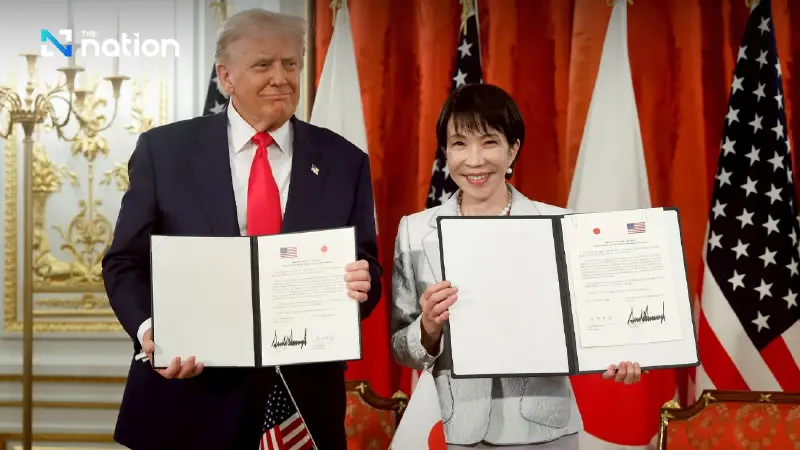


Japan’s new PM Sanae Takaichi praised Donald Trump’s peace efforts and vowed to nominate him for the Nobel Prize after signing a rare earths deal to counter China.
US President Donald Trump hailed Japan’s new prime minister, Sanae Takaichi, during his visit to Tokyo on Tuesday, commending her pledge to accelerate the country’s military expansion and signing a series of trade and critical minerals agreements.
Takaichi, Japan’s first female leader and a long-time ally of Trump’s late friend and golfing partner, Shinzo Abe, told reporters through a White House statement that she would nominate Trump for the Nobel Peace Prize, citing his role in several international peace efforts.
Under a US$550-billion investment package finalised earlier this year, Japan is expected to increase purchases of US products, including soybeans, liquefied natural gas, and pickup trucks, as well as expand cooperation in shipbuilding. Analysts said these commitments could help soften Trump’s calls for Tokyo to shoulder a greater share of defence costs amid rising tensions with China.
To pre-empt such pressure, Takaichi reaffirmed plans to raise Japan’s defence spending to 2% of GDP, fast-tracking measures introduced under Abe. “It’s a very strong handshake,” Trump quipped as the two leaders posed for photographs at the Akasaka Palace.
“From everything Shinzo told me, you’re going to be one of Japan’s great prime ministers,” Trump said. “And congratulations on being the first woman to lead country, it’s a tremendous achievement.”
As a gesture of goodwill, Takaichi presented Trump with Abe’s golf putter, a signed bag from Hideki Matsuyama, and a gold-leaf golf ball, according to photos posted on X by Trump aide Margo Martin.
Deal on critical minerals
During the meeting, Trump praised Japan’s efforts to expand purchases of US defence equipment, while Takaichi lauded his “unprecedented” success in mediating ceasefires between Thailand and Cambodia and between Israel and Palestinian factions.
Both leaders signed a new agreement to strengthen the supply chain for critical and rare earth minerals, aiming to reduce dependence on China’s dominance in mining and refining the materials essential for products such as smartphones, electric vehicles, and fighter jets.
The deal commits both nations to identified joint projects in magnet and battery production within six months and to develop strategic stockpiles of key resources.
Trump’s return to the palace marked his first visit since 2019, when he met Abe, who was assassinated in 2022. After a working lunch, Trump met families of Japanese citizens abducted by North Korea in the 1960s and 1970s, a long-standing humanitarian issue championed by Abe. “The United States stands with you completely,” Trump assured them.
Echoes of Abe
Takaichi’s gestures, from the golf-themed gifts to her repeated references to Abe, were seen as attempts to invoke memories of the close personal rapport between the former Japanese leader and Trump. The symbolism carried extra poignancy as the trial of Abe’s assassin began Tuesday in Nara, the city where he was killed.
At home, Takaichi’s government remains politically fragile, falling two votes short of a lower-house majority despite a recent surge in popularity. Observers say her growing partnership with Washington could help stabilise her leadership and strengthen Japan’s diplomatic hand.
Later in the day, Trump and Takaichi were scheduled to tour the US naval base at Yokosuka, home to the USS George Washington, a key component of the US Indo-Pacific fleet. Trump will then meet business executives in Tokyo before departing on Wednesday for South Korea, where he is expected to hold talks with Chinese President Xi Jinping on reaching a truce in the US-China trade war.
