
Is hair loss a public health issue? President Lee Jae Myung believes so
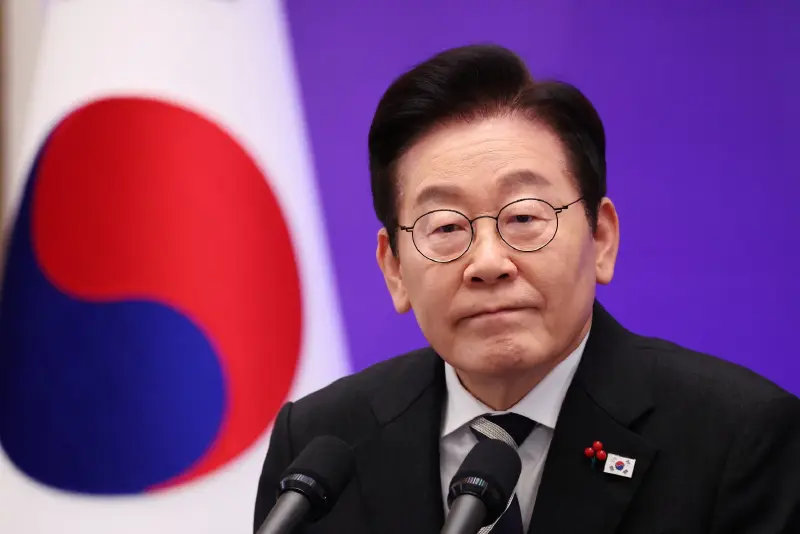


President Lee Jae Myung’s suggestion that South Korea expand public health insurance coverage for hair loss treatment has sparked a backlash, with critics questioning whether the insurance service's strained funds should be used for conditions that are not life-threatening.
The controversy emerged during a livestreamed policy briefing on Tuesday (December 16), when Lee instructed the Ministry of Health and Welfare to review extending insurance coverage beyond the narrow range of medically induced hair loss currently covered.
The remarks quickly drew criticism from doctors, opposition politicians and civic groups, who argue that limited public insurance resources should be prioritised for patients with cancer, rare diseases and other serious conditions.
The Korean Medical Association said Wednesday it was particularly concerned by Lee’s comment that hair loss can be “a matter of life and death for youths.” The association urged the government to prioritise coverage for cancer and other serious illnesses instead.
Under the current system, the National Health Insurance Service covers only limited treatments aimed at suppressing hair loss caused by immune system disorders. Most medications that promote hair growth remain excluded from coverage.
Lee went further by suggesting that hair loss caused by hereditary factors could be regarded as a form of disease and thus be eligible for insurance support.
Health Minister Jeong Eun-kyeong, a family medicine specialist, took a more cautious stance during the briefing, noting that treatments for hereditary hair loss lack clear effectiveness.
Members of the main opposition People Power Party also criticised the proposal.
“The national health insurance system is meant to safeguard treatment for diseases that directly threaten life and for therapies whose effectiveness has been medically proven,” said party spokesperson Choi Bo-yun.
Yoon Hee-sook, a former lawmaker who previously led the party’s innovation committee, echoed the criticism.
“Families of cancer patients are already struggling with anxiety over expensive new medications that remain uncovered by public insurance,” she said, adding that a close relative of hers is currently undergoing cancer treatment.
Concerns over expanding coverage come as the financial outlook for the health insurance system continues to worsen.
According to a report released by the NHIS in July, the system is expected to fall into deficit starting in 2026. The accumulated reserve fund is projected to be depleted as early as 2028, with the annual deficit estimated to reach 1.5 trillion won ($10.6 billion) that year.
The report warned that Korea’s rapidly ageing population will further undermine the fund’s sustainability by driving up medical spending, unless insurance premiums are raised.
In response to the projected deficit, Lee has also called for a review of insurance spending on treatments for mild symptoms such as cough medications.
Medical professionals estimate that adding hair loss treatments to insurance coverage could place a significant burden on the system. Estimates of the number of hair loss patients in Korea range from 2.5 million to as many as 10 million, with the total market size estimated at around 188 billion won in 2024.
Health authorities acknowledge that hair loss can affect self-esteem and mental health, particularly among younger people, but have emphasised fiscal caution.
In a radio interview on Wednesday, Jeong said covering all types of hair loss would have a substantial impact on insurance finances.
“Because hereditary hair loss accounts for the majority of cases, extending benefits broadly would significantly affect the health insurance fund,” she said.
In a separate statement, the Health Ministry said it was conducting a comprehensive review of measures to curb insurance spending, including tighter controls on excessive treatment, while continuing discussions on hair loss coverage. It added that it was premature to estimate the total cost of any expansion.
Lim Jae-seong
The Korea Herald
Asia News Network
