
Early snap election speculation emerges within Takaichi's LDP
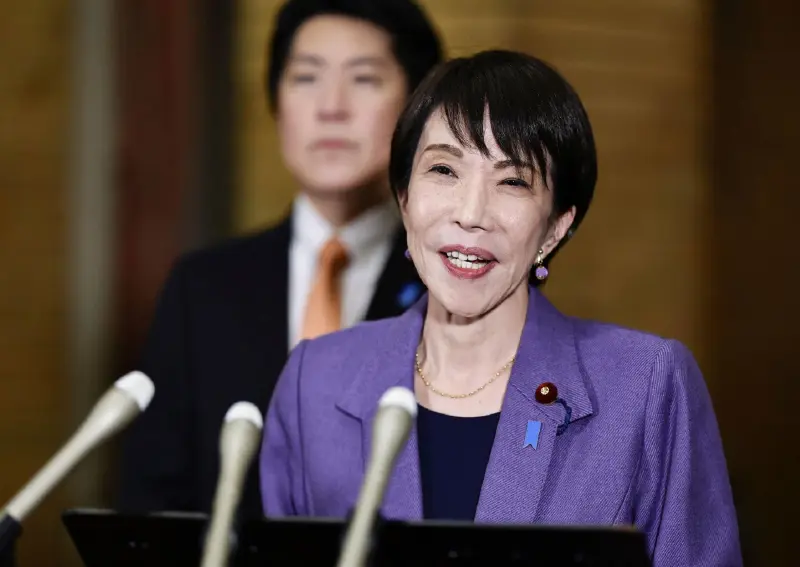


A view has emerged within Japan's ruling Liberal Democratic Party that Prime Minister Sanae Takaichi may dissolve the House of Representatives at the beginning of the ordinary parliamentary session to be convened on January 23 for a snap election, informed sources said Saturday (January 9).
The prime minister apparently aims to strengthen the momentum for implementing her policy measures by winning the election for the all-important lower chamber of the Diet, the country's parliament.
As there are both positive and negative views within the LDP about dissolving the Lower House at an early date, Takaichi is expected to carefully assess the situation before making a final decision.
Some in the LDP are speculating that a Lower House election will be held on Feb. 8 or Feb. 15, the sources said.
If a Lower House election is held, it would be the first since October 2024, soon after the inauguration of the administration of then Prime Minister Shigeru Ishiba, Takaichi's immediate predecessor.
At last year's extraordinary Diet session, the ruling bloc of the LDP and the Japan Innovation Party (Nippon Ishin no Kai) regained its majority in the House of Representatives, bringing its share in the 465-seat Lower House to 233 seats, after welcoming independent lawmakers.
Still, the ruling camp remains short of a majority in the House of Councillors, the upper chamber of the Diet, facing instability in managing the government.
There is a view within the government and the LDP that it is advantageous to fight an election as soon as possible, taking advantage of high public approval for the Takaichi administration. If the ruling camp can increase its presence in the Lower House, the prime minister could strengthen her grip on power.
On the other hand, even if the ruling parties win a Lower House election, they are expected to remain a minority in the Upper House.
Some ruling party members are cautious about dissolving the Lower House, saying it would delay the passage of the government's fiscal 2026 budget bill, potentially undermining Takaichi's focus on policy measures.
"Ultimately, the prime minister will make a decision," an LDP executive said. A decision will be made within days, an LDP source suggested.
Speaking to reporters in the central Japan city of Kanazawa, JIP co-leader Fumitake Fujita said that he had not heard from the prime minister on the matter. "The prime minister has the exclusive authority to dissolve the Lower House," he said, adding that his party will be ready for an election at any time.
Yoshihiko Noda, head of the main opposition Constitutional Democratic Party of Japan, told reporters in the city of Chiba, east of Tokyo, that "it will be questioned whether creating a political vacuum to seek a mandate is the right approach."
703 People Preparing to Run in Japan's Lower House Election
A total of 703 people are currently preparing to run in the next election for the House of Representatives, the lower chamber of the Diet, Japan's parliament, a Jiji Press survey showed Saturday.
Each party will rush to field more candidates in response to a view that Prime Minister Sanae Takaichi may dissolve the all-important lower chamber at the beginning of the ordinary Diet session to be convened on Jan. 23.
The Lower House has 465 seats in total, of which 289 are allocated to single-seat constituencies, and 176 are assigned under the proportional representation system.
As of Saturday, 658 people were planning to run in single-seat constituencies, and 45 were preparing to seek seats under the proportional representation system.
Lower House members will reach the midpoint of their four-year terms in October this year.
The LDP is planning to field a total of 269 candidates. It has not selected its candidates for 31 single-seat constituencies, including those that had been ceded to Komeito, which ended its coalition partnership with the LDP last year.
The LDP plans to proceed with candidate selection while closely monitoring Komeito's moves.
The Japan Innovation Party (Nippon Ishin no Kai), which became the LDP's new coalition partner in October last year, is preparing to field 77 candidates in single-seat constituencies, including 64 constituencies that will be contested with LDP candidates.
The ruling parties are expected to see their candidates compete with those who will run in the election on the Democratic Party for the People. The LDP wants the DPFP to join the ruling coalition.
A total of 172 people are planning to run in the election as candidates of the main opposition Constitutional Democratic Party of Japan. The CDP aims to increase its candidates to some 200 to oust the LDP as the largest party in the Lower House.
The DPFP is planning to field 41 candidates, including one under the proportional representation system. The CDP and the DPFP are expected to compete in at least five constituencies. The DPFP has set a target of winning 51 seats, planning to field more candidates.
A total of 29 candidates are expected to run on Komeito's tickets. Reiwa Shinsengumi is planning to field nine candidates, and the Japanese Communist Party is expected to have 15 candidates.
Conservative Party Sanseito, which sharply increased its presence in the House of Councillors in last year's election for the upper Diet chamber, is planning to have 64 candidates, aiming to field more than 100 candidates in a bid to win 35 to 40 seats.
The Conservative Party of Japan has five candidates, and the Social Democratic Party has one candidate. Team Mirai, which met the requirements for a political party in last year's Upper House election, is also preparing to field candidates.

[Copyright The Jiji Press, Ltd.]
