
Freedom Day, April 27, 2026: Freedom and the Rule of Law: 30 years of Democratic Citizenship - A reflection from the South African Embassy
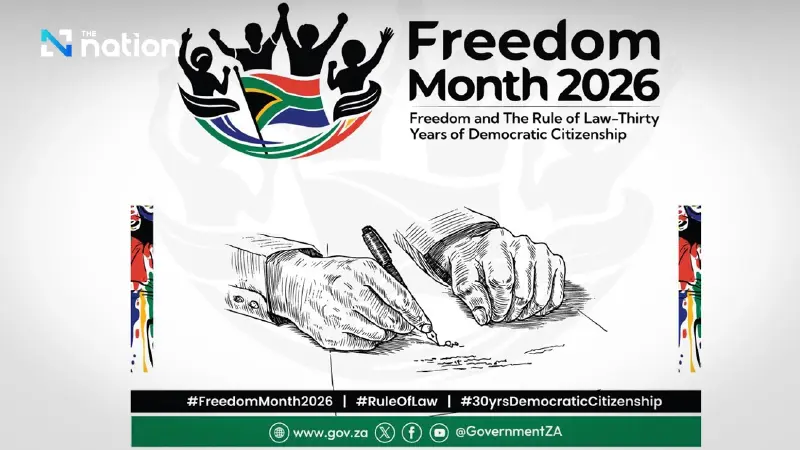


The Preamble to the Constitution of the Republic of South Africa, provides a profound reminder of the past from which the country emerged after 1994.
It reminds all and sundry about the complex task of forging a new nation rooted in human rights, reconciliation and healing after a long and bitter struggle against apartheid. It therefore makes a clarion call to rally all South Africans, black and white to build a new country free from oppression and entrenched racial discrimination. The Preamble asserts as follows.
“We the people of South Africa,
Recognise the injustices of our past,
Honour those who suffered for justice and freedom in our land,
Respect those who have worked to build and develop our country; and
Believe that South Africa belongs to all who live in it, united in our diversity,
We, therefore, through our freely elected representative, adopt this Constitution as the supreme law of the Republic so as to-
Heal the division of the past and establish a society based on democratic values, social justice and fundamental human rights.
Lay the foundations for a democratic and open society in which government is based on the will of the people and every citizen is equally protected by law,
Improve the quality of life of all citizens and free the potential of each person; and
Build a united and democratic South Africa able to take its rightful place as a sovereign state in the family of nations.
May God protect our people.
Nkosi Sikeleli iAfrika. Morena boloka setjhaba sa heso.
God seen Suid Afrika. God bless South Africa,
Mudzimu fhatutshedza Afurika.Hosi katekisa Afrika”
For the last 30 years, this is what has inspired a driven South Africa as a democracy underpinned by non-racialism, non-sexism human dignity and the rule of law. On the 10 May 1994, during his inaugural speech as the democratically elected President of South Africa, HE Nelson Mandela said, amongst others “The time to build is upon us. We have at last achieved our political emancipation. We pledge ourselves to liberate all our people from the continuing bondage of slavery, deprivation, suffering, gender and other discrimination. We succeeded to take our last step to Freedom in conditions of relative peace. We commit ourselves to the construction of a complete, just and lasting peace. We have triumphed in the effort to implant hope in the breast of the millions of our people. We enter into a covenant that we shall build a society in which all South Africans, black and white, will be able to walk tall, without fear in their hearts, assured of their inalienable right to human dignity-a rainbow nation at peace with itself and the world. We must therefore act together as a united people, for national reconciliation, for nation building for the birth of a new world. We understand that there will be no easy road to freedom “It is therefore, within this context that South Africa will be celebrating, and reflecting on progress made in the last 30 years. The country will do so, mindful of the positive strides made and the challenges which lay ahead. The theme for the celebration of our National Day is…. Freedom and the rule of law:30 years of Democratic Citizenship.
This marks a symbolic moment in South Africa’s democratic journey, that commemorates the nation’s first non-racial democratic elections that was held in 1994, a historic event that ushered in a new era in South Africa and ended the brutal system apartheid. South Africa’s transition from apartheid to democracy was widely regarded by the international community as one of the most remarkable political transformation epochs of the 20th century as it was achieved through negotiation and dialogue.
This year, it is a dual milestone, as this occasion carries even greater significance as it coincides with the 30th anniversary of the adoption of South Africa’s Constitution. South Africa’s Constitution continues to be hailed as the best in the world. This 30-year milestone of the Constitution compels the country to take stock of where we have been and the hurdles that we must overcome as we continue to build the South Africa we want.
This day did not only confirm and herald the birth of a new democratic nation but also stands as a testament to South Africans' unwavering commitment to justice, equality, human dignity, and the commitment of building a better, more inclusive future for all her people, black and white. The Constitution has served as a powerful tool for civil society and continue to protect the rights of all the people, including the rights of the LGBTQ+ community.
South Africa has made strides over the last three decades in dismantling institutionalised racism and expanding access to basic rights such as education housing, electricity, and healthcare. Freedom is a continuous process that require nurturing and consolidating the struggles for justice and equality, not just in South Africa, but across the African continent.
South Africa believes that true freedom is incomplete without justice, peace and reconciliation in the world. South Africa will continue to support those who are still fighting for their freedom for they have travelled that journey and are still fighting and redressing the remnants of the old system. The struggles of the people of Palestine and Western Sahara, who continue to be subjected to brutal oppression and indignity, will continue to receive the support of the people of South Africa, whose struggle against apartheid was supported by many across the world.
South Africa remains committed to building an inclusive and participatory democratic culture undergirded by a united society which works together to promote and protect the human rights of all people as enshrined in the Constitution. As we mark the day our nation was born and celebrate the values, we are enjoined by the Constitution to embrace, we do so mindful of the turmoil engulfing the contemporary world. Peace and solidarity are receding, and conflict and violence is redefining our future. But South Africa remains resolute in her conviction that might is not right and that war does not build but only destroy. This is what we have learned throughout our struggle for freedom. And we shall continue to promote peace and strive for a better world free of violence and conflict.
The spirit of April 27 remains relevant, a commitment to dignity, equality and opportunity for all and shall continue to guide our efforts to transform our country. Freedom Day serves as both a celebration and a checkpoint, measuring how far the rainbow nation has come, what challenges it faces and how to surmount such challenges. The 30-year milestone calls for renewed commitment to move faster to address the current challenges we face, educate young people about the values, rights and responsibilities enshrines in the Constitution, invoking the words of our founding father, the late Nelson Mandela that ”Never, never and never again shall it be that this beautiful land will again experience the oppression of one by another and suffer the indignity of being the skunk of the world. Let Freedom reign!”
By: Ambassador Darkey Africa
Ambassador Extraordinary and Plenipotentiary of the Republic of South Africa: Bangkok
