
Thai shares down on Asian market jitters


Play
Thai shares moved in the negative territory Friday due to shares sell-off in China, Hong Kong and Japan.
While citing that Thailand's economic sentiments improved thanks to public spending which spurred domestic demand, Tisco Securities earlier today expected to the Stock Exchange of Thailand index to move up to 1,400-1,420 points today. However, Thai shares opened lower today and at 3.40pm, the SET index lost 10.15 points or 0.72 per cent to 1,397.55 points.
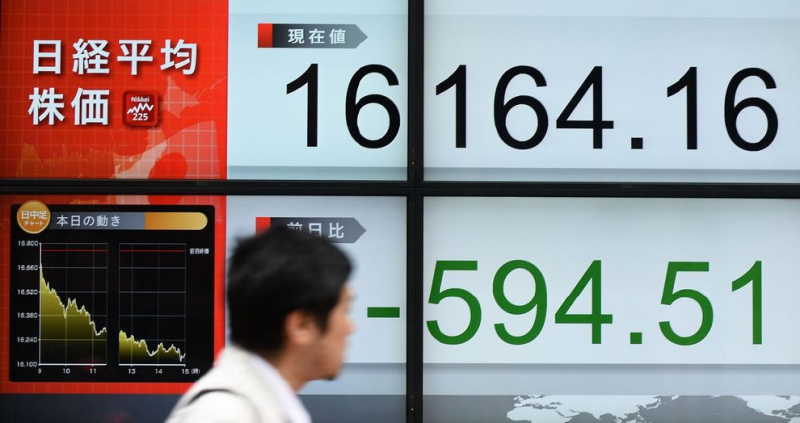
Regional bourses today also fell due to sell-off in China and Hong Kong, after rating agency Standard & Poor's downgraded its outlook for China and Hong Kong. Tokyo stocks also tumbled more than three per cent Friday as a key Bank of Japan (BoJ) survey showed confidence among major manufacturers dropped to its lowest level since 2013, while Panasonic plunged on a disappointing profit forecast.
Hong Kong's benchmark index suffered its biggest one-day loss in five weeks on Friday, after rating agency Standard & Poor's downgraded its outlook for China and Hong Kong.
The Hang Seng index fell 1.3 percent, to 20,498.92,its biggest one-day percentage loss since February 25. For the week, the Hang Seng was up 0.8 percent.
The China Enterprises Index lost 1.8 percent on Friday, to 8,842.86 points, though recouping some losses in late trade thanks to a surprise jump in a gauge of Chinese manufacturing. For the week, it gained 1.6 percent.
S&P on Thursday cut its outlook for China's sovereign credit rating to negative from stable, and also downgraded the outlook for Hong Kong.
Affirming China’s “AA-“ ratings, S&P revised the outlook to reflect its expectation that the economic and financial risks to the Chinese government's creditworthiness are gradually increasing.
“This follows from our belief that, over the next five years, China will show modest progress in economic rebalancing and credit growth deceleration,” it said in a statement.
S&P projects over 6 per cent annual growth rate for China in the next three years, but government and corporate debt ratio could deteriorate. The investment rate could be well above “sustainable levels” of 30-35 per cent of gross domestic product (GDP).
“These expected trends could weaken the Chinese economy's resilience to shocks, limit the government's policy options, and increase the likelihood of a sharper decline in trend growth rate,” it said.
