
Credit Suisse sets sights on assets of wealthy Thais


CREDIT SUISSE, a leading global wealth manager, aims to tap an estimated pool of US$450 billion (about Bt16 trillion) in investable wealth currently held by more than 91,000 rich people in Thailand via its newly-opened private banking unit in Bangkok.
The on-shore wealth management operation in Thailand is the second of its kind in Asean countries after Singapore for Credit Suisse, which is one of the world’s top-five wealth managers. In Asia, Credit Suisse manages combined assets worth about $150 billion – out of its worldwide assets under management worth $688 billion.
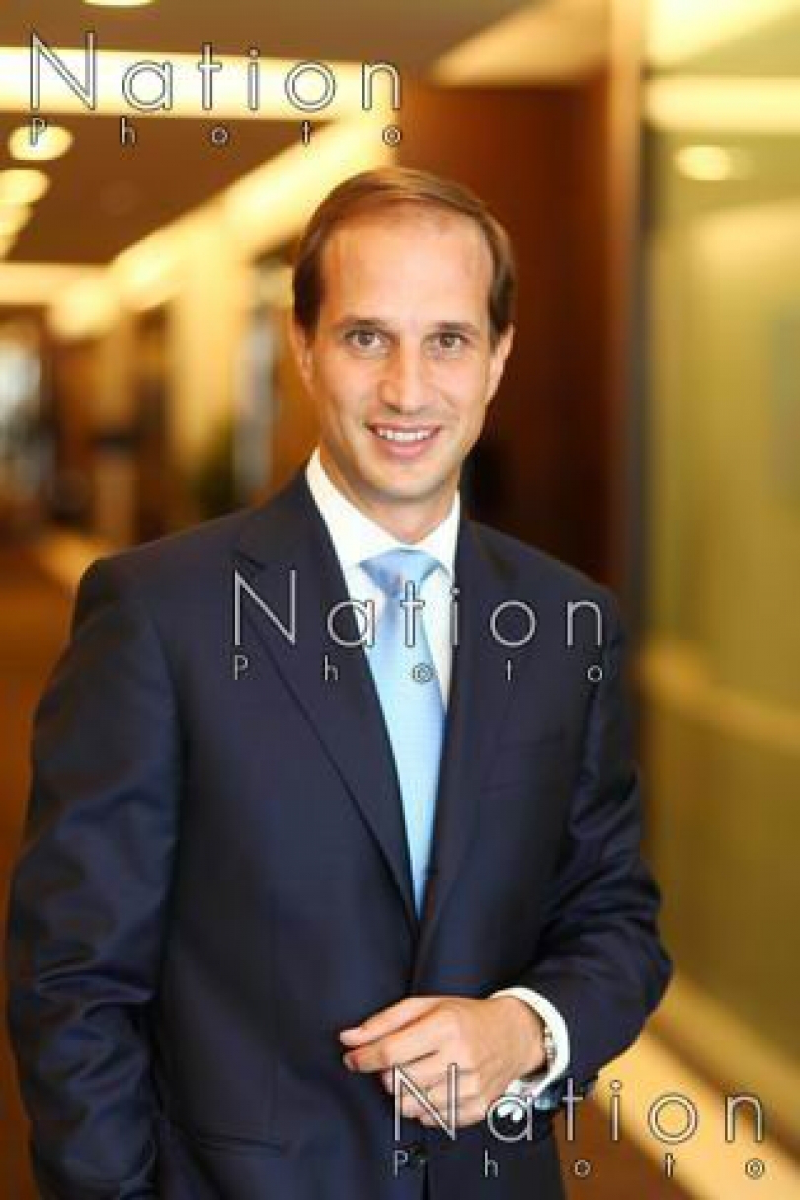
Francesco de Ferrari, head of private banking for Asia Pacific and CEO of Southeast Asia, said in an interview with The Nation that Thailand’s investable wealth is comparable to those in Singapore, Malaysia and South Korea so Credit Suisse decided to open the operation here to serve Thai clients with proximity.
According to research, there are more than 91,000 Thais with investable wealth of more than $2 million (about Bt70 million) per person and 340 Ultra High Net-Worth Individuals (UHNWI) with investable wealth of more than $50 million each.
The target groups include entreprenuers who run their own businesses as well as those in family-owned businesses that are listed on the Stock Exchange of Thailand.
About 66 per cent of Thailand’s publicly traded firms with a market capitalisation of more than $50 million are controlled by family groups so these individuals are regarded as UHNWIs, according to Ferrari. These clients need solutions for both corporate and personal needs.
Credit Suisse aims to serve them with more than 200 financial products so that their money can be invested internationally in equities, fixed income and currencies as well as in more than 10,000 exchange-traded funds and other funds worldwide in addition to local Thai stocks, properties and other domestic assets.
Credit Suisse also has been operating a securities arm in Thailand since 2000.
For those with more than $50 million in investable assets, they will also be offered more sophisticated wealth management products which can be used for the family estate’s management to pass on assets to the younger generation.
Ferrari said the bank is also strong in investment banking and equity research in Thailand since it has been operating a securities arm here since 2000.
Christian Senn, managing director for Thailand and Vietnam, said there are large amounts of money in time deposits in Thai banks which generate an annual return of just over 1 per cent so wealth managers can advise clients to diversify their portfolio to suit their risk profile and get a better return. For example, baht deposits can be converted into foreign currency deposits or fixed-income investment outside Thailand so as to earn up to 3-4 per cent per annum.
For yield enhancement, funds can also be invested in international stocks to earn dividends and capital gains.
In addition, wealth managers can tailor-make structured products to suit the needs of clients such as investing in credit-linked notes that will increase yields on bond investment.
At present, Singapore is a major market for wealth management in Asia with about $543 billion in investable wealth, followed by South Korea’s $516 billion, Thailand’s $456 billion, Malaysia’s $435 billion and Taiwan’s $404 billion.
