
Anutin sets resilience course as economic pressures mount
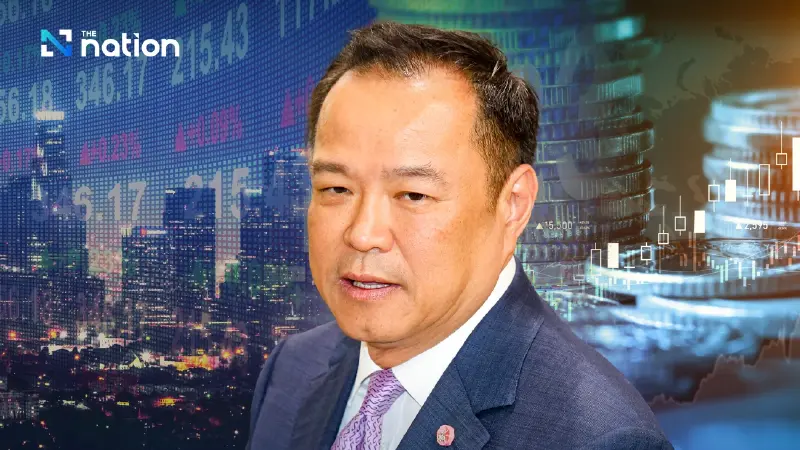


Thai economic policy is shifting towards resilience, OECD standards and investment confidence as private firms warn of inflation risks
- Prime Minister Anutin Charnvirakul is prioritizing a drive to make Thailand's economy more resilient in response to growing risks, including inflation and geopolitical conflicts impacting purchasing power.
- A key part of this resilience strategy is pursuing membership in the Organisation for Economic Co-operation and Development (OECD) to raise standards, improve transparency, and attract foreign investment.
- The push for resilience comes as business leaders and officials express concern over rising inflation, driven by high energy and oil prices, as a major economic threat for the second half of the year.
Prime Minister Anutin Charnvirakul has said the government is moving quickly to strengthen Thailand’s economy as the country faces multiple risks, including the impact of conflict in the Middle East on domestic purchasing power.
Speaking at Nation TV’s 26th anniversary event, Anutin said the government’s urgent task was to make the Thai economy more resilient.
He said Thailand had strong foundations in technology, resources and infrastructure, while foreign leaders he had met had shown interest in investment opportunities in the country.
He said investors were no longer looking at Thailand only as a source of labour or low wages, but as a strategic country with broader advantages.
Changing geopolitical conditions, he added, had created an important opportunity for Thailand as many countries continued to show confidence in its potential.
“There is now the word resilience, which means not only recovering, but recovering in a way that allows us to survive and then run forward. That is the condition of Thailand and the Thai economy at this time,” Anutin said.
The prime minister said the government was also working with the private sector to explore how it could further strengthen business potential, particularly through financial support, the financial system and greater liberalisation.
A key part of that effort, he said, was Thailand’s goal of joining the Organisation for Economic Co-operation and Development, or OECD.
Anutin said Thailand must prioritise OECD membership to avoid falling behind other countries that are upgrading their development standards.
He said OECD membership would require Thailand to raise the transparency of public procurement, bring regulations closer to international standards, improve tax policy and strengthen information disclosure.
The government, he said, was fully committed to achieving this in order to expand investment opportunities and reinforce investor confidence in Thailand’s credibility.
Anutin said appropriate financial costs for doing business would also be important in attracting investment under international rules and strengthening confidence in the country.
“I believe that if we take good care of the people, through welfare, attention to livelihoods, openness to opinions and public participation in different areas, the international community will look at Thailand and use Thailand to create business opportunities,” he said.
He added that a stronger Thailand and OECD membership would allow people to see the country in a new light, without outsiders being able to accuse it of corruption or a lack of scrutiny.
Finance Ministry sees no stagflation signal
Winit Wiset Suvarnabhumi, director-general of the Fiscal Policy Office and spokesman for the Finance Ministry, said the second half of the year had raised concerns over rising inflation caused by a prolonged energy crisis.
He said many parties were worried about higher consumer prices and weaker purchasing power at a time when the economy was not growing strongly, which could raise fears of stagflation.
However, the Fiscal Policy Office assessed that there were still no signs of stagflation at present, as investment continued to expand.
The government was preparing mechanisms to cushion the impact and prevent cost pass-through, including the Thais Help Thais Plus scheme and support for the transport sector.
Winich said the government must also accelerate the country’s energy transition, including the promotion of electric vehicles.
He noted that EVs accounted for only 1% of vehicle users in Thailand, compared with 66% in China, and said greater adoption would help reduce the impact of high oil prices on the public.
CPF sees pressure from war easing
Prasit Boondoungprasert, chief executive officer of Charoen Pokphand Foods Plc, or CPF, said Thailand had already passed through the most difficult period of uncertainty, especially as tensions between the United States and Iran appeared to be easing.
“This means concern over raw material costs, which had risen as much as 30%, has now eased to around 10%. This will help reduce production cost burdens and ease pressure to raise product prices,” Prasit said.
He said government measures to stimulate spending would also be an important positive factor in restoring confidence among consumers and investors in the second half of the year.
Stable management, he added, would help speed up investment approvals through the Board of Investment, particularly in data centres and clean energy, which would strengthen Thailand’s sustainability image.
Bangchak warns of inflation in second half
Chaiwat Kovavisarach, group chief executive officer and president of Bangchak Corporation Plc, said inflation was the key economic concern for Thailand in the second half of the year.
He said the impact would be delayed because many consumer goods currently on the market were still produced from oil costs incurred before crude prices reached US$100 per barrel.
Chaiwat said that even if crude oil prices remained at US$100 per barrel, refined oil prices had risen to US$200 per barrel, a level never seen before. This, he said, would gradually affect people’s cost of living and must be closely monitored.
He said he hoped the government would introduce appropriate measures to maintain the country’s growth momentum, after GDP had performed well in the earlier period.
FTI urges support for SMEs
Pimjai Leeissaranukul, chairwoman of the Federation of Thai Industries, said Thailand’s economy in 2026 was facing risks from both external and domestic factors that were significantly affecting the industrial sector.
Externally, she pointed to trade measures, geopolitical tensions and an unfavourable global economy, with weak global demand becoming one of the clearest challenges this year.
Domestically, she said there were two main concerns: rising energy prices and the influx of cheaper foreign goods replacing Thai-made products.
Energy costs were embedded in every stage of production, from transport and raw materials to direct manufacturing expenses, while weak consumer purchasing power and high household debt remained major national challenges.
Pimjai said the second half of the year would be a critical period for Thai industry and SME liquidity.
Although the impact on the industrial sector had not been clear in the first half because firms still had inventory, supply chains would need close monitoring in the second half.
“The situation of Thai SMEs at present is like waiting for an oxygen tube,” she said, referring to difficulties in accessing credit.
She said commercial banks had become stricter in lending because sales were weak, creating a “chicken-and-egg” problem that needed to be solved by stimulating purchasing power while also improving access to funding.
