
Government to discuss outdated laws with private sector, starting with seven industries
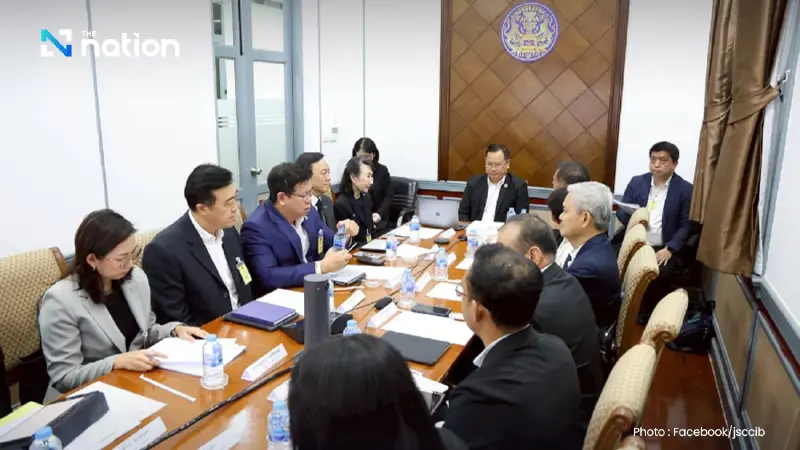


Thailand will meet the private sector on June 10 to review outdated subordinate laws and pilot reforms in seven key industries.
Deputy Prime Minister Pakorn Nilprapunt said the government is preparing to hold talks with the private sector on June 10, 2026, through the Joint Standing Committee on Commerce, Industry and Banking (JSCCIB), comprising the Thai Chamber of Commerce, the Federation of Thai Industries and the Thai Bankers’ Association.
The meeting will seek private-sector recommendations on amending subordinate laws that obstruct Thailand’s development and business operations.
“We have previously discussed this with JSCCIB, which submitted proposals under the Reinvent Thailand plan. These are proposals to amend outdated subordinate laws that obstruct business operations,” Pakorn said. “We have asked the private sector to select what they want the state to amend, such as announcements, regulations, orders or ministerial regulations. For each item, they must identify the problem, what burden it creates, how they want the state to amend it, what the private sector will gain from the amendment, and whether it will benefit the public. At the June 10 discussion, we have asked the private sector to submit its homework.”

For the public hearing on amending laws that obstruct business operations under JSCCIB’s Reinvent Thailand plan, JSCCIB has initially proposed legal issues related to seven target industry groups, including agriculture, automotive, electronic communications, health, tourism, retail and the creative economy.
All of these are high-value industries and play an important role in driving the country’s economy.
Pakorn said the government would pilot the amendment of laws that obstruct business operations in these seven industry groups first.
Once conclusions are reached through discussions with the private sector and relevant agencies, the proposals will be opened for public consultation so that the public and all sectors can express their views. The details will then be finalised and submitted to the Cabinet for approval.
“The government will bring the proposals into the public consultation system to allow people to comment on whether all the private sector’s proposals are truly acceptable. Some proposals may not be accepted by civil society because they may be viewed as unbalanced. But the key principle is that we must listen to opinions. If they are acceptable, they will be submitted to the Cabinet through the Office of the Prime Minister, so that relevant agencies can accelerate amendments to their own laws,” the deputy prime minister said.
Pakorn added that he is also preparing to discuss with JSCCIB preparations for the new Facilitation of Official Permission Consideration and Public Services Act, which is currently awaiting publication in the Royal Gazette.
A key issue is the introduction of the Super Licence system, or a single main licence that covers other related secondary licences. The government and private sector will jointly consider which business groups should be selected for the pilot phase.
Pakorn acknowledged that the Super Licence, or bundled licence system, would allow a main licence application to cover all secondary licences, meaning people and business operators would no longer need to apply separately to several agencies as before.
Examples include hotels, coffee shops or bakeries, which currently require several licences. The new system would help businesses start operations faster and reduce hidden costs.
If any secondary licence issued under the system is later found to be unnecessary, business operators will be able to return it to the state.
