
CPRAM Clarifies Plant Registration Details as Native Holy Basil Rights Remain Untouched
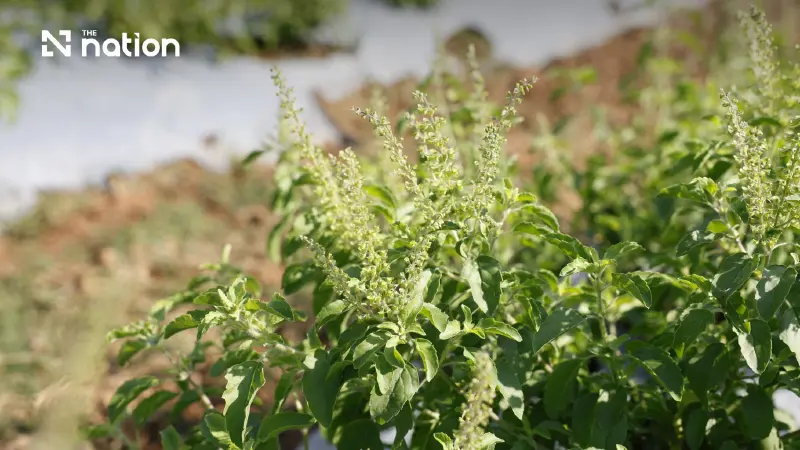


Food producer confirms native varieties remain unaffected as legal protection for four newly developed strains aims to enhance national agricultural competitiveness
- CPRAM has clarified that its intellectual property registration applies only to four newly developed hybrid holy basil strains, not existing native varieties.
- The public and farmers retain the full right to cultivate, trade, and consume all traditional and native holy basil varieties without restriction.
- The registration is intended to advance agricultural research and develop high-yield strains for industrial use within the company's own supply chain, not to monopolise the herb or restrict traditional farming.
- Government officials confirmed that the legal protection does not grant ownership over native species, and farmers face no legal liability for accidental cross-pollination.
Food producer confirms native varieties remain unaffected as legal protection for four newly developed strains aims to enhance national agricultural competitiveness.
Food manufacturing company CPRAM Company Limited has addressed public concerns regarding its registration of intellectual property rights over four newly developed holy basil (krapao) strains.
Company leadership emphasised that native Thai plant varieties must be preserved for communal use, confirming that the public and agricultural workers remain fully permitted to cultivate, consume, and trade traditional basil as normal.
The clarification follows widespread public anxiety over potential corporate monopolies on Thailand's national staple herb.
The registration of new plant varieties, the company noted, is designed to advance agricultural research, improve crop yields, and maintain Thailand's competitive position within global food markets, rather than restrict traditional farming practices.
Public debate intensified after civil society group BioThai and regional agricultural networks raised concerns regarding CPRAM’s registration of four hybrid varieties—named Kaew Juree 01, 02, 03, and 04—under the Plant Varieties Protection Act B.E. 2542 (1999).
Reports sparked apprehension among local farming communities, including growers in Nonthaburi province, who expressed fear over potential seed saving restrictions, increased commercial costs, or legal liability for cultivating traditional strains.

The Ministry of Agriculture and Cooperatives subsequently issued official statements clarifying that intellectual property protection granted under the 1999 Act applies exclusively to newly researched hybrid strains, comparable to pharmaceutical development patents.
Government authorities confirmed that private registration does not transfer ownership over pre-existing or native plant species, nor does it curtail non-commercial home cultivation or traditional market trade.
Addressing the matter, Wisade Wisidwinyoo, managing director of CPRAM, explained that plant breeding and research are standard practices across advanced agricultural economies such as Japan, the Netherlands, the United States, and China.
Continuous research helps produce crops with higher yields, enhanced disease resistance, greater climate resilience, and standardised quality suited for industrial processing, aligning with Thailand’s national policy to serve as the "Kitchen of the World".

Wisade stated that Thailand possesses more than 300 traditional holy basil varieties currently cultivated across various regions. The development of specialised commercial strains alongside academic researchers provides additional choices for the supply chain without replacing or eliminating indigenous plant lines.
The four protected Kaew Juree varieties were developed specifically for use as raw ingredients in CPRAM’s ready-to-eat food manufacturing process.
The company noted that it operates strictly within its own supply chain and affiliated farmer networks under contract cultivation, with no operations dedicated to the retail sale of commercial seeds or seedlings to the general public.

Members of the public, commercial vendors, and restaurant operators remain fully entitled to grow, trade, and prepare dishes using standard holy basil varieties.
To address specific technical concerns regarding cross-pollination, Wisade explained that pollen dispersion does not equate to seed propagation. Natural cross-pollination between protected strains and local plants would result in genetic mutation in subsequent seed generations.
Consequently, farmers who inadvertently grow plants resulting from natural wind or insect pollination carry no legal liability for intellectual property infringement.
The research programme for the Kaew Juree strains required over a decade of research in collaboration with Kasetsart University’s Kamphaeng Saen Campus, leading to formal protection status in 2024.

Development targets focused on achieving strong aromatic characteristics, specific leaf sizes suitable for high-temperature stir-frying, and higher yield weights per plot to improve farm income.
Field trials indicated that the newly developed varieties allow for up to 20 harvest cycles per planting block under managed systems, compared to eight or nine cycles typical of conventional cultivation.
CPRAM reiterated its commitment to collaborative agricultural development alongside state agencies, research institutes, and universities, emphasising that legal protection frameworks are essential to incentivise long-term research investment while ensuring tangible socio-economic benefits for domestic farmers.
