
CPRAM Strips out The Premium Dining Markup to Target Mass-Market Consumers
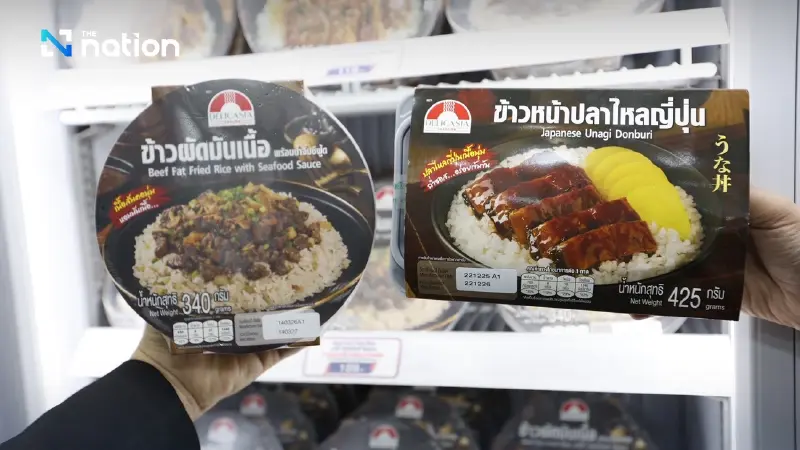


CP All unit CPRAM is unbundling fine dining from its luxury trappings, selling premium frozen dishes direct to consumers as household budgets tighten
- CPRAM is making fine dining more affordable by "unbundling" high-quality food from the expensive overhead costs of restaurant experiences, such as service and prime real estate.
- The company is launching a range of over 100 premium and regional dishes in a frozen format, allowing consumers to enjoy them at home at a lower price point.
- This strategy targets mainstream consumers whose budgets are tightening due to economic pressures, capturing spending from those who are cutting back on expensive restaurant meals.
- The frozen fine-dining meals are sold directly to consumers through CPRAM's new digital marketplace, Fudidiworld, to bypass retail intermediaries and reach a mass market.
CP All unit CPRAM is unbundling fine dining from its luxury trappings, selling premium frozen dishes direct to consumers as household budgets tighten.
Thailand's leading ready-to-eat food manufacturer, CPRAM Company Limited, a subsidiary of CP All Plc, is embarking on a strategic push to make fine dining accessible to mainstream consumers by severing it from the high-cost restaurant environments in which it has traditionally been anchored.
Speaking at the THAIFEX–ANUGA ASIA 2026 trade exhibition in Bangkok on Thursday, Wiset Wisitwinyu, managing director of CPRAM, outlined a pivot designed to capture consumer spending during a prolonged economic downturn.
The company is placing a significant bet on "democratising" premium gastronomy through a frozen fine-dining range hosted on its newly expanded direct-to-consumer digital marketplace, Fudidiworld.

Unbundling the premium dining experience
The strategy is a direct response to structural shifts in domestic consumer behaviour. As inflation and economic uncertainty squeeze household budgets, intermediate luxury experiences — high-end restaurant meals chief among them — are typically the first to be cut.
Rather than conventional product marketing, CPRAM is applying the concept of "unbundling": stripping away the overhead costs embedded in luxury dining, such as prime real estate, panoramic views, and intensive front-of-house service, to isolate what the firm views as the core product — carefully sourced, high-quality meals.

"The demand for fine dining has always existed in the hearts of consumers," Wiset told reporters at IMPACT Muang Thong Thani. "However, because it is traditionally tied to premium venues, the average consumer can only access it once a year for milestone events. We are removing the service and ambient overhead from the retail price. By turning premium, meticulously prepared dishes into a frozen format, we ensure that consumers across all income brackets can experience fine dining at home."
The commercial rationale reflects broader shifts in urban eating habits. National food consumption surveys indicate that up to eight in ten Thai youths and working-age professionals now regularly consume instant or ready-to-eat foods, as rapid urbanisation displaces home cooking.
CPRAM is seeking to capitalise on this shift by introducing more than 100 premium and regional dishes — including Moo Hong (Phuket sweet braised pork belly), Northern Khao Soi chicken, and Southern-style stir-fried pork ribs with sour curry paste — engineered for home reheating and sold through its Fudidiworld platform via LINE Official Account.

Moving up the value chain
The frozen fine-dining launch marks a deeper shift in CPRAM's corporate positioning. Having historically operated as a high-volume, thin-margin supplier of fresh food boxes to convenience store networks including 7-Eleven, the firm is now attempting to build its own direct-to-consumer destination platform.

This transition allows CPRAM to bypass retail intermediaries, harvest first-party consumer data, and command healthier margins by moving into premium categories.
The product portfolio has been segmented into targeted niches to capture high-growth demographics, including VG for Love, aimed at the plant-based and flexitarian market, and Creator, a nutritional line tailored for the elderly — a strategically significant segment given that Thailand's population aged 65 and above now accounts for more than 25 per cent of the total.
The underlying infrastructure draws on the group's extensive cold-chain logistics footprint to ensure food safety and traceability under CPRAM's "Food 3S" corporate framework, covering Safety, Security, and Sustainability.
To support the direct-to-consumer model, the company has implemented a hub-and-spoke distribution structure. Urban logistics hubs in high-density commercial districts, including Silom and Chaeng Watthana, serve as micro-distribution centres and brand showrooms, routing online orders to local delivery networks based on consumer density mapping.

Defensive growth amid macroeconomic headwinds
Despite the challenging macro environment, CPRAM's management is projecting continued expansion. The company closed its most recent financial year with revenues of 33.5 billion baht and has set a target of between 34.5 billion and 35 billion baht for the current fiscal year — representing annualised growth approaching 10 per cent.
"Because food is a non-discretionary purchase, the sector is insulated from the sharpest drops in consumer spending," Wiset said. "During economic hardships, consumers do not stop eating; they change where and how they spend. By offering luxury-grade products at mass-market prices, we are capturing the budget reallocation of consumers who are pulling back from high-end restaurants but still demand premium quality."
Beyond direct-to-consumer digital sales, the premium range is being positioned across two further business-to-business channels.

The first targets international hotel chains and commercial food operators grappling with kitchen staff shortages; CPRAM's pre-prepared formats are designed to allow conventionally trained hotel chefs to expand into specialist Asian and Thai regional cuisines without additional culinary hires.
The second focuses on export expansion, following a pilot programme that shipped Thai fruit-based bakery products – including Le Pan moist banana bread – to South Korea. CPRAM is now scaling its frozen manufacturing capacity to supply shelf-stable premium regional dishes to international distributors.
By separating the functional value of high-end food from the variable costs of luxury hospitality, CPRAM is positioning Fudidiworld not merely as a technology asset but as a strategic buffer against a shifting consumer landscape.
