
Hyperlocal Innovation: The Secret to Navigating Asia’s Fragmented Financial Map
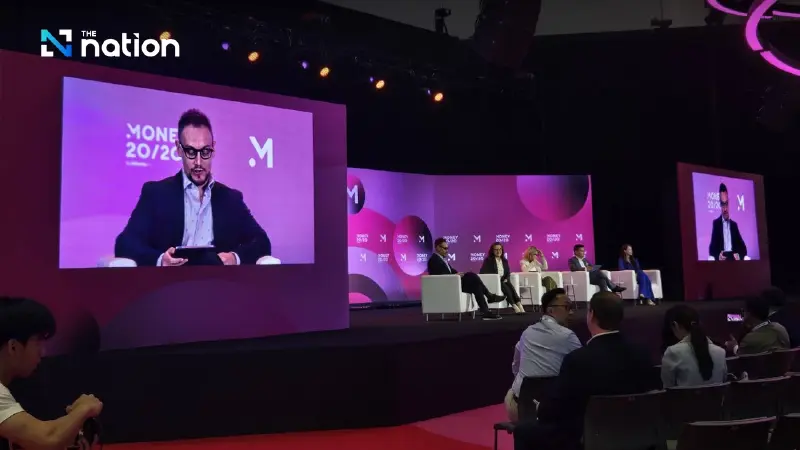


Public and private sector leaders at Money 20/20 Asia reveal why surviving in Asia’s diverse markets requires a shift from global templates to local impact
- A "one-size-fits-all" global fintech model is failing in Asia due to the region's diverse markets, regulatory fragmentation, and significant cross-border payment friction.
- Success requires a "hyperlocal" strategy that goes beyond language translation to deeply understand local user needs and integrate relevant features to solve specific problems, such as the anxieties of travel.
- Unlocking cheaper and more efficient cross-border payments is crucial to capturing massive demand in sectors like travel, a high priority for young Asian consumers.
- The focus should be on integrating new technologies like stablecoins into existing infrastructure to make transactions faster and cheaper for the end-user, rather than pursuing technology for its own sake.
Public and private sector leaders at Money 20/20 Asia reveal why surviving in Asia’s diverse markets requires a shift from global templates to local impact.
In a region as economically diverse as Asia, the one-size-fits-all approach to financial technology is officially obsolete.
At the Money 20/20 Asia 2026 summit on Tuesday, a panel of fintech leaders and banking executives highlighted that while domestic payments have reached near-instant efficiency, the true "limitless possibility" of the region remains locked behind cross-border friction and regulatory fragmentation.
The Myth of the Uniform Market
Asia’s growth is currently driven by a paradox: infrastructure that is ahead of the West in domestic speed but often hits a wall at national borders.
Raymond Ng, CEO of Revolut Singapore & South East Asia, noted that while a consumer can pay instantly in their home country, that same seamlessness often vanishes the moment they step off a plane.
"Localisation is not just about language; it means going deep into the environment," Ng explained.
For Revolut, this has meant evolving into an "all things money" app—integrating everything from money market funds to eSIMs and split-bill features to remove the anxiety of travel.
"If you don't go deep into the market to understand the user’s expectations, don’t go at all."
Travel: The New Currency of Success
The shift in consumer behaviour is perhaps most evident in the travel sector.
Nadia Omer, CEO of MOVE (AirAsia), observed a generational shift where young Asians are prioritising travel over traditional assets like cars or houses.
"Travel has become a life goal," Omer stated. However, she argued that the industry’s growth is currently hampered by the high cost and burden of payments.
"It’s not about the technology or the speed anymore; it’s about making payments less costly. Unlocking cross-border payments is the key to harvesting this massive demand."
MOVE’s strategy focuses on "community-led" value—creating flight and hotel packages that are significantly cheaper by working directly with ecosystem partners rather than simply replicating Western "Online Travel Agency" models.
Integrating New Rails: The Stablecoin Question
While "stablecoins" and "new rails" are the buzzwords of 2026, the panel urged caution against technology for technology’s sake.
Vira Platonova, Global Head of Visa Direct, argued that the future lies not necessarily in entirely new systems, but in the integration of existing tech into current structures.
"The answer is not always new rails, but integrating technologies like stablecoins to unlock use cases like real-time settlement for hard and non-hard currencies," Platonova said.
She noted that Visa is already moving toward a future where all forms of money are integrated into a singular, invisible infrastructure.
Rachel Whelan, APAC & MEA Head of Corporate Cash Management at Deutsche Bank, echoed this sentiment, noting that her corporate clients are less interested in the underlying ledger and more interested in liquidity management and predictability.
"We need to bridge the gap between regulatory landscapes and technological builders. The technology is never the problem—it’s about bringing the right people into the conversation to ensure security and resilience."
The 'Human Dividend' and Future Outlook
As the summit shifted focus from infrastructure to impact, the consensus remained that the winners of the next decade will be those who solve problems for the "layperson."
"Does the consumer understand what a stablecoin is? Probably not," Ng remarked. "They understand whether a transaction is faster, cheaper, and more trustworthy. That is the fundamental problem we must solve."
With Asia Pacific expected to represent $25 trillion in growth by 2030, the stakes for getting localisation right have never been higher.
As the panel concluded, the message to the industry was clear: move out of technical complexity and into the reality of the local merchant and the regional traveller. The era of "global scale" is being replaced by the era of "local relevance."
