
The Great Convergence: How TradFi and DeFi are Redefining Institutional Finance
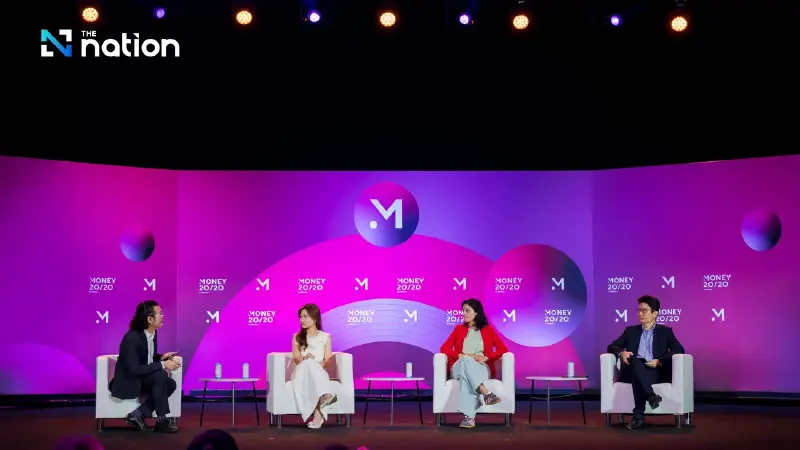


Public and private sector leaders at Money 20/20 Asia reveal the roadmap for a unified financial ecosystem bridging legacy security with DeFi efficiency
- The convergence of traditional and decentralized finance is creating a unified "institutional-grade" ecosystem by building trust through a framework that combines the security of legacy systems with the efficiency of programmable protocols.
- Proactive regulation, as demonstrated by Hong Kong, is acting as a catalyst for this integration by providing clear frameworks that attract capital and guide innovation, rather than stifling it.
- Major financial institutions are now treating tokenized liquidity as a revenue-generating product, driven by client demand for 24/7 access to on-chain liquidity and instant cross-border settlement.
- This hybrid "Web 2.5" model promises to solve critical real-world problems, such as settlement delays and liquidity traps for small and medium-sized enterprises (SMEs), thereby improving economic efficiency.
Public and private sector leaders at Money 20/20 Asia reveal the roadmap for a unified financial ecosystem bridging legacy security with DeFi efficiency.
The long-standing wall between traditional finance (TradFi) and decentralised finance (DeFi) is no longer just thinning; it is being dismantled in favor of a unified, "institutional-grade" ecosystem.
At the Money 20/20 Asia 2026 summit in Bangkok, a high-level panel of policymakers and banking executives argued that the industry has moved past the "hype phase" and into a period of production-ready, revenue-generating integration.
Bridging the Trust Deficit
For institutional adoption to scale, the panel identified "trust" as the primary anchor. Pei Ling Tin, co-president of MetaComp, noted that while the technology has matured, a "trust deficit" persists between legacy systems and programmable protocols.
Tin outlined a three-pillar framework to close this gap:
Institutional Trust: Leveraging the established AML and KYC expertise of traditional banks.
Regulatory Trust: Designing systems where compliance is "baked into the code."
Industry Trust: Ensuring infrastructure is interoperable and data is shared securely across digital foundations.
"By embracing a 'Web 2.5' approach—layering decentralized rails onto existing institutional structures—we can forge a foundation for faster, more reliable transactions," Tin observed.
Regulation as a Catalyst, Not a Brake
Hong Kong has emerged as a frontrunner in this evolution, recently issuing its first official licenses for stablecoin issuers.
Joseph H.L. Chan, Under Secretary for Financial Services and the Treasury for the Hong Kong SAR, dismissed the notion that regulation stifles innovation, framing it instead as the "steering wheel" for the industry.
"We believe in the principle of ‘same activity, same risks, same regulation,’" Chan stated.
He highlighted Hong Kong’s success in issuing the world’s largest multi-currency digital green bond last year as evidence that a robust framework attracts, rather than repels, capital.
Addressing the perceived rivalry between Hong Kong and Singapore, Chan noted that the relationship has evolved into "cooperation".
While Singapore serves as a gateway to ASEAN, Hong Kong acts as the bridge between mainland China and the global economy.
“One plus one equals more than two when jurisdictions collaborate,” he added, suggesting that this "pool competition" expands the total market pie rather than fighting for a fixed share.
From Cost-Saving to Revenue-Driving
The shift in sentiment is most visible in the bottom lines of global tier-one banks. Akshika Gupta, executive director at J.P. Morgan, confirmed that tokenised liquidity has transitioned from a back-office experiment to a genuine revenue driver.
"Clients are overwhelmingly asking for a better rail," Gupta said. "This is definitely a revenue-generating product for us now."
She cited subscription fees and FX revenues driven by platforms like Onyx, noting that "Clients are willing to pay for the ability to access on-chain liquidity that is 24/7. It’s no longer about just operational efficiency; it’s about economic efficiency."
For corporate clients—particularly in Asia, where cross-border trade often faces weekend delays and "pre-funding" liquidity traps—the ability to settle instantly in US dollars on a Sunday is a transformative proposition.
The Human Dividend: Impact on SMEs
The discussion concluded by pivoting from macro-infrastructure to the "human-centric" impact. For small and medium-sized enterprises (SMEs) in hubs like Bangkok or Kuala Lumpur, the convergence of TradFi and DeFi promises to solve the perennial issue of liquidity.
Tin cited research indicating that settlement delays of two to seven days often carry an opportunity cost exceeding the actual transaction fees.
"SMEs form the bulk of the region’s economy," she noted. "If we can provide them with instant settlement at the point of sale, we aren't just improving technology—we are elevating the economic situation for everyone."
As the panel concluded, the consensus was clear: the future of finance is neither purely traditional nor entirely decentralised.
It is a programmable, regulated hybrid—a "Web 2.5" reality designed to serve the real-world economy with the speed of code and the security of a central bank.
